

What Will You Learn At A Defensive Driving Course (That Could Also Save Money On Your Insurance)?
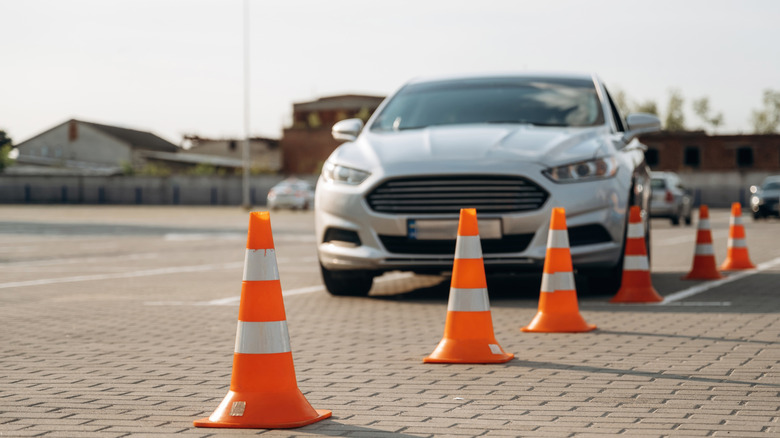
You might think you're quite the adept driver. That perhaps in another life you would have made an excellent Formula 1 driver, starting by dominating karting circuits and climbing up to the big show. Delusions aside, 74% of American drivers believe they are good drivers, rating themselves at a 7 or higher on a 1 to 10 point scale. That said, even the most confident drivers could improve.
How do you get better behind the wheel? For starters, focus on building good driving habits, like steering clear of distracted driving. After all, distracted driving claimed over 3,200 lives in 2024. It's also important to maintain and work on your situational awareness. But beyond applying your own good habits, you could (and should) consider a defensive driving course.
Defensive driving, like it sounds, is a skill set with safety in mind. It's meant to help motorists defend themselves and their passengers against the unforeseen dangers of driving, like poor drivers, obstacles, and inclement weather. And one of the best ways to hone your defensive driving skills is to enroll in a course.
Not just because you'll benefit from what the class has to offer — such as learning to hold your hands at the "9 and 3 o'clock" positions instead of the "10 and 2" you may have been taught in driver's ed, letting you adjust faster to what's happening on the road — but because you might save money on your insurance rates. And who doesn't want to save money? Especially when some drivers are cutting or dropping their expensive car insurance altogether because it's just too pricey.
A defensive driving course can save you headaches and money
So what else can you learn at a defensive driving course? Most importantly, the training will encourage situational awareness. Trainers teach drivers to use techniques like "Scan, Identify, Predict, Decide, and Execute" to pay attention and make informed decisions behind the wheel.
And have you ever heard of the three-second rule? Using a sight marker ahead, you should pass the marker at least three seconds after the vehicle ahead does. It's a valuable tool for judging safe following distance and avoiding tailgating another car. Cultivating that kind of decision-making skill — the sort that applies to unexpected danger — saves lives.
As for how to take a class, the National Safety Council offers both in-person classroom training and online training to meet state requirements for defensive driving courses. Would you rather do some driving with a certified instructor? Colleges and other educational institutions offer courses with practical application portions that put you behind the wheel. Some of those courses, like those offered by racing schools, include valuable skills like car control, high-speed braking, and accident avoidance.
Here's the good news: In addition to making you less of an awful driver with bad habits, taking a defensive driving course could save you money on insurance. Depending on the insurance company and the state, a driver can apply for a driver safety course discount. Don't think that the discount is there forever, though; your insurer may require you to take another course to keep the discount after some time. Is it worth it? The savings could be as much as 20% annually. Take New York, for example. The Empire State offers motorists a 10% insurance discount for taking the course. Not too shabby.
It doesn't cost much to be a better driver
A driving course? In this economy? Hear us out. Depending on where you live and how much your insurance premiums are, a safety course-related discount could make a real difference in how much you pay every year.
Let's start with the price of a course. A New York Point and Insurance Reduction Program-approved online course, for instance, costs $25 on average and takes around six hours to complete. Motorists who complete it can qualify for a three-year discount. Considering New York car insurance premiums are an average of $3,380, savings could be around $338 per year. Six hours and $25 to save over $300 per year for three years? It's a no-brainer, really. And many other U.S. states, including Connecticut, Florida, and Maine, offer similar discount programs.
A course at a racing school, on the other hand, can make things much pricier. Depending on the course, you might have to part with around $3,000 for two days of hands-on, high-speed training. But even without a day or two learning from seasoned instructors, an inexpensive course can teach you valuable skills and save you money in the long run.