

How Japan's Production Culture Helped Toyota Build A Reputation For 300,000-Mile Cars
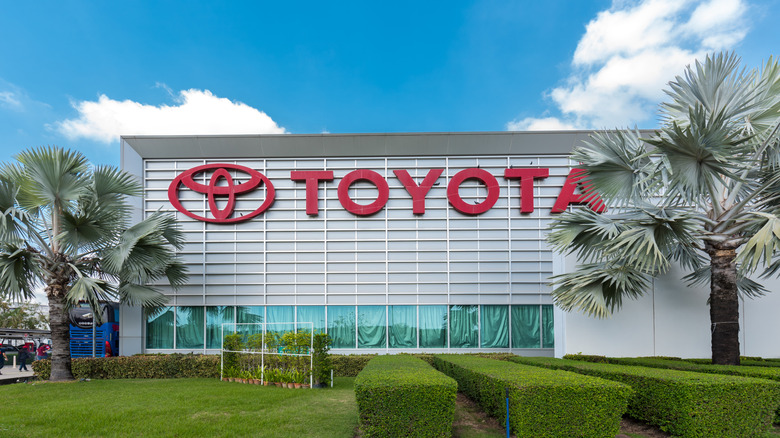
Toyota has long been embraced for its robust, reliable vehicles. While that reputation has taken a hit due to problems with the company's i-FORCE engines and electric bZ4X, the vast majority of cars and trucks that can last, or have lasted, over 300,000 miles bear the Toyota badge.
That's not something you accomplish from Day One. It's a process — you make a mistake, you learn, you improve, and the cycle continues. This, when translated into Japanese, sounds awfully similar to the term "Kaizen." In Japanese, "Kai" means "change" and "zen" means "for the better."
Kaizen is about maximizing quality, reducing cost, eliminating waste, and improving efficiency across all aspects of a business. And it's not just a Toyota thing. Japanese and non-Japanese businesses across the globe, including Sony, Canon, Samsung, and Honda, have incorporated Kaizen into their production processes. Ford has also embraced the Kaizen philosophy, as has Nestlé. And Kaizen, as an ethos, is now applied across industries including aerospace, health care, and education.
However, it was Toyota that, many moons ago, set an example for the rest of the world through the Toyota Production System (TPS). According to Toyota, Kaizen is the foundation of Jidoka, "automation with a human touch," which — along with the concept of "Just-In-Time" — became the pillars of Toyota's vehicle production framework.
Understanding Toyota's two important pillars
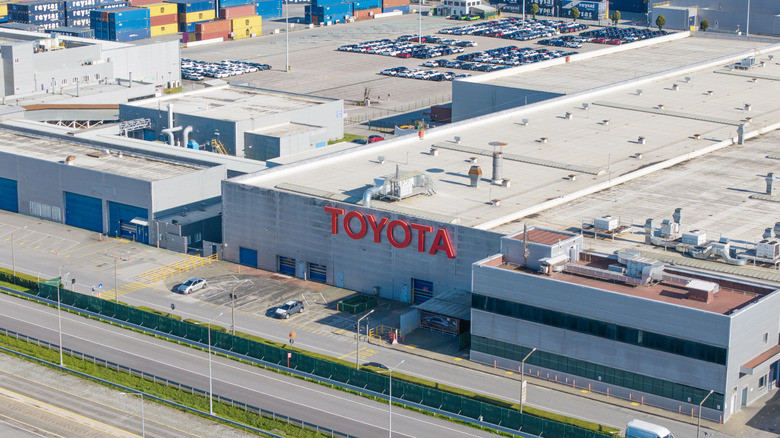
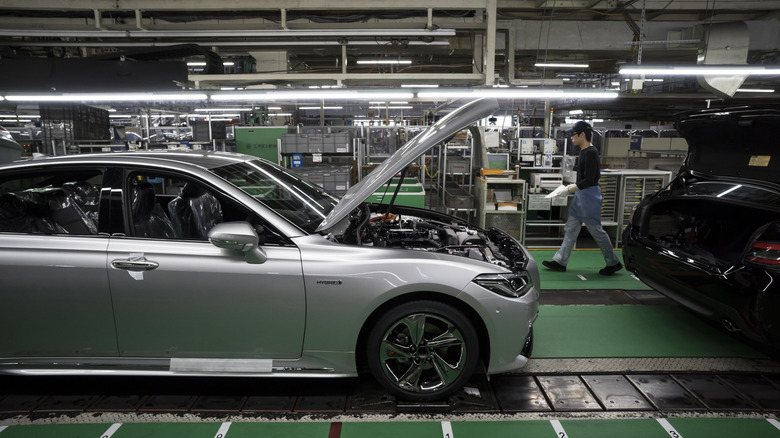
Jidoka blends automation with human wisdom. Before machines take over, Toyota insists on breaking things down to see how they can be done by hand, offering a window into the many problems that can occur. By applying Kaizen, the process is further refined, and these learnings then get incorporated into the many machines seen across the production line. When there's a product abnormality or equipment malfunction, the machine can automatically detect and stop the line if needed. When it's on a non-automated portion of the line, a worker can pull a cord to stop, check, and rectify the problem.
The idea of continuous improvement is backed by Just-In-Time, which, in Toyota's words, is about "making only what is needed, when it is needed, and in the amount needed." Toyota also understands that technology keeps advancing and that new production techniques present even more challenges. However, the company reckons that no matter how good machines or robots get, they can't improve further without human intervention — that only humans can help these machines level up through Kaizen. So that "continuous change for the better" philosophy is here to stay.
Nothing's perfect, including Toyota
It's not like Toyota has been perfect all the time, and yes, it has encountered problems with many of its products the last few years. Despite all that, per Consumer Reports, the company still builds some of the most reliable vehicles on the road. And if we look at the mileage champions — ones capable of breezing past 300,000 miles on the odometer — the list, as compiled by Forbes, is Toyota-heavy. The Land Cruiser is famous for being robust and dependable, especially the older examples, as are 4Runners, Tacomas, and Sequoias. Mechanics often say that these Toyotas can last a really long time with just routine maintenance.
These cars were typically conservative in their design, rather than focusing on glitz and glamour. Not rushing into every new car trend allows Camrys, Corollas, and other Toyota models to clock over 200,000 miles without breaking a sweat. The TPS idea of continuous steady improvements, aka Kaizen, is the bedrock of this achievement — and despite the brand's recent problems, eight of the 12 vehicles that made the Consumer Reports' 2025 list of long-lasting cars were modern Toyotas.