

Great News, The Strait Of Hormuz Is Now Open To Anyone Willing To Pay A Multi-Million-Dollar Toll To The Iranian Government
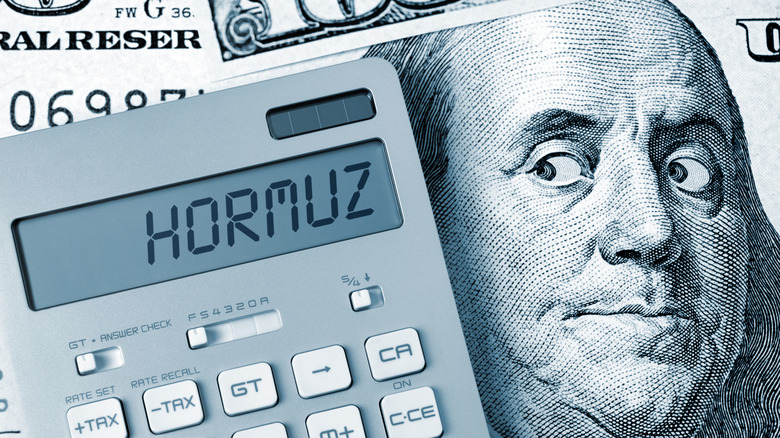
The U.S. held the world hostage Tuesday night, with billions nervously waiting to learn whether Trump would nuke Iran, obliterate the Genocide Convention and commit a series of horrific war crimes, or chicken out. Thankfully, he went with the third option, which was great news for the Iranian people, pretty much everyone in the Middle East right now, and anyone not itching to watch millions die in World War III. And in good news for gas prices, the Wall Street Journal reports the Strait of Hormuz is now open to anyone willing to give the Iranian government millions of dollars in exchange for letting them pass.
We already knew we wouldn't see a significant drop in gas prices until long after a peace deal was signed, but the toll to get through the strait? That's definitely new, even if it's not literally new as of today. As the WSJ explained it, "For weeks, Iran has begun formalizing a tiered system for passage through the Strait of Hormuz, with ships carrying Iranian oil or goods passing through freely, ships from friendly countries paying a sort of toll of $1 million or more and ships from unfriendly countries blocked altogether, shipbrokers said." Per the terms of the ceasefire, Iran will now allow all ships through, provided they pay an even higher toll than the $1 million it costs friendly countries' ships.
Did Iran charge a toll to traverse the strait before Trump started his pointless war with Iran? Nope. But it sure does now. Likely at least $2 million and possibly more, depending on how final negotiations go. So Trump didn't just chicken out. He gave Iran exactly what it wanted and even bragged about it in his announcement on TruthSocial. That 10-point proposal he mentioned? That was this one. The White House didn't negotiate a ceasefire as much as it gave an enemy nation everything it asked for in exchange for... nothing? Wonderful.
Consequences of Iran controlling the strait
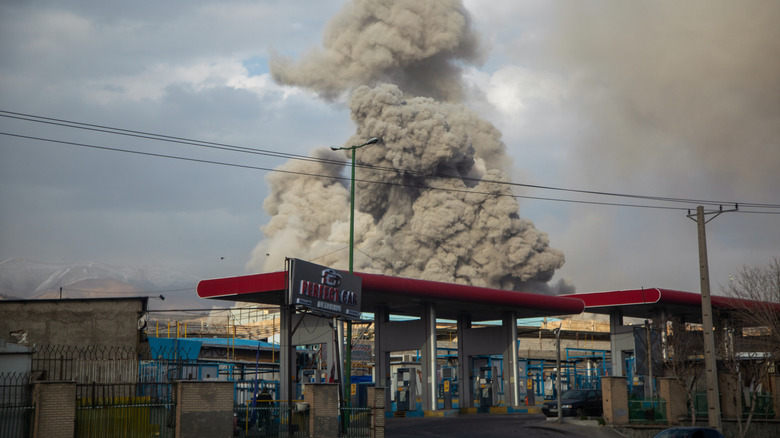
So, as best as I can tell, we started another war in the Middle East and made gas way more expensive, at least 13 U.S. soldiers are dead, more than 1,600 civilians are dead, Iran's leadership is now more anti-U.S. than ever before, the Iranian people now hate the U.S. more than they already did, oil and gas infrastructure was massively damaged, ships will now have to pay Iran millions of dollars to pass through the Strait of Hormuz, gas is still expensive, and we spent half a billion dollars a day to make that happen.
Iran controlling the Strait of Hormuz and charging tolls for ships to pass through would also have implications far beyond simply being a constant reminder that Trump started a war with Iran and then lost. As the Telegraph reports, if Iran's "tollbooth" policy of only allowing paying ships through with a military escort stands, "the tollbooth could earn a vengeful rogue state hundreds of billions of dollars and fundamentally reshape both the Middle East and maritime trade around the world." Current estimates suggest it would generate roughly $500 billion over the next five years.
That cash would help rebuild the country and all the damaged infrastructure, but it would also allow Iran to rebuild its military "many times over" and could be the key to finally developing the nuclear weapon we allegedly started this war to stop them from obtaining. It's also possible we'd see another hostile nation such as Russia or China decide it doesn't care about international order, either and start charging tolls on any ships passing through "choke points" of their own.
Dr. Andreas Krieg, a senior lecturer at the School of Security Studies at King's College London, told the Telegraph that we can expect the Islamic Revolutionary Guard Corps to use the influx of cash to concentrate its power and "build a military dictatorship" that will create a "more radical, more empowered, more financially robust system that can go and build networks east with Russia and China." Oh, and you can also expect gas prices to remain high.
Now comes the tricky part
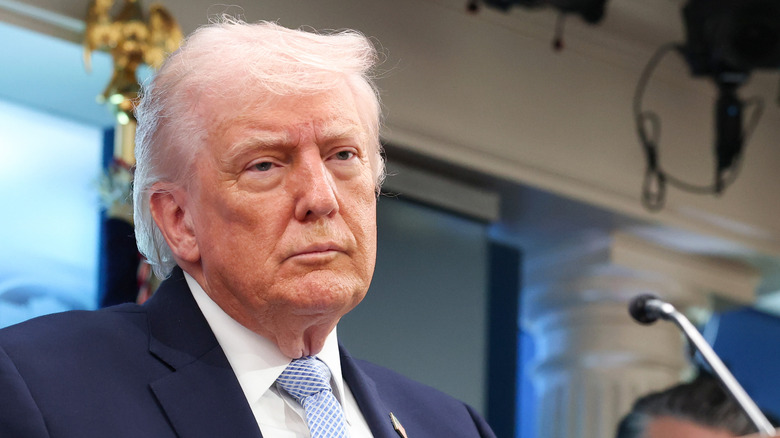
A temporary ceasefire is always going to be better than all-out war, but by its very nature, it's not permanent. All sides still need to finalize the agreement before we can move forward, and it's already looking like that may not happen. Trump told ABC News's Jonathan Karl, "We're thinking of doing [the tolls to pass through the Strait of Hormuz] as a joint venture" between Iran, Oman, and the U.S., and that doesn't sound like something Iran would accept.
Also, while the deal Trump agreed to said Iran would share control of the strait with Oman, apparently, Trump didn't check with Oman before agreeing. Because according to Oman, freedom of the seas is still important, and it doesn't want anything to do with Iran's tollbooth. So that might complicate the negotiations a bit. As far as Oman's Transport Minister Saeed bin Hamoud bin Saeed Al Maawali is concerned, "No tolls can be imposed for crossing Hormuz."
Other countries, especially those in the Middle East, would also likely not take kindly to a newly wealthy and powerful Iran maintaining control of the strait in violation of international law, setting the stage for yet another conflict. Before we even get to the potential for disaster there, though, turns out, Trump also forgot to make sure Netanyahu was on board with everything before he agreed to Iran's terms. The ceasefire deal with Iran was supposed to cover all countries involved, but Israel claims it never agreed to that part and has continued attacking Lebanon.
NBC News also reports that Iran has responded to attacks on its oil sites with attacks on Bahrain, Kuwait, and the United Arab Emirates. So the ceasefire isn't looking like much of a ceasefire at the moment, Trump accepted Iran's terms before ensuring all allies were on board, the rest of the world is unlikely to accept Iran's control of the strait, this entire house of cards could come crashing down at any moment, and gas is still expensive. But at least Trump accomplished all of the objectives he laid out so clearly before the war.