

Why Porsche Maintenance Tends To Be Pricey
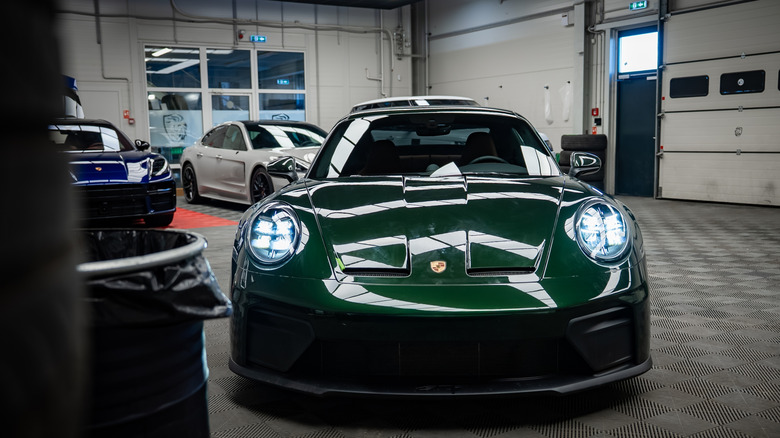
Porsche is very near the top of the list for brands with high maintenance costs, and there are several factors that contribute to that distinction. Many Porsche models have expensive parts and high-strung high-performance engines that require special attention; they're also a luxury brand, so high-end materials cost more to replace. But, there's more to it.
It is important to acknowledge that, yes, many Porsche parts are expensive in the first place. For example, an OEM brake rotor for your base-model 2021 Boxster will set you back just shy of $300. For reference, that same part for a same-year GR Supra is almost $100 cheaper, and of course, that price soars for the more performance-oriented Porsche models — carbon rotors are around $10,000.
Enthusiasts report that labor rates also make up a significant portion of the high costs, particularly in the case of repairs rather than regular servicing, although this can be mitigated somewhat by visiting independent specialists rather than Porsche dealerships. What can't be side-stepped, though, is the complexity of certain jobs, which is what numerous owners have found to be the true culprit of some sky-high servicing bills.
Porsche has a knack for turning small jobs into all-day affairs
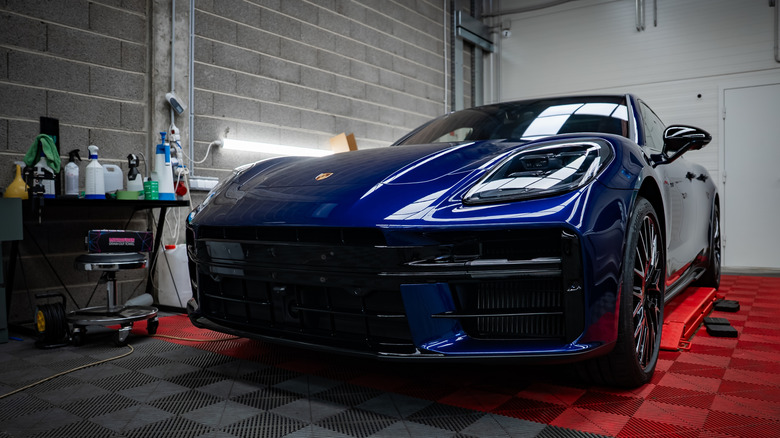
What, with some other brands, might be a simple job, can be very complicated with Porsche packaging. For example, changing the air filter of a Panamera requires you to remove the front bumper, both front wheels, and their respective fender liners, just to access the filter. The task at the core of all this, taking the filter out, is a job that ultimately takes a handful of seconds once the rest of the car's front end has been reduced to a pile of nuts and bolts.
That's no one-off incident, either. Replacing the water pump and thermostat on a Porsche Macan S is another example. German repair specialists Rayteam Automotive say this job takes a full 10 hours and involves removing the intake system and radiator hoses, in addition to a whole host of other parts. According to AAA, the average labor rate for mechanics across the United States is well over $200 per hour, which takes this job well into four figures before you even factor in the cost of parts. Some of it is packaging related, too — where the water pump is located means a lot of stuff has to come out to get to it.
The first-gen Panamera S Hybrid is another good example of a Porsche with high maintenance costs. It used a 3.0-liter supercharged V6, an engine commonly troubled by water pump, PCV, and thermostat failure. The parts costs themselves aren't ludicrous, but their locations mean lots of labor to replace the parts, once again sending bills sky high. The parts alone can be had for around $900, but enthusiasts online who have models with the same engine frequently report bills 3 or 4 times this to have the job carried out by specialists.
Complex layouts can send bills soaring
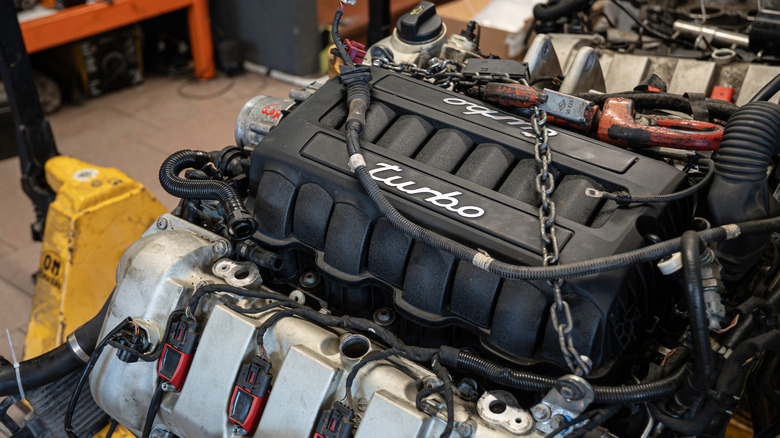
As the old saying goes, in for a dime, in for a dollar. In other words, if you've pulled the bumper off, removed the wheels, stripped the intake system, disassembled the coolant system, and placed the supercharger to one side — spending thousands of dollars in labor costs in doing so — then you might as well attack some other common failings while you're there. The complex way in which Porsche packages its cars together ultimately opens up numerous 'while you're there' instances, which leads to higher repair bills.
For instance, if you're replacing your Panamera's air filter with the bumper and wheels off, and you notice some other worn components, then surely it makes sense to add those repairs to the list while you're in there. This sort of approach is cost effective in the long run, but it does mean individual bills have the potential to skyrocket. In contrast, if you own something a little more straightforward to work on, such as a C5- or C6-generation Corvette, where many routine jobs like an air filter change, are easy DIY tasks, you're less likely to run into heaps of smaller issues while tackling the job at hand.
Furthermore, the fact that many Porsches are rear- or mid-engine doesn't help matters. Such engine placement can make access for routine repairs and servicing more complex than a traditional front-engine layout, and this can contribute to higher bills.