

Here's How (And How Often) To Inspect Your Vehicle's Tires
We may receive a commission on purchases made from links.
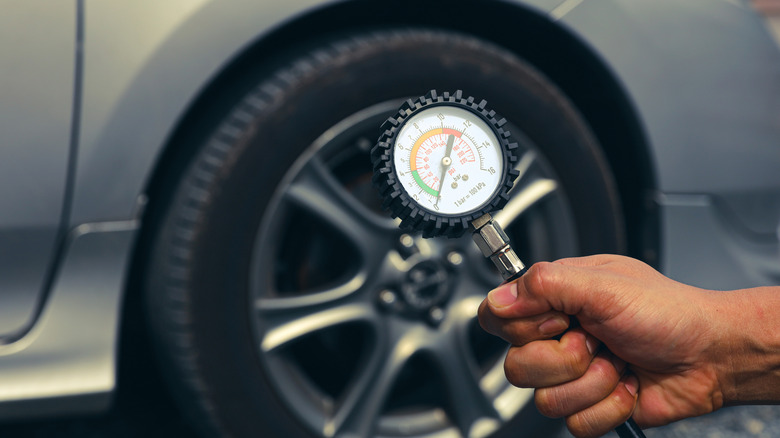
The tires of your vehicle take a lot of abuse. And, as you probably know, they aren't impervious to age, punctures, and damage caused by worn-out parts. The National Highway Traffic Safety Administration recommends inspecting all tires at least once a month or before taking a road trip. You'll want to keep an eye on any damage or wear, as well as the depth of your treads — but you'll want to start your inspection by focusing on the tire's pressure.
While it might seem excessive, it's not a bad idea to check and correct the tire pressure as often as once every week. The reason is simple: tires will gradually lose some air pressure whether you drive the vehicle or not, and they can lose air when impacted by potholes or curbs. Why wait a month when you can do it once a week? Proper inflation can extend the life of any tire, and maintaining the correct air pressure can save a few cents per gallon on fuel. It doesn't sound like much, but it makes a difference in today's world of unstable oil prices.
It's a bad idea to inflate any tire to its maximum PSI, and it's relatively unwise to go over the recommended tire pressures for the front and rear, which you can easily find on a placard in the driver's side door jamb. Grab a tire pressure gauge, confirm the air pressure, and add or remove air when necessary. Also double-check it when the mercury drastically falls overnight, as the tire pressure will typically drop by a couple of PSI for every 10-degree Fahrenheit drop in temperature.
What else to look for when inspecting tires
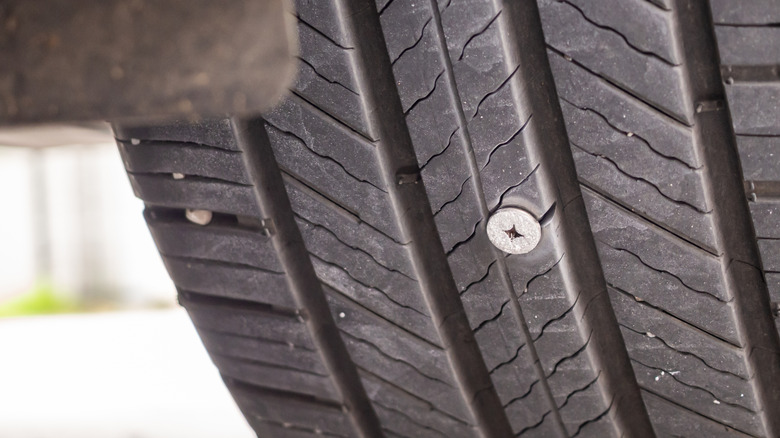
When inspecting the tires of your vehicle, adding or removing air is just the start. Make it a habit to look over and check the sidewalls while at it. Keep an eye on punctures, cuts, abrasions, bulges, cracks, or bumps, which all deserve a visit to a tire shop if you happen to find one. Keep in mind that the NHTSA doesn't recommend plugging or patching sidewall punctures, so you're better off with a new tire than hedging bets on a damaged one.
The next thing to check is the tread depth. For this, it's best to use a tire depth gauge to confirm it, like the Godeson Dial Type depth gauge. You should consider ponying up the cash for new tires if the treads are ²⁄₃₂ of an inch or lower. They should also be at least ⁴⁄₃₂ of an inch during winter or intense snow, and swapping to winter tires is best if the temperature falls below 45 degrees Fahrenheit.
If the treads are nice and thick, the next thing would be to check for cuts, unusual slits, signs of dry rot on the tread surface, or uneven wear, which could cause your treads to degrade more quickly than normal. Rotating the tires every 4,000-6,000 miles will help you get the most out of your rubber. The tire rotation pattern will depend on your car's drivetrain configuration (whether FWD, RWD, or AWD), the type of vehicle, and the tread design of the tire (whether symmetrical, asymmetrical, or directional). If you can't remember the last time you had the tires rotated, it's probably best to have a professional do it for you.