

Why Car And Driver Hated The Now Legendary (And Valuable) Ford GT40 Mk III
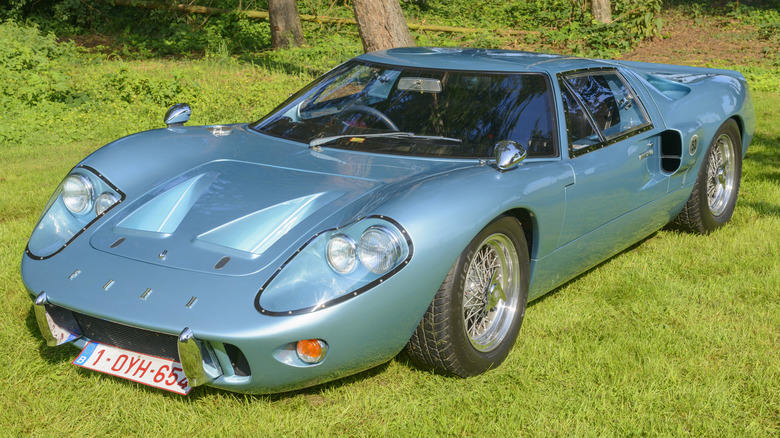
When Ford released the roadgoing version of its Le Mans winner, the GT40 Mk III, in 1967, Car and Driver jumped behind the wheel. Its initial thoughts? Outlook not so good. The glue-covered dash, missing parking light, or an ever-glowing brake warning indicator would surely scare off any buyer of a 1967 car with an $18,500 price tag (that's $181,000 in 2026), right? Perhaps. That is, until they mash the gas pedal into the overly padded floor.
When the 34th 24 Hours of Le Mans wrapped up on June 19, 1966, the only drivers on the podium had crossed the finish line in Ford GT40 Mk IIs. The race cars were bred from a Ford racing program with two goals; to win the 24 Hours of Le Mans and embarrass Ferrari on a world stage. Henry Ford II greenlit the mission in 1963 after Enzo Ferrari backed out of a deal to sell his company to the Blue Oval. Just three years later, Ford accomplished what it set out to do with its 1-2-3- finish in the real-life "Ford V. Ferrari," the cinematic version of which, according to Jalopnik readers, is one of the best car movies.
To further capitalize on the program and the win, Ford initiated development of a roadgoing version of the GT40 in 1966. J.W. Automotive Engineering would run the project out of its new headquarters, the defunct Ford Advanced Vehicles facility in Slough, England. With plans to produce 20, significant modifications had to be made to transform the race car into a street-legal grand tourer. Car and Driver, which relished both the Mk I and Mk II, borrowed one of the earliest Mk III examples. The magazine found it a bit rash around the edges, but certainly not around the corners.
A 1967 review of the Ford GT40 Mk III
The opening line of Car and Driver's review, per Phil Are Go, is a tad sassy, reading, "In theory, the Ford Mk. III should be the world's most desirable enthusiast's car. In theory." This sets the tone for an epic teardown. A litany of problems deemed "unpardonable" are divulged early in the article, including a horn that shocks any who dare to press it, a passenger door that routinely flies open, a non-retracting retractable seat belt, a broken driving light, and a missing parking light. To put it plainly, Car and Driver found the workmanship to be completely miserable.
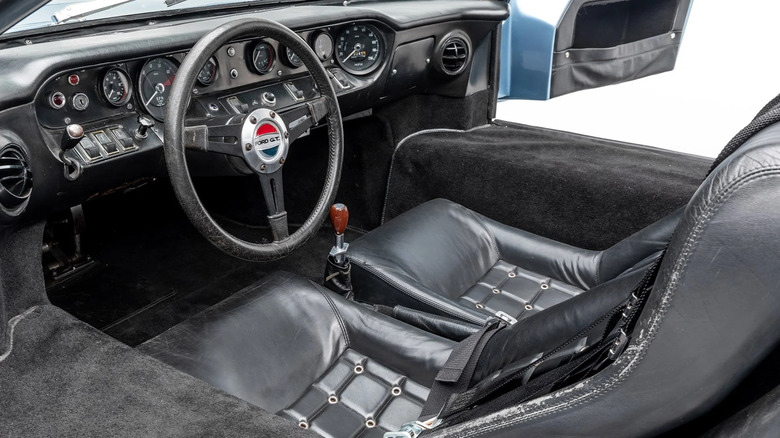
The decrying continues with the writer all but claiming the car has the worst seats they've ever sat in, mocking components borrowed from economy cars, lambasting the excessive floor padding that balls up under the pedals, and perhaps worst of all, a transmission and clutch linkage that makes shifting a nightmare. Is there redemption for such an apparently fouled machine?
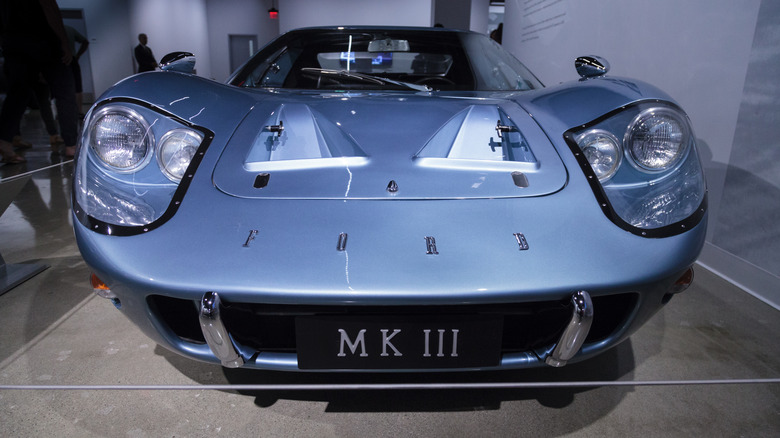
Examining the differences between the racing and street versions offers clues as to why such issues existed. A need to meet legal requirements led to numerous alterations, including a refreshed nose that would sit at a lawful height. Additional front-end revisions saw the installation of round sealed-beam headlights, replacing the oblong ones found in the racing brethren. The rear deck, lengthened to include a crude luggage compartment, led to the tail dragging on slight inclines. A new interior that, at least in the opinion of Car and Driver, did not improve comfort, and perhaps made it worse. The mods necessary to get the car on the street caused trouble — but it's what remained the same that kept the reviewers in the driver's seat.
Was the Ford GT40 Mk III different from the race car?
Outside of craftsmanship, the clutch and transmission linkage rise to the top of Car and Driver's grievances. Using the same German-built ZF 5-speed found in the competition cars, the shift linkage and clutch smoothness are both noted as "unacceptable." As the writer reports, it has exceptional gear ratios, but attempts to shift are akin to a prank. Once a gear is found, however, the car's "shriek transports you to Le Mans." That shriek originates inside the Mk III's 306-horsepower 289-cubic-inch V8, a small block that helped shape the muscle car era.
The GT40s of the World Manufacturer's Championship also ran a 289, though theirs made 385 hp. The street version, equipped with emission controls, raced from 0-to-60 mph in 5.1 seconds, and to 100 mph in 12.7. The reviewer notes acceleration is not much better than its contemporaries, but the Mk III continues to pull long after others call it quits. The power is planted by track-borrowed, street-tuned suspension. It proved exceptional. Steering effort, response, and road feel all received excellent marks, with ride comfort earning a good rating. All categories of handling and braking also received excellent marks, the outlier being the disc brakes' direction stability, which is listed as fair. The ride left the driver feeling comfortable at speeds upward of 120 mph.
At the end of the test, the verdict was in: Nice try, but we have some suggestions. Ford didn't need to listen. Only seven Mk IIIs saw the light of day, with just three going home with private buyers. Good luck buying one today. In good condition, should one even come to market, expect to shell out millions. If its cornering doesn't make your eyes pop out, its price tag sure will.