

What Does A Compensator Do On A Harley-Davidson?
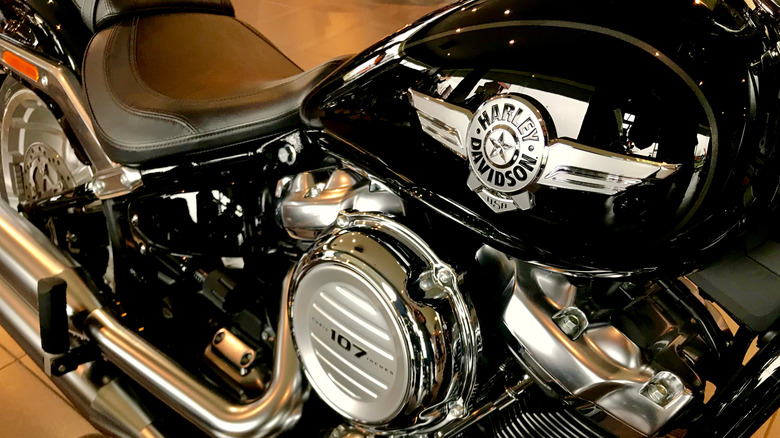
Harley engines are not particularly smooth. Sure, the modern Milwaukee-Eight engines have improved things, but they're still pretty vibey. And if you suspect unusually high levels of vibration, it's likely that your compensator is on its way out. For the uninitiated, a compensator absorbs the engine pulses, protecting everything downstream of the crankshaft from sudden shock loads. This bit of hardware is mostly limited to Harley's large-displacement Big Twin engines, including both the modern M8 and the older Twin Cam versions. However, it's not uncommon to find compensator sprockets inside classic post-war Harleys and Ironhead Sportsters as well.
While compensators play a crucial role in drivetrain longevity, they also help control your Harley-Davidson's engine vibration to a certain extent. Ask anyone who isn't running a compensator, and they'll tell you how raw things can get. The compensator prevents the primary chain, clutch basket, and other drivetrain components from grenading prematurely, essentially acting like a shock absorber between the crankshaft and the primary drive.
In terms of design, the compensator features a ramp and spring assembly, which slots into the primary sprocket in a dog-like fashion. As the engine fires, the crank transmits those pulses into the sprocket, which then flows through the compensator's spring assembly, absorbing some of that force and making power delivery smoother. As you may have guessed, having the shock absorbed also translates to better component life, which is why it's generally not recommended to run without a compensator.
Should you eliminate or compensate?
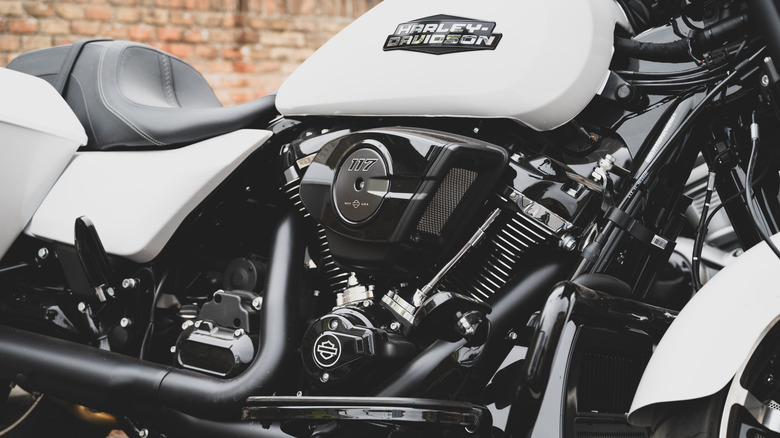
As engine builder Kevin Baxter put it in a YouTube video on his channel, you can eliminate the compensator on a Harley, but you can't eliminate the pulses — they have to go somewhere, and that somewhere is the drivetrain. You're essentially subjecting the primary sprocket and the rest of the drivetrain to a lot of additional stress, especially during heavy acceleration and deceleration. This can lead to premature wear of bearings, the clutch basket, transmission components, and the crank itself. Baxter even recalls an instance where one of the engines had its crankshaft snap after running a solid front sprocket/eliminator. The damage is real.
However, there are benefits to removing the compensator. You'll likely notice better throttle response and, more importantly, you'll have one less moving part to worry about. So if you're drag racing, for example, the trade-off may be worth the effort. For the vast majority of people, however, compensators are the way to go. If, on the other hand, you're really fed up with changing the compensator, then you might consider the idea of going the eliminator route. As Baxter explained, it's probably not the compensator that's the problem if you're changing it out every 10,000 miles or so.
At the end of the day, a compensator is there for a reason, so it'd be unwise to throw it away just for the sake of improved throttle response. For most people, the trade-offs are not worth it. Of course, everyone will have their own take on this, just like how there are still camps of people who believe Harleys need exhaust back pressure.