

Why Michelin Started Putting RFID Tags In Its Tires
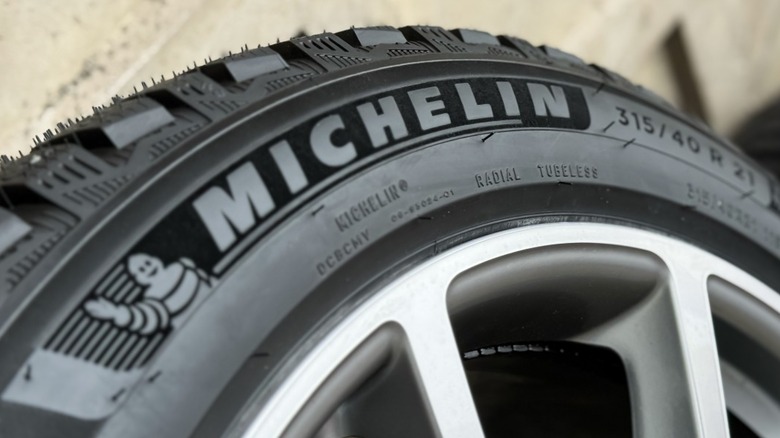
OK, so don't panic, but Michelin has been putting RFID chips in our tires for some time now. Before you start watching the sky for black helicopters as you drive to the Piggly Wiggly, Michelin isn't trying to spy on you. That's Google's job. What it is trying to do is to streamline manufacturing, delivery, maintenance, and end-of-life sorting with easy identification of the tire itself.
RFID technology is put to use from the moment the tire comes off the assembly line. Tires are scanned to make sure they get delivered to the right places, whether those destinations are stores or automotive manufacturing plants, this is faster than human sorting and reduces the possibility of human error. The same goes for maintaining inventory at tire shops, which can easily be managed by computer now.
When paired with vehicles, wheels, and TPMS systems, RFID tags can help ensure that the right tire is always correctly matched with the car. Then there's what happens to a tire once a customer decides to replace it. It's often sent to get processed where, depending on its condition, the tire can be reused, recycled, or retreaded.
Normally, humans have to manually sort each tire. With RFID technology, machines will be able to identify the tire and know what its specs should be to qualify for reuse or retreading, and then do the sorting instead of humans.
What is RFID?

RFID stands for Radio Frequency Identification, and it's all over the place. Automatic road tolls often use RFID technology. RFID chips are found in key fobs, too. You know that little chip on your debit and credit cards that allows you to pay just by tapping the card reader? Or how you can pay at those same card readers with your smartphone? And no doubt you've bought something at the store that had a fancy plastic tag on it that the cashier had to remove with a special tool so you don't set off the alarm as you leave the store. That is all related to RFID technology. It basically makes something scannable within a short distance.
There are two kinds of RFID technology: active and passive. Active RFID devices have batteries and antennas that transmit data on their own. Then there are passive RFID devices that aren't powered, but can only identify itself when scanned by a nearby device. Which kind of RFID chip is in your Michelin tires? That would be the passive kind, as there are no batteries attached to your tires.
That means this technology cannot transmit your location. Michelin couldn't care less how often you drive to your Aunt Bertha's house. But, a simple scan at a tire shop can tell them a lot about the condition of the tire (using a drive-over scanner), whether it should be replaced, and the best tire to replace it with.
Why is Michelin putting chips in our tires?
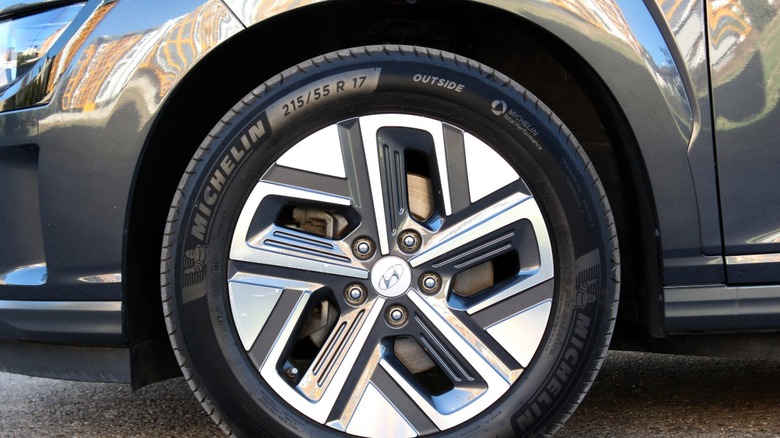
Michelin began its foray into the use of RFID tags by putting them in commercial tires, as part of their connected services, which help companies to manage the maintenance of their fleets. But the company has in the past couple of years begun rolling out the technology to its consumer tires, as well.
There are all kinds of capabilities that are opened up by this technology. For example, suppose a certain tire needs to be recalled. Tires with chips in them are associated with a car's VIN at the factory. That makes it much easier to reach out to owners and make sure that all of the deficient tires get replaced. And all of this data about tire use and performance that gets stored in the cloud can be aggregated and analyzed to make better tires and to streamline their life cycle management even further. It can also be used to cut down on tire counterfeiting.
Michelin has opened some of its RFID patents in hopes that other manufacturers will use this technology so data can be shared. Imagine any shop being able to review the maintenance history of your tires. Those other tire makers probably ought to consider it, as the EU will soon begin requiring tire manufactures in Europe to enable unique digital identification of each new tire produced.