

E-Bike Vs. Moped: Pros, Cons, And Differences Between Them Explained
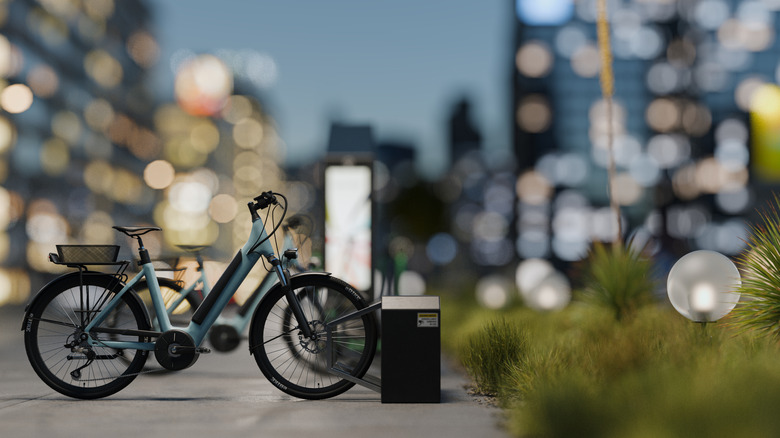
Small vehicles like e-bikes and mopeds can make city travel easier. Unfortunately, the fact that they're different vehicles that often perform in similar situations can cause confusion. There are a number of differences between them that can make one a better choice over the other depending on your needs. For example, while you might think an e-bike would cost less than a moped, this isn't often true, leading to many asking where all the cheap e-bikes are. The prices between e-bikes and mopeds are actually pretty competitive, with the lowest prices starting at a little under $1,000 for each.
E-bikes look very similar to traditional bicycles, with the exception of a battery typically found on the frame or integrated into a rear rack behind the seat. You still have a set of pedals, so even with an electric motor, you're helping drive the bike forward by peddling. Conversely, a moped features an engine (or electric motor), typically has a distinct look setting it apart from an e-bike, and doesn't typically require any effort from you in terms of propulsion.
It's not just how each vehicle is powered that makes them different. You also have to consider how the law applies to each, where they're able to travel, and what type of performance you're looking to get.
E-bikes provide an easier entry point, don't have as many restrictions, and are more portable
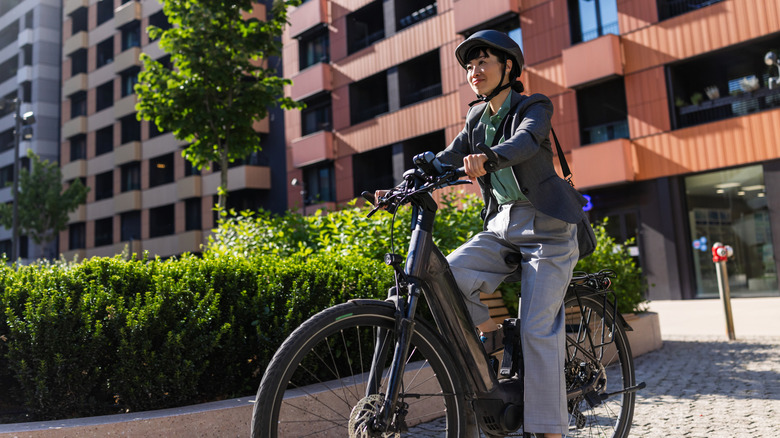
So why would an e-bike be more accessible? Well, that's because of the laws surrounding them, which are generally more relaxed than the rules for mopeds. E-bikes are placed into three different classes, with the first having no throttle and reaching speeds of 20 mph. The second includes a throttle in addition to pedal-assist, and the third doesn't include a throttle but can reach up to 28 mph. The exact laws for each e-bike class can vary across the country; riding one could require a license in certain states. When it comes to mopeds, though, most states require a license for them, they may need to be registered, and they require insurance coverage.
You also need to consider where you want to ride. For example, while local regulations can vary (such as excluding certain e-bike classes), bicycle paths and lanes can be utilized during your travels. A moped, on the other hand, must stay on the road, which could limit your route options when navigating a city that includes parks and green spaces with trails.
Lastly, while e-bikes are heavier than traditional bicycles, potentially tipping the scales at over 80 pounds, they're a lot lighter than mopeds. Some moped models can be as much as 200 pounds, which certainly takes a lot more effort to move around. Being lighter and similar to a regular bicycle, an e-bike also affords you the opportunity to potentially store your ride inside your apartment, depending on the building's rules.
Mopeds can be faster, don't require a workout, and offer potentially greater range
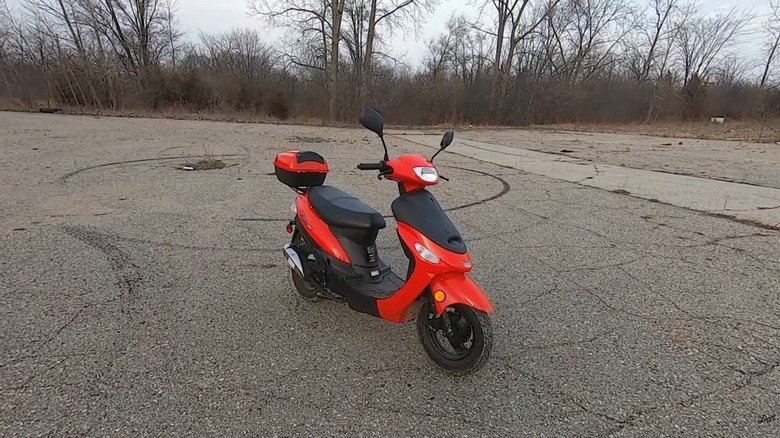
While e-bikes certainly have their advantages, with even some Amish communities adopting e-bikes over horses, mopeds do offer some attractive benefits. For one thing, you can cut down travel time, as most mopeds can reach the top-end of class 3 e-bikes around 28 mph. Their engines are typically equipped with a 50cc (cubic centimeters) engine or smaller. Although, depending on where you reside, a vehicle could still be defined as a moped with a larger engine. For instance, a two-wheeled vehicle with a 130cc engine still qualifies as a moped in the state of Kansas.
For context, let's say your commute from home to work is 20 miles. A class 1 e-bike will get you there in around an hour, whereas the typical moped traveling at 28 mph can cut that time down to 43 minutes. Of course, a class 3 e-bike would perform very similar to a moped in terms of top speed, so the benefits only apply when comparing speeds to class 1 and class 2 e-bikes. Oh, and don't forget; you'll likely be pedaling for a good portion of that hour on an e-bike. Granted, it's great if you're looking to become more active, but it's not for everyone.
Another reason you might opt for a moped over an e-bike is range, as fuel economy in the triple digits is possible with those small 50cc engines. The average e-bike battery can offer as little as 20 miles of range on a single charge. So, those looking at greater travel distances might consider a moped over an e-bike — unless that e-bike has a high-end battery, which could offer as much as 100 miles per charge.