

These Are Consumer Reports' Top Truck And SUV Tire Picks For 2026
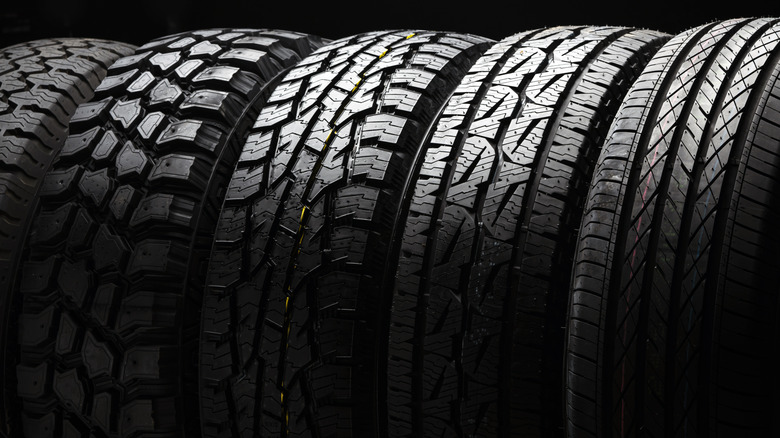
If that headline looks a little familiar, it's probably because we covered Consumer Reports' best car tires earlier this year. Why different articles for different vehicles? Well, there are real differences between tires engineered for passenger cars and those developed for use on trucks and SUVs. Tires for sport utility vehicles, for instance, are specifically designed for taller-riding cars that tend to weigh more than comparable passenger models. On the odd chance an SUV actually leaves the pavement, the tires have to be ready for that, too. As for truck tires, those are tailored to help with towing, hauling, and other hard use that cars don't often endure.
These basic principles do come with a caveat, though, at least according to Consumer Reports. Per CR, "Many subcompact and compact SUVs can simply use regular all-season tires" — which, to be clear, are part of today's truck and SUV tire rankings as a result.
All winners have gone through an extensive testing program that sees technicians evaluate more than 40 tire models and 800 individual tires each year at CR's own facilities — including a skating rink for testing the tires' braking performance on ice. In addition, CR partners with outside experts who ride that rubber through 16,000 miles of Texas roads to analyze real-world tread wear. The outcome? A half a dozen hard-to-beat options for regular all-season tires (suitable, remember, for smaller SUVs), all-season SUV tires (for midsizers and above), all-season truck tires, all-terrain truck tires, winter/snow tires, and winter/snow truck tires.
All-season tires
Right off the bat, don't fall into the trap of confusing all-season vs. all-weather tires. The former are the basic everyday choice of most new vehicles today, while the latter have been fine-tuned for a little extra capability in the snow — although they're not quite as good in the white stuff as actual snow/winter tires.
And CR's top pick for all-season tires for smaller SUVs — including some of the segment's most reliable and fuel-efficient new models — is the ever-popular Michelin Defender 2. It scored especially well for braking in dry conditions, traction in the snow, and the ability to resist hydroplaning when it's wet, all for the long haul. The Defender 2 also had the highest projected tread life of any tire tested for the recent CR ratings: 100,000 miles. (For what it's worth, the Michelin treadwear warranty provides coverage for 80,000 miles.)
Consumer Reports does tout a less-expensive tire as a "smart alternative," noting that the Hankook Kinergy XP had better scores in most categories for a lot less money. The Defender 2 is quoted by CR with a starting price of $198.99, while the Kinergy XP opens more than $60 below that point — per tire. On the other hand, Michelin's entry had a much higher owner-satisfaction score than the Hankook tire, which was in fact labeled as "below average" in that category.
All-season SUV tires
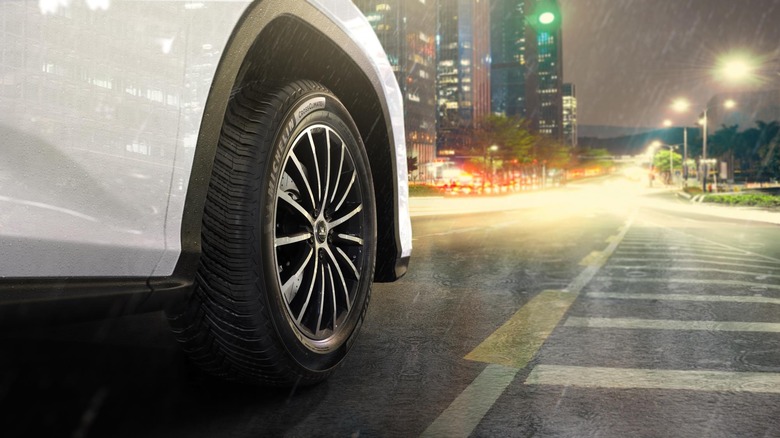
Michelin had the No. 1 tire specifically engineered for SUVs, too. As mentioned, CR recommends these for midsizers and above, and particularly for modern crossover-style vehicles, which may need more support for their larger load and towing capabilities versus their smaller siblings. The top choice for these rides was the Michelin CrossClimate2.
Frankly, CR seems to have fallen in love with CrossClimate2, calling it an "exceptional tire" that was a "clear standout" in its category with "epic predicted tread life." There's a lot more to like as well, since this tire scores above-average or higher in every aspect of Consumer Reports' testing regime — earning the highest-possible results in snow traction and ice braking. Of course, that makes sense when you realize that the CrossClimate2 is one of those tires that goes beyond an all-season rating to earn all-weather certification. Plus, not only did the CrossClimate2 capture the category's highest overall score, it also led for owner satisfaction.
The second-place all-season tire was the Vredestein HiTrac. Now, the HiTrac did have its high points, matching the CrossClimate2 in most categories, but fell behind when it comes to owner satisfaction and ride comfort. But a possible issue, called out by CR, was that the estimated lifespan of the HiTrac's treads was among the shortest recorded in the testing — at only 60,000 miles. Vredestein does offer a 75,000-mile tread life warranty, however.
All-season truck tires
Just what the hell counts as an SUV anymore is still an open question, but we can tell you that both large body-on-frame SUVs and light-duty trucks tend to offer even more capability potential than unibody crossover-style entries. So they need even more robust tires to meet their challenges. That said, there's usually a tradeoff between toughness and comfort in truck tires — something reflected in the scores of the highest-ranked all-season truck rubber.
The CR selection in this category was the Continental TerrainContact H/T, and it was graded as only "average" for ride comfort — despite its perfect score for preventing road noise. The TerrainContact H/T also received the same score for snow traction, and finished with above-average results for dry braking, handling, and ice braking. Showing off another facet of their durability, the TerrainContact H/T tires turned up with an expected treadwear life of 70,000 miles. No other all-season truck tires bested that mark.
The so-called smart option for trucks was the General Grabber HTS60, named by CR as a balanced performer that did its best in the hydroplaning resistance and rolling resistance categories. Yet you may want to think about the Vredestein Pinza HT instead, since it matched the Grabber for most characteristics, but with significant advantages in terms of a lower cost, higher owner satisfaction, and better ride comfort.
All-terrain truck tires
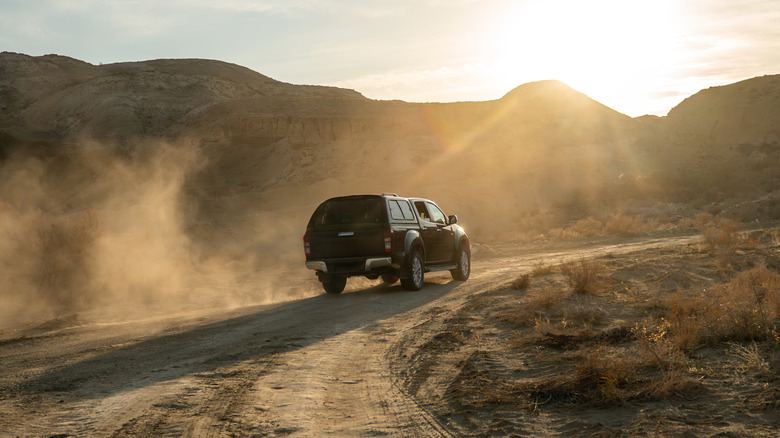
Continental's TerrainContact family also took home top honors in the all-terrain truck-tire category with its A/T rubber. (In this context, the TerrainContact A/T tires are engineered for "all-terrain" driving and the H/T refers to "highway-terrain.") Unsurprisingly, the key factor distinguishing the two is their tread design, since A/T tires need unique patterns better suited to grabbing rough ground or loose sand than smooth freeway travel. Indeed, on-road noise is one of the major downsides of all-terrain tires, making the performance of the TerrainContact A/T that much more impressive — it was the only all-terrain tire to nab the very top score in the noise category for CR's rankings.
Further highlights included above-average results for dry braking, handling, and resistance to hydroplaning, and the Continental tires were called out for their relatively long tread life, as they're projected to last for up to 65,000 miles. Just be aware that the same estimate for CR's smart alternative — the Michelin LTX A/T 2 — is 80,000 miles. Moreover, the Michelins garnered much better ratings from their owners than the Continentals. Since the two brands had essentially the same overall scores, with Continental ahead by a single point, the Michelin benefits must have helped make up for the LTX's poor showing in the noise category and a price $50 (per tire) higher than for the TerrainContact rubber.
Snow/winter tires
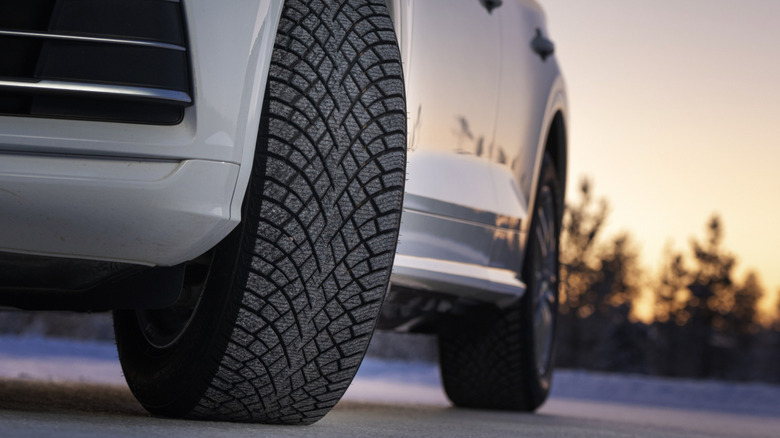
Regular Jalopnik readers know that none of your winter driving hacks beat simply buying winter tires. You can chalk a lot of that up to the way the rubber in the tires is formulated, with snow/winter tires needing to stay malleable enough to hold the road even on days when the temperature remains below zero. The thing is, this shortens how long their treads can hold up, and with that in mind, snow/winter tires are usually sold without tread wear warranties — nor does CR test these tires for projected tread life.
For the frigid times of the year, Consumer Reports lists two top choices, the Hakkapeliitta R5 from Nokian for crossover-style SUVs and the same brand's Hakkapeliitta R5 SUV for trucks and other sport-utilities. Both were lauded for their excellent performance in the snow-traction and ice-braking tests, as well as for rolling resistance. That last achievement is notable here because, as Consumer Reports indicates, most snow/winter tires can't score that high.
The Hakkapeliitta R5 then extends its advantages with above-average grades for dry braking, resistance to hydroplaning, ride comfort, and noise. True, the "SUV" version was considered below average for wet braking, but here CR explains that that score is par for the course among competing tires.
The smart alternatives? CR likes the Continental Viking Contact 7 and Michelin X-Ice Snow as worthy options to the "regular" Hakkapeliitta R5 tires — backed by top scores for rolling resistance — while the GT Radial IcePro SUV 3 was the backup choice for the R5 SUV tires, based on a combination of low cost and better braking results.