

Volkswagen's TSI Vs. TFSI Engines: The Main Differences Explained
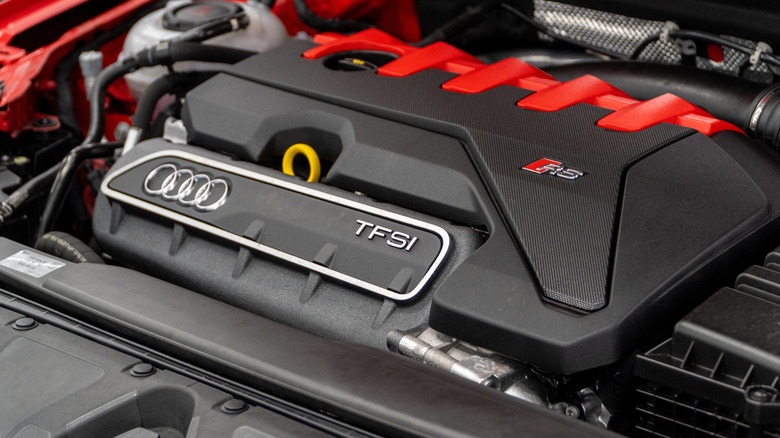
Even if you're in the market for a modern Volkswagen or Audi, you might not be familiar with Volkswagen engine nomenclature. If so, you've likely found yourself staring at engine badges and wondering why one says TSI and another says TFSI. The two acronyms look almost identical, sound almost the same when you say them out loud, and sit on cars powered by engines that feel remarkably similar to one another. Still, somewhere along the way, someone decided the extra "F" was worth printing on an engine cover — and that decision has confused enthusiasts ever since. So, what are the differences between the two, and is Audi's TFSI really more than just a badge?
TSI stands for "Turbo Stratified Injection" while TFSI stands for "Turbo Fuel Stratified Injection". Both describe direct-injection turbocharged gasoline engines developed by the Volkswagen Group. In short, the extra "F" (for modern engines) means nothing mechanical; it's merely a branding distinction between Audi and the rest of the VW Group. The long answer, however, involves two different engine families, some engineering upgrades, and a few notorious reliability headaches that every used-car buyer should know about before buying.
It's mostly just a branding game now
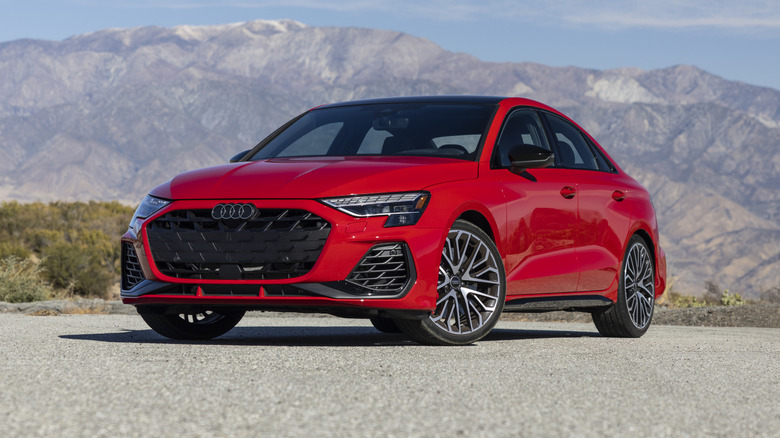
Here's the thing that trips people up: TFSI is only used by Audi. It's essentially Audi's way of underlining its premium positioning within the Volkswagen umbrella. There isn't really a practical difference between a 2.0-liter TSI and a 2.0-liter TFSI engine; they likely even share engine codes. In plain terms, it's the same engine in a different jersey.
However, in the past, the naming conventions were a little more interesting than that, loosely tracking a generational shift in the hardware department. The TFSI badge first appeared prominently on the EA113 engine family, which made its debut in the Audi A3 Sportback in 2004. The EA113 was then used as a basis to develop the 2006 EA888, the first two-liter, four-cylinder engine to carry the TSI badge.
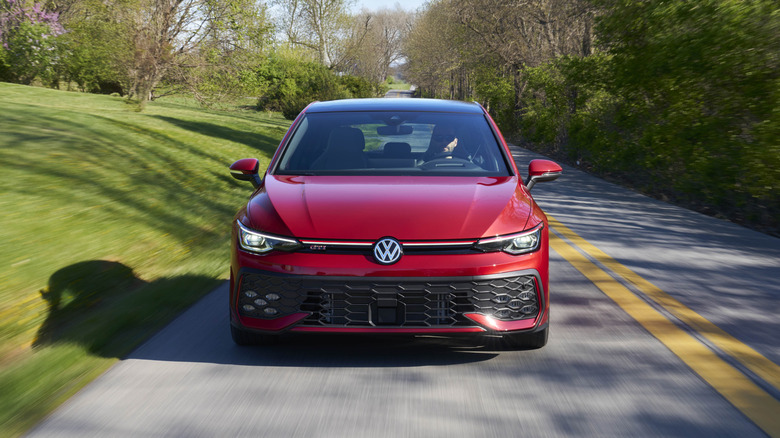
Most notably, the EA888 ditched the EA113's rubber timing belt entirely in favor of a roller timing chain – a meaningful durability upgrade that eliminated the need for scheduled belt replacements. The engine is still rocking strong, and it can be found in the 2025 Audi S3 wearing the TFSI badge, or in a "hot" R-Line VW Tiguan Turbo wearing the TSI badge. In other words, for the modern era of the EA888, the only difference between TSI and TFSI is pure nomenclature.
Which one should you care about?
The EA888 engine has been revised multiple times since it came out. This allowed VW to constantly improve it, therefore making it one of the most reliable turbocharged engines you can get. That said, there are a few things worth checking on any used example. PCV system problems can lead to increased oil consumption, and carbon buildup on intake valves is a known downside of direct injection. First- and second-generation EA888s (2007-2011) are the ones to approach with the most caution; certain third-generation and newer versions are more dependable because they also use dual injection, which helps to eliminate carbon buildup.
The TSI and TFSI badges also appear on engines well beyond the EA888. The smaller EA211 series carries the TSI name in entry-level models like the Polo and Golf. Unlike the EA888, it uses a timing belt rather than a chain. With these, be sure to watch for (coolant) water pump leaks on early units, as well as carbon buildup since it's also a direct injection engine. Audi's 2.5 TFSI inline-five, found in the RS 3, is another TFSI engine with a devoted following. It's known for its baby V10 sound and strong reliability. Still, leaks and turbocharger issues are worth looking out for in higher-mileage examples.