

A P-Pump Conversion Kit Could Be The Answer To Upping Your 24V Diesel Cummins' Power
Founded in 1919 by Clessie Cummins — with financial help from moneyman William Irwin — the company now known simply as Cummins, Inc. has grown into an internationally-recognized leader in diesel technology. That reputation is helped by products like the iconic 5.9-liter I6 truck engine that, by the 1989 model year, had found its way from medium-duty commercial trucks to the 2500/3500 HD versions of Dodge Ram pickups. (This was back before the two split in 2009, when Ram and Dodge were part of the same brand.)
Of course, the basic engine did change over time. It evolved from the original 12-valve setup to a 24-valve configuration for what was called the 1998.5 model year. The updated engine delivered upgraded performance, and it was further supported by a new fuel-injection pump, as well. Out was Bosch's proven P7100 inline injection pump — aka the P-pump — and in was the VP44, also from Bosch. But that new pump was not without its problems, which is why you might want to avoid certain years if you're buying a Cummins 5.9-liter motor.
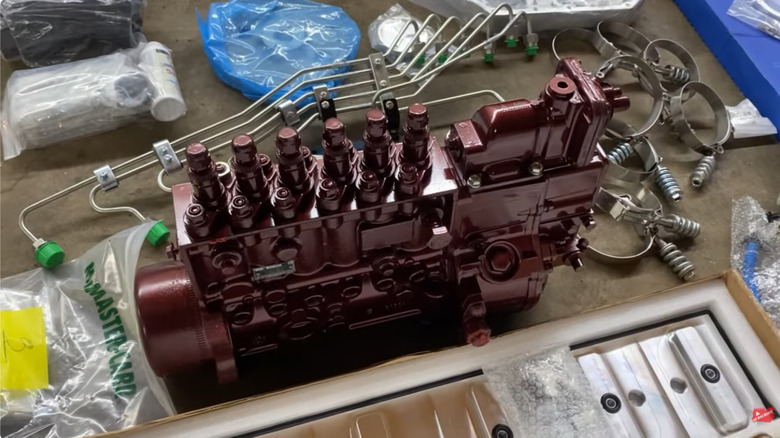
The good news? At some point, folks realized it was fairly easy to get the newer engines to run on the older injection setup with a P-pump conversion kit. And, on top of increasing its reliability, using this kit could also boost your 24V's power massively. For example, a properly tuned P-pump can break out an extra 100 horses from a Cummins motor — without breaking your bank account.
P-pump pros and cons
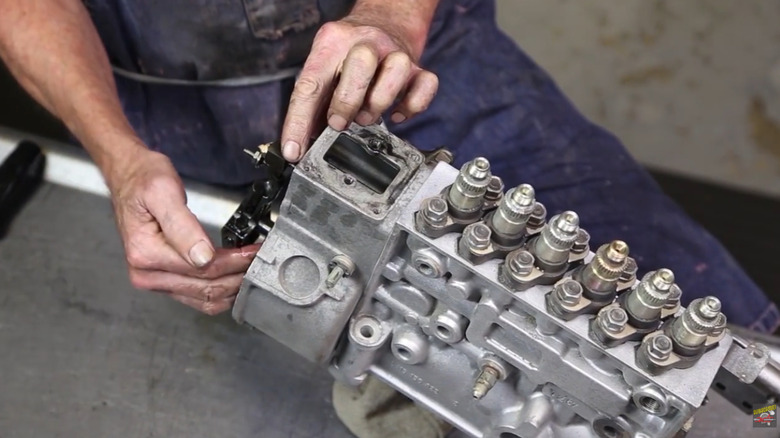
Right off the bat, the P-pump has a big-time advantage in terms of how much fuel it can inject compared to the V44. The former, with individual injectors for each cylinder, can handle 650 ccs of fuel with minor mods. In some cases, that number has climbed close to 1,000 ccs. The V44, on the other hand, is limited to about 600 ccs even with performance-focused enhancements. That's because of its rotary-style injection system, which uses a single distributor for injection to all cylinders. At the same time, pairing the older injector system with the newer cylinder heads — featuring four valves per cylinder rather than two — can add more air into the mix. Increasing both the amount of fuel and the amount of air going into the cylinders translates into getting more horsepower out of them. Some engine builders have even squeezed 1,000 horses from P-pumped Cummins engines.
True, the VP44 had advantages of its own, but they were vastly outweighed by their issues. For instance, the brain of the VP44, used for computer-controlling the electric operation of the system, turned out to be prone to heat damage. As for the fuel distributor, its rotor tended to seize up in certain common conditions, and lift-pump failure commonly prevented the VP44 from being properly cooled, was a regular occurrence as well. With that in mind, the 5.9-liter engine isn't the only modern one from Cummins that can enjoy a P-pump swap. Folks have also started doing them to 6.7-liter Cummins motors, like the one found in the diesel-powered 2027 Ram Power Wagon that comes stock with more than 1,000 pound-feet of torque.