

Oliver Bearman's 50G Crash Could Force Changes To F1's Divisive New Cars
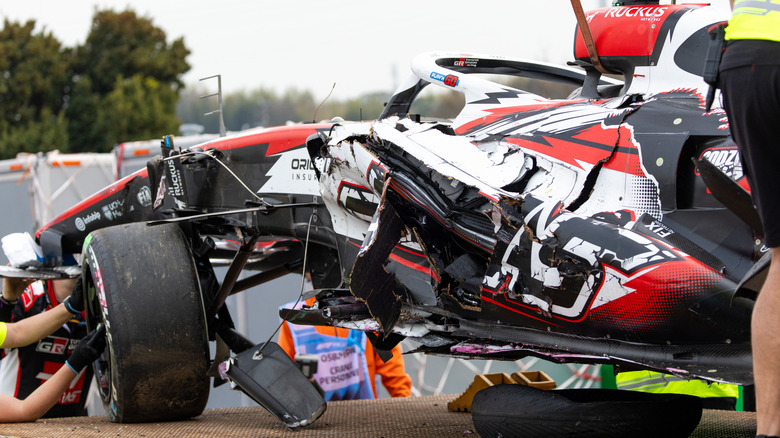
The decisive moment of Sunday's Japanese Grand Prix came on Lap 20 when Haas' Oliver Bearman crashed trying to avoid the energy harvesting Alpine of Franco Colapinto. While the 50G impact helped Kimi Antonelli win the race, the crash will have ramifications for Formula 1 far beyond which driver took the victory at Suzuka. The drivers' concerns over the new power unit regulations have only been amplified after the race, forcing the sport's governing body and commercial rights holder to respond.
The incident was provoked by a 27-mile-per-hour difference between Bearman and Colapinto as both drivers approached Spoon, Turns 13 and 14. According to Autosport, Alpine's energy deployment strategy didn't feature any battery use through the long sweeping Turn 12. Bearman, on the other hand, was using his boost button to attempt a pass. Colapinto legally covered off the inside line, but the Haas driver didn't expect to reach the Alpine so quickly. Bearman cut the other way to avoid a collision, went off into the grass, and lost control.
FIA hints that change is coming
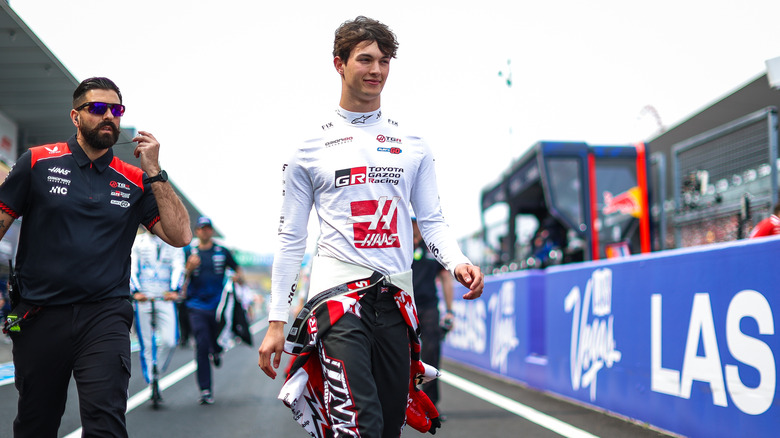
The Haas car slid back across the track and slammed into the outside barriers. Thankfully, Bearman climbed out of his destroyed car and limped away with only a bruised right knee. The 20-year-old British driver noted that the entire field needs to be prepared for the type of overspeed situations that caught him off guard.
The FIA released a statement in response to the crash with an equally cautious stance. The body reiterated that all of F1's stakeholders agreed that "a structured review would take place after the opening phase of the season," hinting that change is coming, but it won't solely be due to Bearman's crash. The statement continues:
"Any potential adjustment, particularly those related to energy management, require careful simulation and detailed analysis. The FIA will continue to work in close and constructive collaboration with all stakeholders to ensure the best possible outcome for the sport and safety will always remain a core element of the FIA's mission. At the stage, any speculation regarding the nature of potential changes would be premature. Further update will be communicated in due course."
F1's drivers are in open revolt
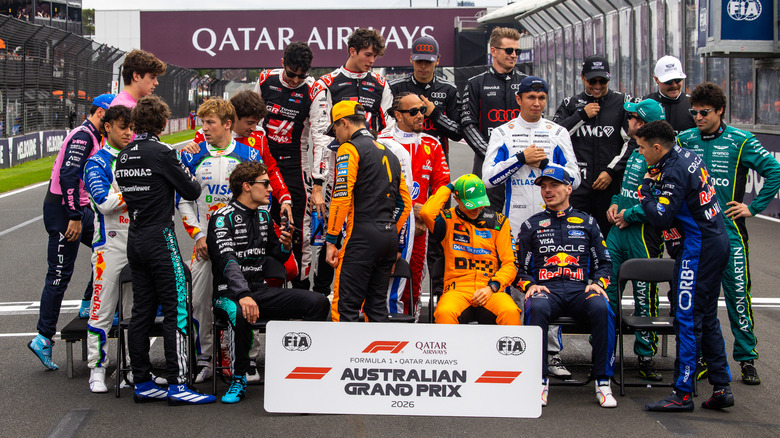
The disgruntled drivers in the field are taking Bearman's crash as the sign that they were right about this season's cars and their potential closing speeds. Carlos Sainz told ESPN that the FIA and Formula One Management resisted making changes because of how exciting the racing has been. The Williams driver and Grand Prix Drivers' Association director said, "I am hopeful that we'll come up with something a bit better for Miami." The Spaniard isn't alone in his dissatisfaction with sport's current state. Max Verstappen told the media that he's considering retiring from F1 after this season if significant changes aren't made. It's not the first time he's threatened to retire over these rules.
F1's stakeholders are right to be hesitant to make changes. Despite what a vocal minority of online fans would have you believe, this is the best wheel-to-wheel racing that F1 has had in at least a quarter-century. There are problems with push laps in qualifying, but the Sunday product is great. Even the podium finishers noted in the cool-down room that it was easier to follow one another compared to the typical Suzuka procession.
F1 has a month-long break to figure out what its immediate future looks like. After the cancellation of races in Bahrain and Saudi Arabia, F1 will return for the Miami Grand Prix on May 3.