

How To Prevent Engine Block Hot Spots

So you've kept your coolant topped off and the temp gauge on your dash looks good, but your engine is still showing signs of overheating. What's the deal? Your engine could have developed one or more hot spots. Engine block hot spots are localized, isolated, overheated areas on your block. They can cause a lot of damage and they can be sneaky, because sometimes they can happen even though your coolant appears full and the needle on your temperature gauge is standing in the middle, where it's supposed to be.
The damage from hot spots can be catastrophic. You could end up with cracked cylinder heads or a blown head gasket, as well as pre-ignition or detonation in a cylinder, which can ruin rod bearings, pistons, connecting rods, main bearings, and crankshafts. Hot spots commonly show up between valves, around cylinder heads, in cylinder walls, and other locations.
But there are things you can do to help prevent engine block hot spots. For one thing, keep up maintenance of your cooling system, which means all parts of it, going beyond just topping off the coolant. For example, properly bleeding the coolant system after draining is vital to ensuring that the new coolant flows properly. Check your thermostat and change it when needed. Other things you'll want to do are use gas with enough octane and pay attention to your airflow and timing when tuning an engine.
What causes hot spots?
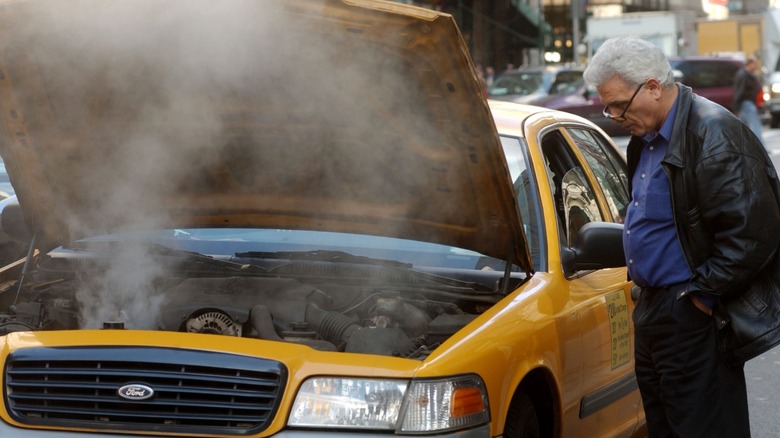
To fully understand how to prevent hot spots, you have to know what causes them in the first place. Hot spots are often caused by the coolant not fully reaching an isolated area on the engine block. This can happen when air pockets have formed in the coolant lines, partially blocking the flow of coolant. This, in turn, can cause your coolant level to look full when it might actually be low. So now, not only is the flow of coolant blocked, but you're not topping it off enough because you think it's fine.
Hot spots can also be caused by a weak radiator cap, coolant that's just a little low, or parts of the coolant system being clogged with rust or debris. Use of the wrong coolant or the wrong mix of coolant and water can also be the culprit.
Some causes have nothing to do with the coolant system and may have to do with detonation in the cylinders or pre-ignition spikes. These are things you especially need to watch for if you're tuning your engine. Using gas that doesn't have enough octane can lead to this, so learn when and when not to use premium gas. An air-fuel ratio (AFR) that is too lean at wide-open throttle (WOT) can also cause hot spots. There are other factors that can cause hot spots, but these are some of the common ones.
How to protect your engine from hot spots

Obviously, one way to prevent hot spots is to prevent the development of air pockets in the coolant system. Pour slowly when topping off or filling the coolant reservoir or radiator. If you've drained the coolant, make sure the lines are properly bled before refilling it. Conducting a pressure test when you see possible signs of air pockets – such as temperature gauge going up and down, overheating, gurgling noises, heater not working — can reveal multiple issues. This would include the locations of leaks, as well as a weak radiator cap. You'll want to fix those problems as soon as you notice them.
And, of course, there's the coolant itself. Always use the recommended coolant for your system, in the correct mix. Bleed the system properly after draining the coolant, and don't pour cold water into an overheating engine. Do regular coolant changes, since there are multiple benefits to flushing your radiator. Also, it wouldn't hurt to check your caps, thermostat, and hoses from time to time.
In addition to maintaining your coolant system, pay attention to the other things that keep your engine from overheating. Use the right viscosity of motor oil, for example. Make sure you're filling your tank with the right octane fuel. If you're tuning your engine, watch the timing and the AFR at WOT. Whatever you do, don't rely solely on your temperature gauge. It typically gauges the temperature at just one spot. But hot spots are localized, and can go undetected.