

Why Doesn't Diesel Exhaust Fluid (DEF) Work In Extreme Cold?
The short answer to why Diesel Exhaust Fluid doesn't work in the cold: It freezes at 12 degrees Fahrenheit. Comprised primarily of deionized water and urea, DEF serves to help make large diesel engines emissionscompliant. Although, beyond subzero temperatures, DEF systems don't always work as intended, with DEF faults being among the some of the most reported 3.0L Duramax problems, for example.
Modern diesel engines still outsell gas in heavy-duty trucks for a variety of reasons, including their enhanced efficiency. However, there are still certain byproducts of the diesel combustion process that create pollutants, particularly nitrogen oxides (NOx). NOx contributes to environmental conditions like smog, so additional emissions technology has been developed in the form of Selective Catalytic Reduction (SCR), which utilizes DEF.
The problem comes from when the SCR attempts to inject DEF into the exhaust stream, where it's meant to vaporize and neutralize NOx, In frigid conditions, it can't, since the liquid has transformed into a solid popsicle. This can then trigger a heavy-duty truck to go into limp mode, which severely restricts performance capabilities or prevents you from restarting the engine until DEF is flowing freely.
DEF tanks come equipped with heating systems, so why is freezing still an issue?
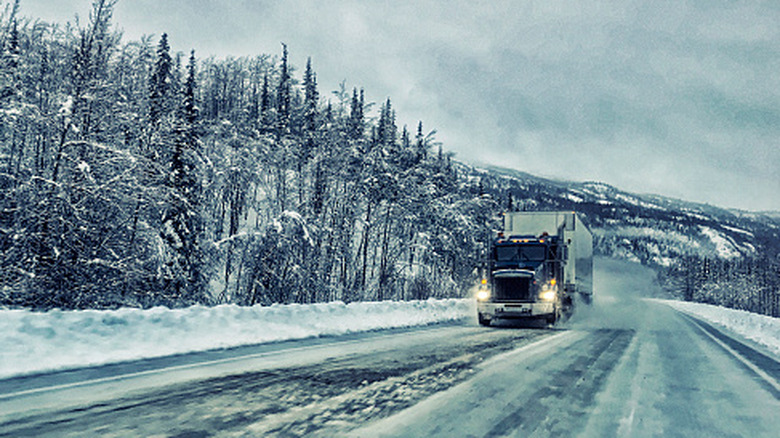
Often, a built-in heater is incorporated into the DEF tank from the factory. It works by either using a heating element within the unit or heat from the engine coolant to keep the fluid thawed. The issue is that the tank is only heated when the vehicle's engine is running. As such, in extreme cold, parking for even a short span can result in the fluid beginning to solidify. Of course, it isn't just DEF that reacts badly to these conditions; engine oil doesn't like sub-zero temperatures, either.
However, some truckers up north can get warnings even when the vehicle is in operation. The built-in heater could end up being locked in a battle with the cold to keep the DEF from hardening. TheNorthNova01 on Reddit explained, "Twice this week...the Engine will derate in 3hrs warning [came] up on the dash. DEF systems were not made for northern Alberta."
Steps can you take to help prevent your DEF from freezing, and a few things to avoid
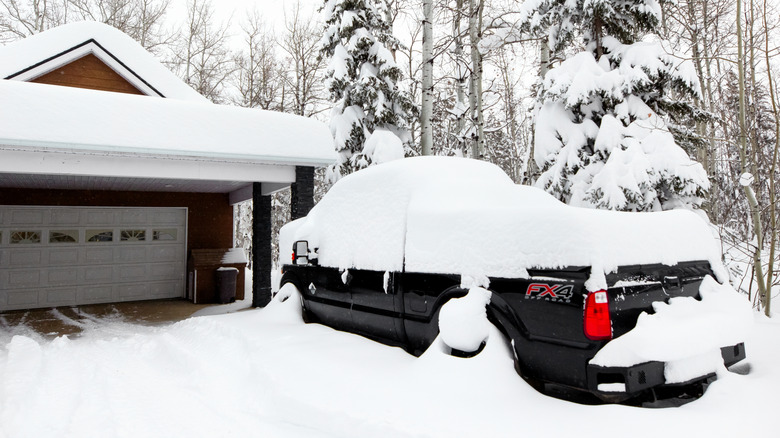
One of the best ways to keep your diesel emissions system from succumbing to the elements (especially in the northern U.S.) is to park your truck in a heated garage. The DEF fluid will remain warm throughout the night and be ready to function the moment you fire up the truck's engine. Of course, not everyone has the luxury of a temperature-controlled space for parking, so alternatively, you might consider aftermarket heating solutions, such as a warming blanket. These products could help prevent freezing, or at least reduce the amount of time needed to allow the built-in heater to thaw everything out on startup.
While it might seem beneficial to add a bit of antifreeze to the DEF tank, it's actually very harmful to the system. DEF is made using a very specific mixture of non-toxic ingredients, which is then compromised with the addition of antifreeze. This can cause the system to function poorly and potentially even damage the emissions control components. The other thing to keep in mind when dealing with extreme cold is that DEF expands when it freezes. If you overfill your tank, that expansion can result in cracking, leading to fluid leaks and requiring a tank replacement.