

Don't Worry, They're Just Running Out Of Petrol In Australia
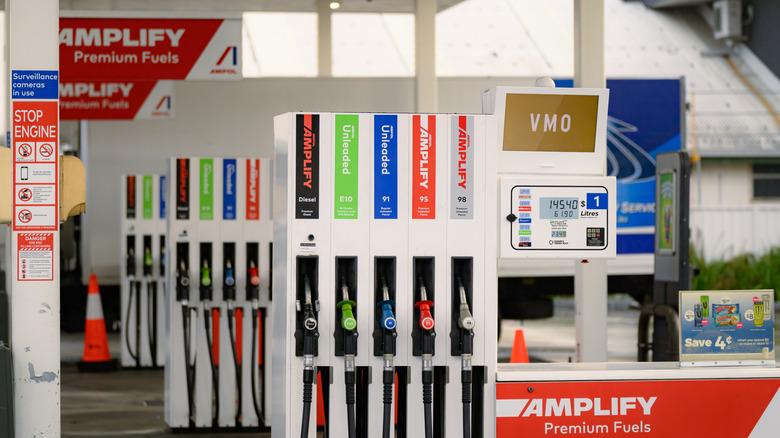
Everything's fine in Australia. Hundreds of gas stations being out of diesel or at least one grade of petrol, according to The Guardian, is perfectly normal. At least, it will be quite soon, even if the war in Iran ended immediately.
Energy Minister Chris Bowen reported specific numbers to Parliament as of Monday, March 23. ABC reports that in New South Wales, 164 stations were out of diesel, and 289 stations had run out of at least one grade of gas. That's a little more than 12% of the 2,400 stations in the state. Victoria had 162 stations out of 1,600 where at least one grade of fuel had run out. In Queensland, 55 stations had no diesel and 35 were out of at least one type of gas, as well as 46 out of 700 stations in South Australia and six out of 770 stations in Western Australia. Tasmania had one station out of diesel and six out of at least one type of gas.
Additionally, Bowen said that while no scheduled tanker shipments have yet failed to arrive in Australia, six that were scheduled for April have been cancelled. These are likely the direct result of Iran's effective closure of the Strait of Hormuz, where 20 percent of the world's oil supply normally flows through. These deliveries head mainly to South Asia and Australia, which are becoming the first places to feel the direct effects of the strait's closure. Australia has arranged alternative sources for some of these canceled deliveries, but not all.
It's only going to get worse
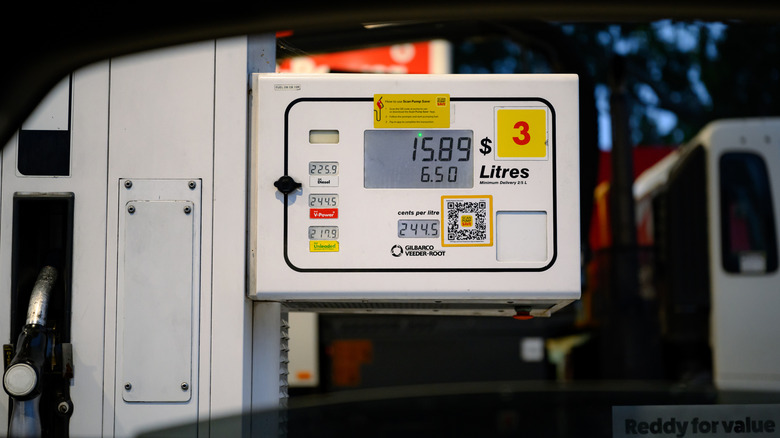
Fatih Birol, Executive Director of the International Energy Agency, says this is only the beginning of the fallout from the war in Iran and its effects on fuel prices. From SBS News:
He said the situation was worse than the two oil crises of the 1970s combined, as well as the crisis caused by the Russian invasion of Ukraine.
"At that time, in each [oil] crisis, the world has lost about 5 million barrels per day, both of them together 10 million barrels per day. And after that we all know that there were major economic problems around the world. And today we lost 11 million barrels – so more than two major oil shocks put together," he said.
"Plus after Russia's invasion of Ukraine, the gas markets – especially in Europe – we lost about 75 billion consumer metres. And as of now, as a result of this crisis, we lost about 140BCM, almost twice.
"The situation is, if we want to put in a context, this crisis as it stands now [is] two oil crises and one gas crash put all together."
The IEA has recommended that Australians consider working from home, using public transportation, and reducing speed to conserve fuel. Despite the current fuel shortages, the Australian government has not mandated any of these measures, partly due to the recent memory of strong resistance to COVID-19 travel restrictions. Working from home is also not possible for many Australians, according to another SBS report, and public transportation is not widely available outside major cities. That sounds a bit like the U.S.
While fuel shortages have not hit here in the States yet, we're part of a global economy. Though we do not depend as much on the Middle East for oil as we did in the 1970s, the skyrocketing cost of fuel is already hitting us hard, and doesn't look likely to change anytime soon.