

How Spark Plugs Can Improve (Or Devastate) Your Fuel Economy

As you may know, spark plugs play a very important role inside a gasoline internal combustion engine. Since they are a key player in the combustion event, the chances of them getting degraded are relatively high, especially as the engine ages. Factors like carbon buildup (often from oil leaking past the piston rings) and electrode wear can affect ignition quality and, in turn, fuel economy.
If you suspect fouled spark plugs, chances are your engine is likely experiencing inefficient combustion. If the intake charge isn't burning properly, the engine is going to consume, or rather, waste fuel. Ergo, reduced gas mileage. Not only that, but you'll likely experience drivability concerns, like loss of power, sluggish acceleration, misfires, and so on. Motorists reason that changing those worn-out spark plugs can improve fuel economy, in addition to bringing the engine back to proper working order.
However, as you would probably guess, the new plugs aren't necessarily making your engine any more efficient than it already was from factory. They're simply restoring things to normal. Unless, of course, they are of the Iridium variety. It's widely believed that iridium plugs can potentially improve gas mileage by helping the fuel burn more completely. Further supporting the argument is Denso, claiming its Iridium plugs can improve fuel efficiency by 1-3% compared to traditional spark plugs.
Spark plug types
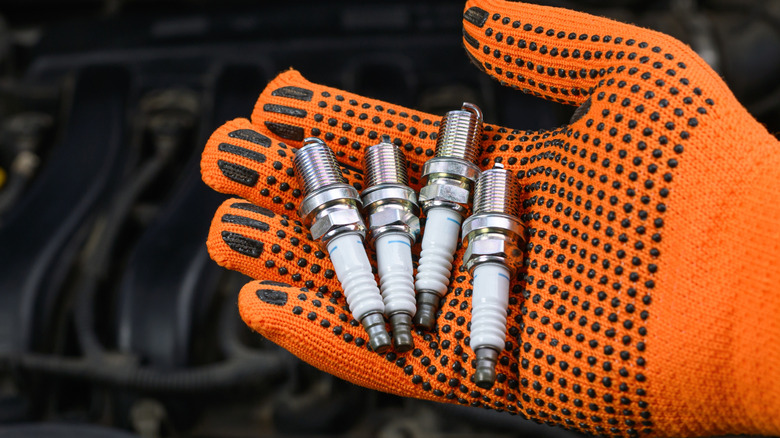
This brings us to the copper vs platinum vs iridium debate. Copper plugs are usually the cheapest, while iridium is the most durable. Platinum is a happy middle ground. Durability is the key deciding factor between all three spark plug types. Copper plugs tend to last roughly 30,000 miles before requiring a swap, while platinum plugs typically cover 60,000 miles or more. But iridium plugs have the longest lifespan — over 100,000 miles — depending on the kind of usage.
Some people argue that swapping to Iridium plugs improves horsepower, which, truth be told, is just one of many myths surrounding spark plugs. It's worth pointing out that no matter the spark plug type, you risk the chance of encountering poor efficiency if you keep ignoring your engine and the symptoms it can develop. Look out for rough idling and lackluster performance, while reduced mpg figures are also a reliable marker of fouled spark plugs.
When replacing plugs, however, make sure to follow the owner's manual. You don't want to downgrade to copper plugs on an engine designed to use iridium plugs. Iridium is often favored in performance applications (and in modern direct-injection gasoline engines) largely because of how consistently it can withstand high temperatures and pressures.
Iridium for the win?
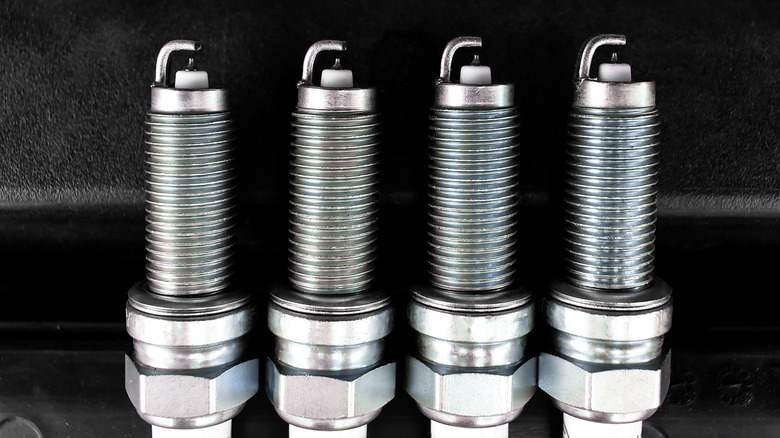
Apart from Denso's claim, however, there's one anecdote of Iridium plugs and their effects on fuel efficiency, demonstrated in this YouTube video by Driving Intelligence. Judging solely on the data from his Mazda's onboard computer, he reckons there might be some efficiency gains. Before changing the old plugs (also Iridium), the Mazda returned a 33.9 mpg average, which jumped to over 36 mpg after swapping to the new ones. But he's not betting big on these fuel economy numbers, and the difference wouldn't likely be as dramatic over a longer test period.
We reckon the video sheds more light on the importance of changing spark plugs rather than Iridium having some form of mileage superiority. Understand that your driving style, tire pressures, and how well you maintain your car typically have a more dramatic impact on fuel efficiency than just the spark plugs. Besides, 1-3% is hardly noticeable, but it does add up over time, though. And it will make a noticeable difference to drivers who cover more miles, too.