

Your Insurance Deemed Your Car Totaled: Now What?
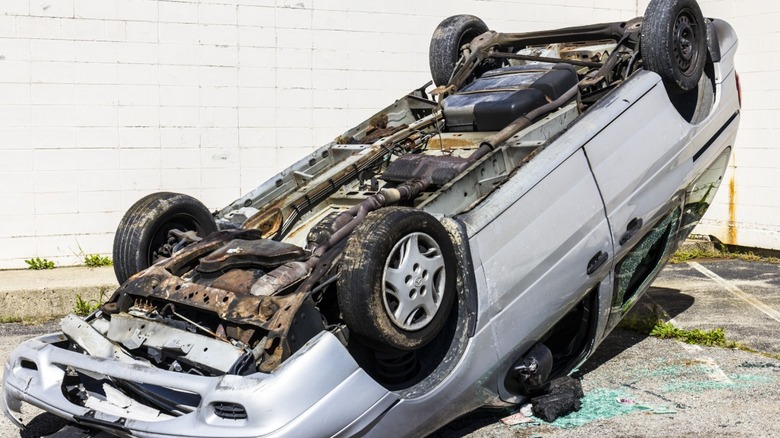
So you've been in a wreck and now you're hoping the insurance company will take care of you and fix your car. But then you receive news from the carrier — it has decided your car isn't worth getting fixed. It's totaled. What does that mean? And what happens now?
It means that instead of paying to get your car repaired, the company will basically buy the car from you for what it was worth at the moment before the accident. If you had to file the claim with your own insurance, the amount they pay to you will typically be the value of the car after the deductible is taken out. In some cases, instead of paying out cash, the insurance company may find a similar vehicle for you. In either case, the car isn't yours anymore. It belongs to the insurance company.
If you still owe on your car, the lender is generally paid first. If you owe less than your car is worth, you'll be paid whatever is left over after the loan is paid off. What if, like a lot of people nowadays, you owe more than your car is worth? You're still required to pay off the rest of the loan.
We should note that laws vary by location, so things might be slightly different where you live. And sometimes there are options if you want to keep your car or you think the insurance company has undervalued it.
Can you keep your car?

Generally, when the insurance company declares your car is totaled, the carrier takes it and sells it for salvage. This makes sense to a certain degree, since the company pays out for the car's total value. But what if you're attached to your car and would like to keep it? Do you even have that option?
Laws vary from state to state. Sometimes, if you let the insurance company know you'd like to keep your car, the carrier will leave it with you and compensate you for the damage, minus what they could have sold the car for to a salvage yard. Maybe that seems acceptable, depending on how attached you are to your car. After all, you get to keep your baby and you still get a little money for the damage.
But not so fast. The insurance company is often required to report the car to the state as totaled. That means you can't just continue driving the car. You'll still have to fix it enough to pass inspection. The state will often issue a salvage or rebuilt title for it. (Here are more details on what a salvage title is.) And you might not be able to get full-coverage insurance for it any longer. You may have to settle for liability only.
What if your car is worth less than you owe on it?
Insurance will pay you what the company concludes your car is worth, and only what it's worth. What if you still owe more than it's worth? You're still required to pay off the loan, even though you no longer have a car to show for it. It may not seem fair, but you're on the hook for the difference between what the insurance pays (the insurance check will go to the lender) and what you owe on the car. So if your car was worth $12,000 before the wreck, but you still owe $15,000, you will owe the lender $3,000.
Sometimes insurance companies short-change payouts for totaled cars. So challenge your insurer if you think it undervalued your car. You can also negotiate with the insurance company. You'll need to do your research on your car's value and have it ready. If the insurance company won't move, you can file a complaint or hire an attorney. If you're fortunate, you may end up with a settlement that at least covers your loan.
A good way to prevent this scenario is to sign up for gap insurance. Gap insurance pays the difference, or gap, between the value of your car and what you still owe, if you owe more than it's worth. Of course, knowing about gap insurance does you no good now if your car is already totaled, but it's definitely something you should consider going forward.