

Why Shouldn't You Use Multi-Vehicle ATF In Your Automatic Transmission?
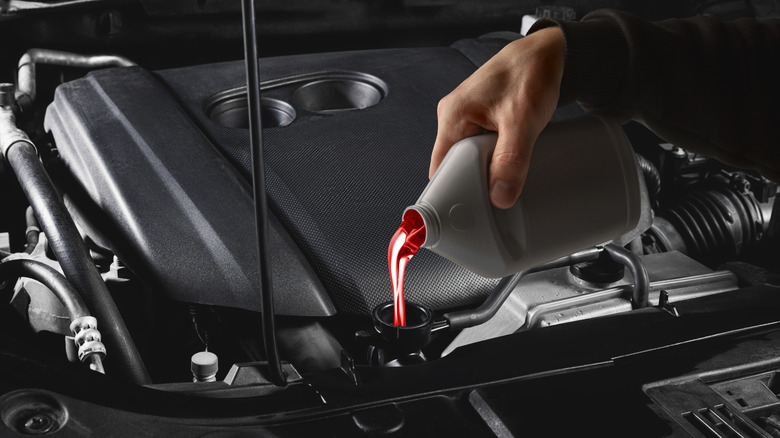
Not all automatic transmission fluid (ATF) is created equal. Different transmissions in different vehicles have different requirements. Each manufacturer develops the transmissions of its vehicles to perform in specific ways, which means they need transmission fluid that can deliver on those specific goals — whether they're for efficiency, smoothness, or performance. And fluids have very specific base oils and additives selected to meet those requirements.
Unfortunately, many auto repair shops often use what's called "multi-vehicle ATF," which is supposed to be a one-size-fits-all-style of fluid. This is supposedly meant to help them service a wide number of vehicles at once. However, when it comes to transmissions, there really isn't a one-size-fits-all fluid, and multi-vehicle ATFs lack the specific qualities your transmission needs to stay as healthy as possible. That's not to say that multi-vehicle ATF is inherently bad or will certainly and immediately break your car, but it can cause increase wear and tear in the long run even if you change it at regular service intervals.
What is multi-vehicle ATF and how does it work?
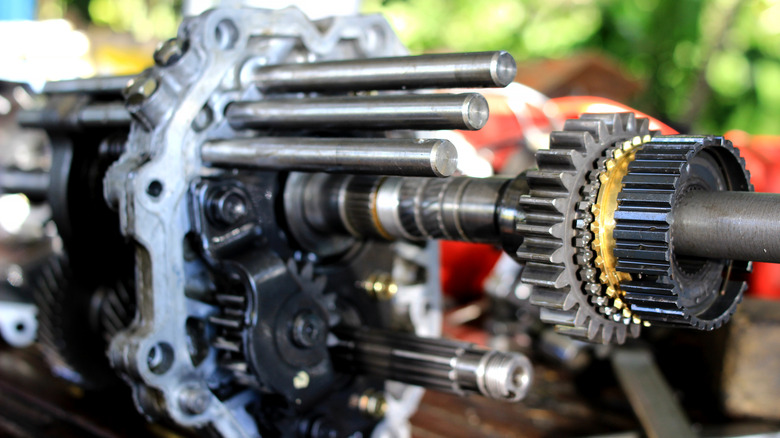
Originally, multi-vehicle ATF was developed so that shops didn't have to carry several different kinds of transmission fluids to service the many different vehicles that came in. There are several different transmission fluid specifications recommended by American automakers, but the three biggest current ones are Dexron VI, Mercon LV, and ATF+4. GM uses Dexron while Ford uses Mercon, and Stellantis/Chrysler uses ATF+. Other automakers from Europe and Japan develop their transmissions for different fluid specs, too, so multi-vehicle ATF was designed to work with a wide variety of them.
Some multi-vehicle ATFs are said to work for transmissions rated for both the latest Dexron VI and Mercon LV. For example, Valvoline has an ATF that claims to be "officially licensed for Dexron VI and recommended for Mercon LV" transmissions. It also clearly states that it's recommended for most GM and Ford vehicles. Other ATFs, however, are broader in scope, claiming to work with any and all transmissions fluid specifications. Mobil 1 Multi-Vehicle ATF, for instance, has an application list as long as a Cheesecake Factory menu, and includes every Dexron, Mercon, and ATF+ rating, as well as countless others for other brands.
Many ATFs, like the Mobil 1, also claim to be backwards compatible. In other words, they're said to work with older vehicles that recommend ATF specifications no longer in production. That can be attractive to owners of older cars who can't find transmission fluid that meets their older specs. However, to meet all of those widely varying specifications, multi-vehicle ATFs have to compromise in certain areas.
Here's why you should avoid multi-vehicle ATF and choose a more specific fluid
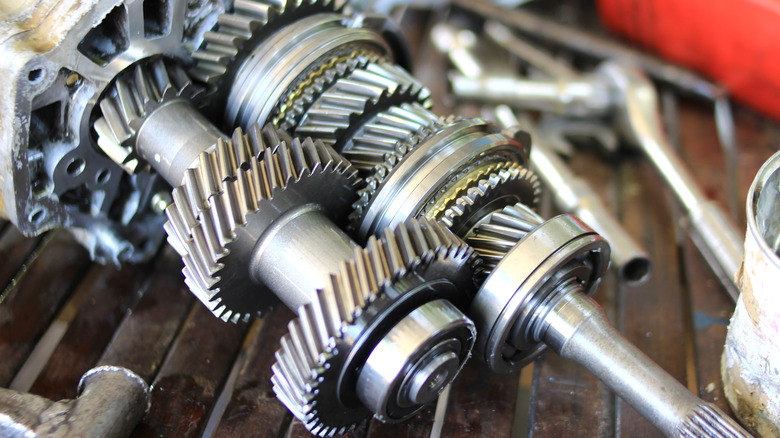
Admittedly, there was a time when less than a handful of transmission fluids could work in all vehicles. However, as automatic transmissions became more capable and more complex, more specific properties were required. Viscosity isn't the only aspect of ATF, even if it's the most discussed part. Automakers demand certain additives for heat management, friction durability, shift quality, oxidation, and even material compatibility. ATF interacts with most of the 1,000+ components inside a transmission, many of which are made of different materials, so it includes additives to ensure that none of those materials are adversely affected. And since each ATF specification goes about meeting those requirements differently, there simply can't be a once-size-fits-all — especially if you have a continuously variable or dual-clutch transmission instead of a normal automatic.
While multi-vehicle ATFs can do a serviceable job for a short time, there's no guarantee that they will function correctly. Some transmissions require specific levels of viscosity and heat management properties, allowing them to shift smoothly and correctly even when the fluid gets hot. Without those specific fluid properties, they can handle roughly, wear out more quickly over time, or even fail entirely, ultimately leading to a costly repair.
Furthermore, there are so many ways to get the correct automatic transmission fluid that it doesn't really make sense to use anything other than what's recommended by the manufacturer. Between auto parts stores, Amazon, or the million other marketplaces out there, you can easily find the exact fluid you need. It isn't always cheap, but it's better than risking an even more costly problem down the road by using a generic ATF that isn't fully compatible with your car.