

What's The Difference Between Platinum And Double Platinum Spark Plugs?

The primary difference between platinum and double platinum spark plugs comes from their construction. You're probably aware that spark plugs come in many types, and they're typically classified according to the precious metals of their electrodes. Ordinary copper plugs have a nickel alloy tip welded to a copper-core electrode, while platinum plugs have platinum tips infused in the electrode.
The nickel alloy metal in a copper plug will begin to wear out after around 20,000 miles. Copper plugs are more affordable and typically start at around $3-$8 each, but the fast-wearing nickel alloy electrode means you'll need to replace them more often. Platinum is a worthy upgrade over nickel alloy, enabling platinum plugs to last up to five times longer. Moreover, platinum is a harder metal, has a higher melting point (around 3,215 degrees Fahrenheit), and burns hotter to better resist fouling.
However, platinum spark plugs come in two general types. Single platinum has a platinum disc at the center electrode, while double platinum uses such a disc on both the center and ground electrodes of the spark plug. Platinum plugs cost around $4-$8 each, and you can expect to pay a bit more for double platinum since it uses more of the precious metal. The differences in performance aren't quite as notable, but certain types of engines actually need double platinum to handle their unique combustion style.
Choose double platinum for engines with waste spark ignition
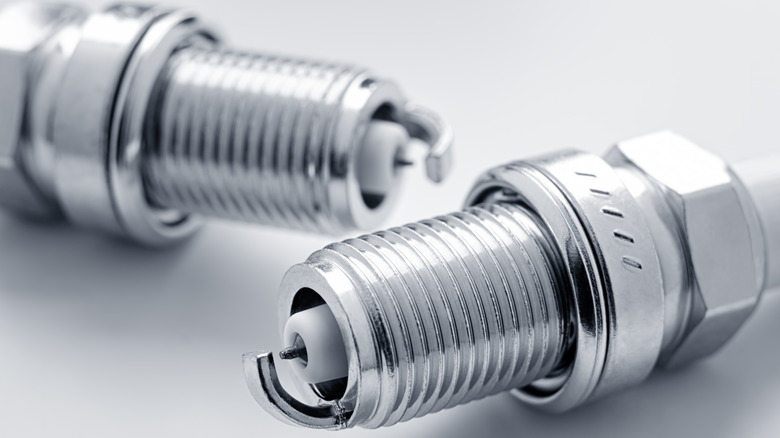
Engines with single-coil systems or electronic ignition would usually run on single platinum plugs. However, engines with waste spark ignition (or distributor-less ignition) require double platinum spark plugs to cope with the wear caused by the positive and negative polarities of the plugs. The internal combustion engine needs four strokes to complete a combustion cycle, and motors with waste spark ignition fire the spark plugs during the compression and exhaust stroke. That ignition is pretty much wasted when it's done during the exhaust stroke, which is how "waste spark ignition" got its name. Although it's unconventional in the way it operates, this method can deliver more precise ignition timings and is generally more durable and reliable than distributor-based ignition.
The downside: Waste spark engines need double platinum to cope with the added wear of firing the plugs twice. The ignition coils of a waste spark ignition have positive and negative polarities, just like the plug, and more wear occurs at different points of the plug depending on those polarities. Double platinum ensures both of those bases are covered, while regular platinum plugs would wear down more quickly at the electrode without the precious metal. Refer to your vehicle owner's manual to determine whether your car's engine needs platinum or double platinum plugs — and also pay attention to their hot or cold heat ranges. Keep an eye out for rough idling, misfiring, or hard starting, as neglecting to replace the spark plugs could lead to costlier engine damage later on.