

These Cars Made Similar Horsepower From Wildly Different Engines
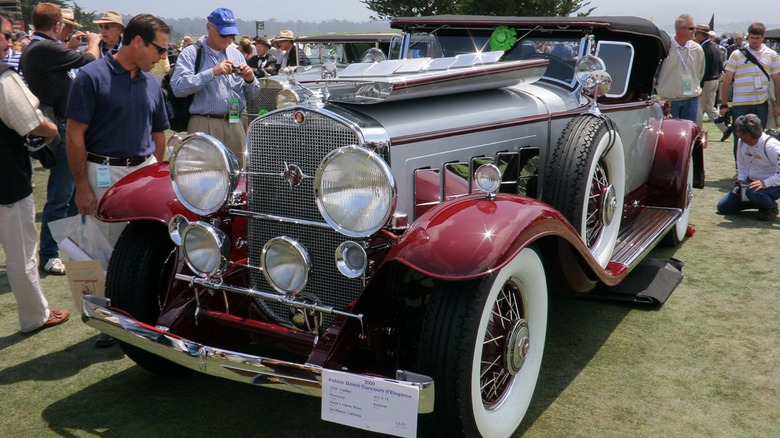
Some may be under the impression that the larger the engine, the faster the car. While power and size are not completely unrelated, it's not always true that more cylinders equal more power. That's especially true when comparing cars from different points in history. For instance, a turbocharged four-cylinder engine in the 1980s, like the one in the 1985 Saab 900 Turbo, may be able to reach 160 horsepower. But the 1930 Cadillac Roadster 452 got around the same amount of horsepower with a V16 engine.
The 300-hp spec seems to be one that's been achieved by all kinds of engines. The V10 Magnum engine found in some 1994 Dodge Rams boasted of 300 hp. The 1992 Chevy Corvette could do it with just eight cylinders. But most impressively, Toyota GR models can do it with only three cylinders.
Speaking of racecar-derived models, the 2017 Ford GT was rated at 660 hp with its EcoBoost V6, while the 2014 Lamborghini Huracán LP 610-4 and the 2020 Mercedes-AMG S65 Final Edition could barely breach 600 hp with 10 and 12 cylinders, respectively. Sometimes, an engine doesn't even need cylinders to compete in the horsepower game. The 1987 Mazda RX-7 Turbo II was equipped with a twin-turbocharged rotary engine that could reach 182 hp, more than the five-cylinder 2000 Volkswagen Golf IV 2.3 VR5, which could put out only 168. Then, there's the manual V8-equipped 1985 Mustang GT, which produced only slightly more power than the total system horsepower offered by a new Honda Civic hybrid.
The engines that have been rated at 300 hp are all over the place
So, as you probably know, Toyota has a motorsports division that goes by the rather whimsical name, Gazoo Racing. Aside from racing, that division takes what it learns from the track and develops high-performance production cars under the GR moniker. Two entries in the 2026 lineup are the GR Yaris (sold in Japan) and the GR Corolla. Each of these bad boys can crank out 300 hp. That may not seem like much for vehicles developed from racecars, but both of these cars do it with three-cylinder engines, which is pretty impressive. For more on these models, check out our review of the 2026 Toyota GR Corolla.
Compare that to the 1994 Dodge Ram. It came with five engine options, one of which was the famous Magnum. Dodge touted it as "the most powerful lineup of pickup engines." It should have been powerful. This 8-liter, 488-cubic-inch beast vas a V10. That's right, it had 10 cylinders. And how many ponies did that monster engine produce? You guessed it, 300. We know, it was the 1990s, and engines have become more efficient since then, but you'd think they could squeeze a little more horsepower out of all of those cylinders.
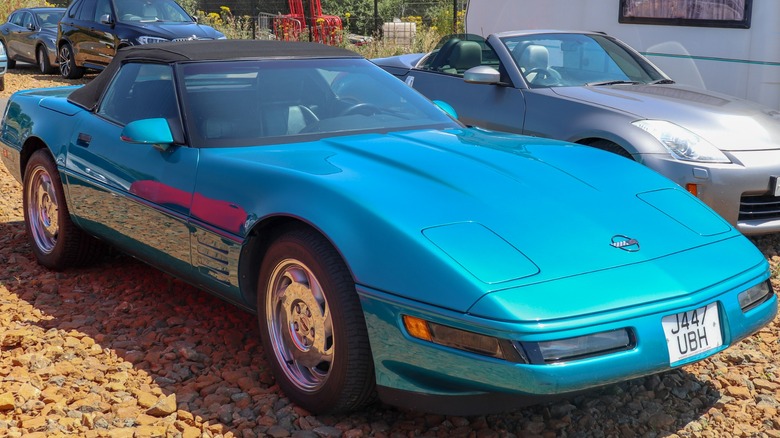
Even the Chevy Corvette model from a couple of years before this Ram could put out 300 hp with its base engine. The 1992 Corvette's 350-cubic-inch base engine had a comparatively modest eight cylinders. An upgraded option could get 375 hp.
We've come a long way (160 hp)
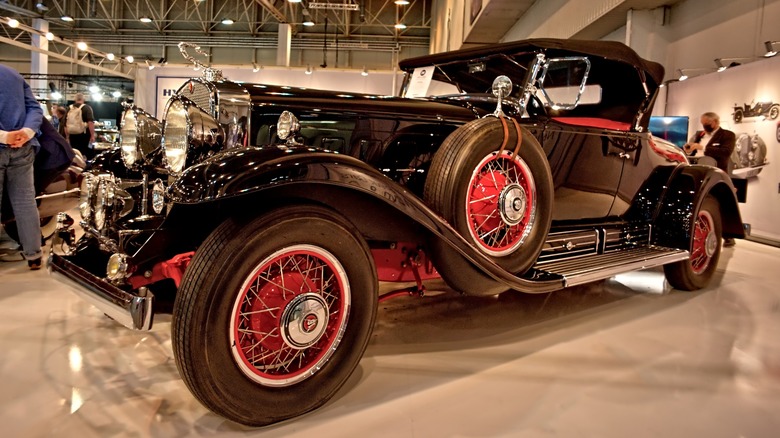
There seems to have been a time in automotive history when manufactures would say, "Hey, we've got more room in the engine bay, why don't we build more cylinders in the engine?" In 1930, Cadillac had a model with no fewer than 16 cylinders, kicking off the "multi-cylinder wars" of that era. The Cadillac V-16 Roadster 452 was equipped with a 7.4-liter engine that could produce 318 pound-feet of torque and a whopping 161 horsepower.
The copy in Cadillac's dealer brochure for this model was quite effusive about the new engine, which is what you'd expect from a sales brochure. It hyperbolically touted the Cadillac V-16 as capable of "performance such as the world has never witnessed." It added, "The sixteen-cylinder engine, designed and developed by Cadillac, is wholly new and expresses fully the contemporary conception of brilliant performance." You've got to love how copywriters wrote back then.
Flowery language aside, the power and efficiency of the 1930 Cadillac V-16 was a far cry from that of modern engines. As an example, we can fast-forward just 55 years to the 1985 Saab 900 Turbo. It also got 160 horsepower, and that was with just four cylinders. It got the same amount of horsepower as the 1930 Cadillac V-16, but with an engine that was one-quarter of the size.
A V5 and the Wankel twin-scroll turbo rotary engine (168 – 182 hp)
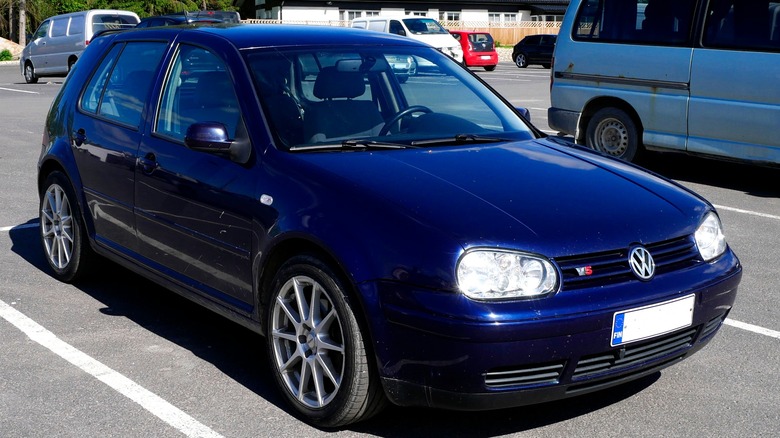
Do you know what's odd? The number 5. That's how many cylinders were in the engine that inhabited the 2000 Volkswagen Golf IV 2.3 VR5. You may be used to an even number of cylinders, as are we. But VW has not been afraid to think outside the box, and it wanted an engine option that was more powerful than a four-cylinder and less powerful than a V6. So, the Goldilocks of engines, the 168-horsepower VR5, was born. And since it wasn't an inline-5 engine, it had the rather lopsided arrangement of one side with two cylinders, while the other side had three. We talk about the pros and cons of 5-cylinder engines here.
Speaking of thinking outside the box, Mazda made VW look downright conservative by comparison when it used an engine that didn't have any cylinders at all. In 1978, it debuted the RX-7, a compact sports car equipped with a rotary engine. This engine had no camshaft or pistons, just two rotors. Yet, a turbocharged version of it that came out in 1987 (RX-7 Turbo II) was able to put out 182 hp, which was more than the VR5 could produce over a decade later. Even the naturally aspirated RX-7's base horsepower would get close, reaching 160 hp by the 1989 model year. This kind of engine isn't perfect either, of course. Check out our post on the pros and cons of rotary engines.
A hybrid, a turbo-4, and the muscle car (around 200 hp)
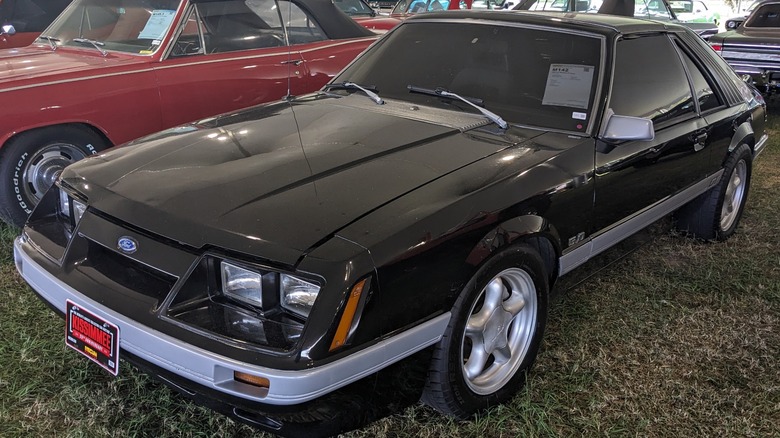
The 1980s were a rough time for muscle cars, thanks to strict U.S. emissions regulations. Yet, the 1985 Ford Mustang was still able to eek out a little over 200 horsepower, which was enough for the Mustang to hold onto its pony car status. The Mustang GT came with the 5.0L 2V HO V8 engine that was rated at 210 horsepower, and the SVO trim just had a 2.3-liter 4-cylinder, but it came with a turbocharger, enabling it to reach 205 horsepower.
Of course, modern muscle cars have left those days long behind. The Dark Horse trim of the 2026 Mustang features a 5.0L V8 that can crank out 500 hp. But you'd think with 40 years of advancements in engine efficiency, there'd be 200-hp economy cars all over the place. It seems like the modern 4-cylinders out there that produce 200 hp typically need assistance to do it. The 2026 Honda Civic Si, for example, is a 4-cylinder that can reach 200 hp, but its equipped with a turbocharger, like the '85 Mustang SVO. The hybrid versions of the Civic can also reach 200 hp, but that is total system horsepower. In other words, it takes the gas engine and both electric motors combined to reach that number. The gas engine by itself can only crank out 141 hp, while the LX and Sport ICE trims of the Civic are rated at 150 hp.
We're not impressed with your extra cylinders (600+ hp)
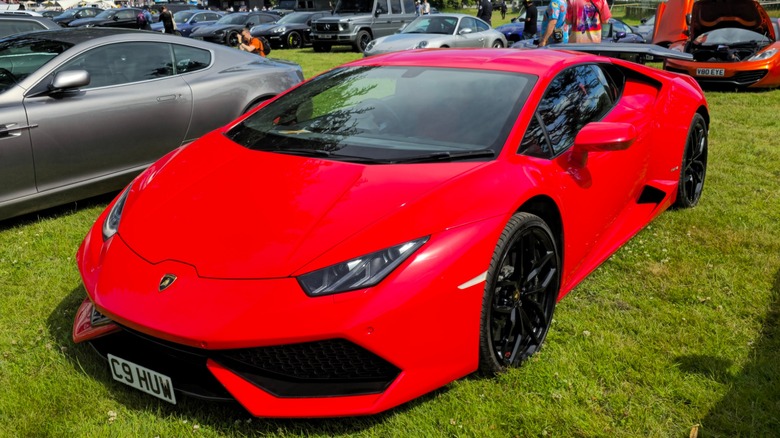
We mentioned the "multi-cylinder wars" during the early part of the 20th century, when automakers were racing to outdo each other when it came to how many cylinders they could pack under the hood. Things have mostly calmed down since then, but lots of supercars have been produced in recent years with a double-digit number of cylinders. For example, the specs for the 2014 Lamborghini Huracán LP 610-4 were pretty typical for what we would expect for a Lambo. It was rated at 610 CV at 8,250 rpm, which comes out to 601 horsepower. Of course, its engine uses 10 cylinders to get that kind of horsepower. Then there's the 2020 Mercedes-AMG S65 Final Edition, which could churn out 621 hp. It had a 6.0-liter twin-turbo V12, meaning it needed 12 cylinders and two turbos to get into the 600+ club.
Meanwhile, Ford was saying, "hold my beer." The 2016 Ford GT supercar, derived from the automaker's GT racecars, was able to squeeze 660 horsepower out of just six cylinders. Its 3.5-liter EcoBoost V6 was able to produce more power than engines almost twice its size. And that's not even the most impressive performance from a modern Ford. The 2026 Mustang GTD has a V8 engine that can crank out 815 hp.
It all goes to show the size of the engine isn't the only factor that impacts horsepower. And the more efficient engines become, the more this is true.