

Finding Gas Higher Than 90 Octane In Alaska Is Oddly Hard (Here Are Some Theories Why)
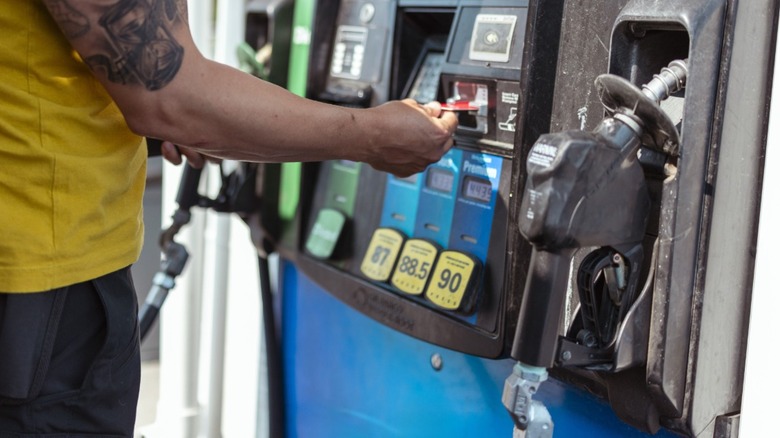
Alaskans have wondered for years why they can't find gas higher than 90 octane. Oddly enough, we can't find one public acknowledgment of this limit by anyone in the oil industry or any government agency. Yet, the cap of 90 octane is real. Even weirder, the closest thing we could find to a news source that comments on this were quotes in multiple forums from an article that was supposedly published in 2001 in a publication called Technobabble. But we can't find the original article, even when searching Archive.org.
The silence from government and Big Oil seems incredibly conspiratorial, as if it was ripped straight from an "X-Files" episode. The truth is out there, though, and we think we may have cracked the mystery. The reasons for this octane limit, if we're correct, are pretty mundane. One likely reason has to do with Alaska's lack of ethanol production. Ethanol is used in the U.S. to make most high-octane gasoline. (Here's a detailed explanation of why gasoline has ethanol and how it affects your engine.) So this is probably a big roadblock in the production of high-octane gasoline.
It's also important to understand Alaska's limitations when it comes to refining crude oil into gasoline. While Alaska is one of the top crude oil producers in the nation, it has only three refineries that produce gasoline, and most of it comes from just one of those refineries. To add the equipment necessary to produce high-octane gas without ethanol would be incredibly cost-intensive.
Alaska produces no ethanol
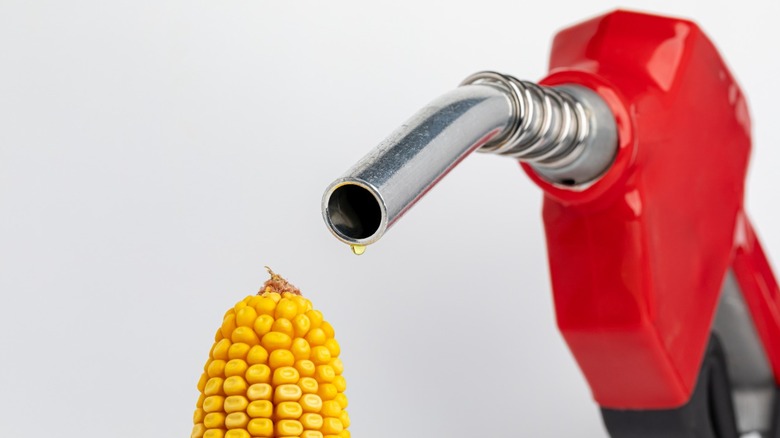
High-octane gas is usually made by blending ethanol with a blendstock of refined gasoline. Most crude oil produces gas that is around 84 octane. Ten-percent ethanol is blended with refined gasoline, usually at a terminal farther down the pipeline than the refinery, to produce a higher-octane version than the blendstock. The 84-octane gasoline is thus turned into 87-octane (regular) gasoline.
To get premium gasoline of 91 octane and above, you have to start with a higher octane blendstock, like 88 octane. The problem with that is that the higher the octane, the lower the amount of gasoline that can be produced. Presumably, that would be a huge obstacle for a state with so few refineries, all of which are very limited in their production capacity.
The other thing is that most ethanol comes from corn. In fact, all of the top ethanol-producing U.S. states are also in the list of top 10 corn producers. Corn is really hard to grow in Alaska due to its cold soil. So Alaska produces no ethanol itself, which is why there are no ethanol stations. Furthermore, ethanol is mainly transported by rail because of the corrosive effect it has on pipelines, and there is no rail line that goes from the Lower 48 to Alaska. The result is gas capped at 90 octane. That's an issue for Alaskans who want to buy certain vehicles, since some engines require premium gas.
Making high-octane gasoline without ethanol is really hard
Is it possible to make high-octane gasoline without ethanol? Yes, there is a process called alkylation. Without getting too technical, a refinery mixes chemicals to form hydrocarbons with high octane ratings. These hydrocarbons are mixed with refined gasoline to make high-octane gasoline, also called alkylate in this case. So why don't Alaskan refineries just do that? It might be because alkylation requires very expensive equipment that often costs hundreds of millions of dollars – a prohibitive expense for smaller refineries. In fact, according to the Energy Information Administration, Alaskan refineries have zero capacity for producing alkylate.
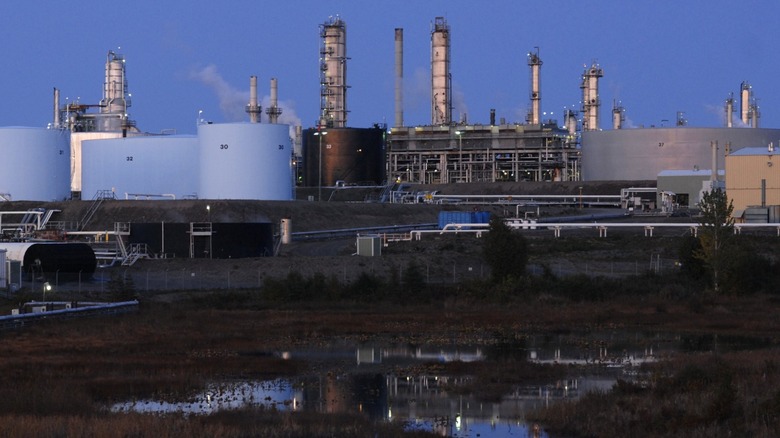
Alaska produces a lot of crude oil, but its refining abilities are limited. Again, most of the state's gas comes from its only major gasoline refinery, the Marathon refinery in Kenai. That refinery's top capacity is just 68,000 barrels a day, but not all of that is gasoline. Much of it is jet fuel, diesel, propane, butane, and asphalt. So it would make sense to focus on gasoline that powers most cars. Producing 92- and 93-octane gas just may not be practical, considering the state's current refining capabilities.
We want to reiterate that no official source has come out and said that these are the reasons there's no gas in Alaska above 90 octane. But we feel these factors must come into play. If you have a theory as to why it's so difficult to find high-octane gas in Alaska, let us know in the comments. And while you're at it, read our post on when and when not to use premium gas in your car.