

Here's What To Know When You're Considering A Diesel Swap
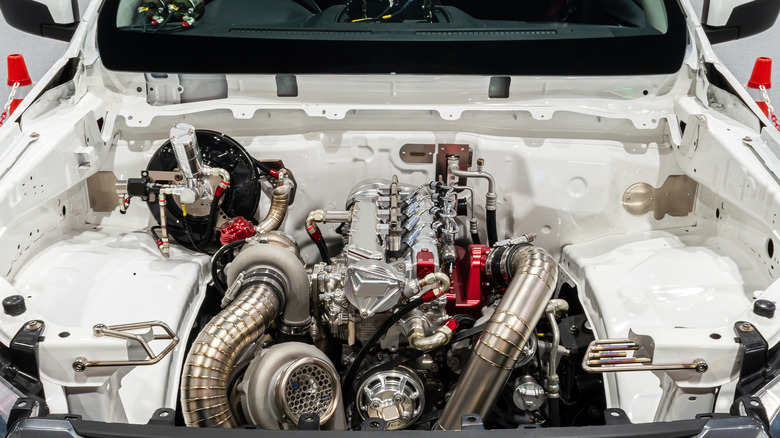
There are times when you think that gas engines no longer offer the cheap thrills they used to. Because of that, maybe you've decided to go for a diesel swap. It might be for sane reasons, like to be able to tow your boat effortlessly — or not-so-sane reasons like to improve your off-road rig's rock crawling ability. There are good reasons to go for diesel other than reliability. Modern diesel engines offer earth-moving torque from idling speeds while sipping fuel at a rate that makes a hybrid look like a glutton. However, common sense still dictates to leave the stock engine alone, and for good reason.
A diesel conversion is not a weekend project. It's a full-on course in automotive engineering where you have to look to parts of your car beyond engine mounts, like the suspension, electronics, and gearbox, for starters. A diesel swap will have you managing variables like space, heat, torque, and especially weight. Your car's frame and suspension will have to be beefed up to handle it, as a diesel engine can weigh twice as much as a comparable gasoline engine. For example, a Cummins 6BT weighs close to 1,100 pounds, while a small-block Chevy V8 is close to 575 pounds.
Your car's power band will change, getting narrower and necessitating a total reworking of the gearing. You will have to account for the cabin becoming louder and gaining more vibrations. As another example, four-cylinder Cummins 4BT emits a secondary imbalance that, if not properly dampened, can rattle accessories off of the engine. If you still want to go ahead, then you should keep these factors in mind for the most optimal diesel swap.
Choosing the right diesel candidate
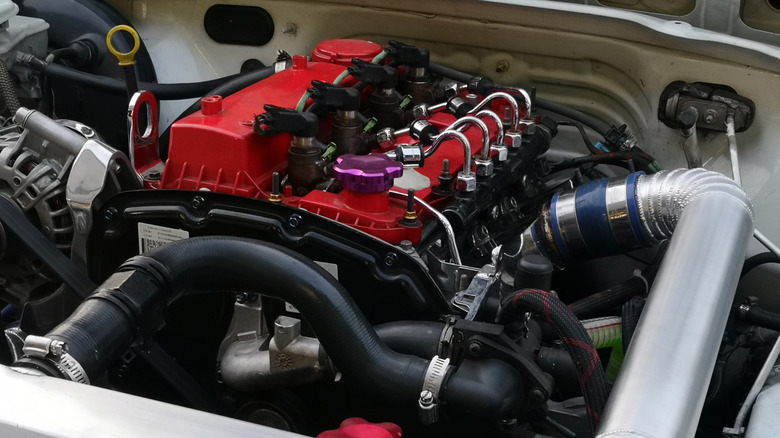
It all starts and ends with choosing the right engine, accounting for the vehicle and the application. The engine you choose dictates the rest of the steps of your path towards diesel swap nirvana. The most common diesel swap engine candidates fall into three broad categories: heavy, mid-range, and modern. Heavyweights are the big dogs, ideal for full-size trucks and heavy SUVs. The most popular swap choice is the 5.9-liter Cummins 6BT six-cylinder engine which has been around for 40+ years. Despite its size, the 6BT can be a straightforward swap due to its being entirely mechanical, which means you don't have to worry about thick wiring. Its primary drawbacks are weight and size. Another option is the modern 6.6-liter Duramax V8, but it can be an electronics nightmare.
In the mid-range, you have the 3.9-liter Cummins 4BT, the four-cylinder version of the 6BT. It's a popular swap for Jeeps, Land Cruisers, and smaller trucks. It's also compact, robust, and — like the 6BT — requires little electrical infrastructure. However, the 4BT is notorious for its heavy vibrations, often being referred to as a tractor engine. If you opt for this, invest in high-quality, fluid-filled motor mounts.
Then you have the modern alternatives. Engines like the Volkswagen 1.9 or 2.0 TDI are popular choices for light trucks, owing to their low weight and peak torque output at low revs. However, these modern engines require significant electronic integration or a standalone electronic control unit. For such swaps, go for a donor vehicle rather than a crate engine, as the original wiring harness and accessory brackets will save you a lot of money, time, and headache.
Solving the drivetrain dilemma
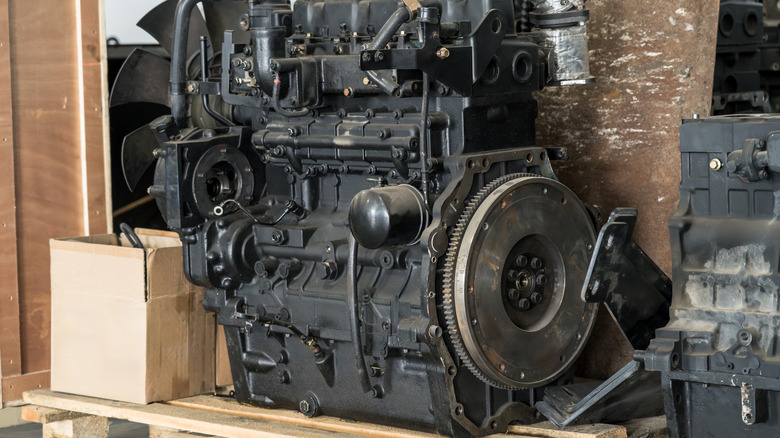
One of the biggest mistakes you can make during an engine swap is to assume you can use your diesel engine with the stock transmission. You can't bolt a high-torque diesel engine to a light-duty gasoline transmission and expect longevity. If you plan to use a manual, you will need a transmission with a high torque rating, like an NV4500 or a ZF6. These are popular thanks to being overengineered to take the abuse of a torque-heavy diesel. You also need to factor in gearing. A gasoline engine makes its power in the higher rpm power band, while a diesel has a lower rpm power band, so the gear ratios need to be widely spaced out. Many swappers find that a 3.54 or a 3.73 rear end hits the sweet spot.
For automatics, you cannot use a gas-engine torque converter as it has a high stall speed, which is the engine rpm at which it begins to transfer power. Your engine will simply rev higher while struggling to accelerate. You need a diesel-specific low-stall torque converter, like the 4L80E. However, this is an electronically-controlled transmissions, so you will need a standalone transmission control unit. This unit uses a sensor to execute shifts based on engine load and speed.
The next big challenge is mating the engine and gearbox together. You will need a precision-machined adapter plate, and you shouldn't skimp for the cheapest ones on eBay. Precision matters here. If this plate is misaligned by even just a fraction of a millimeter, you can end up destroying the pilot bearings and your transmission input shaft.
Figuring out cooling and fueling
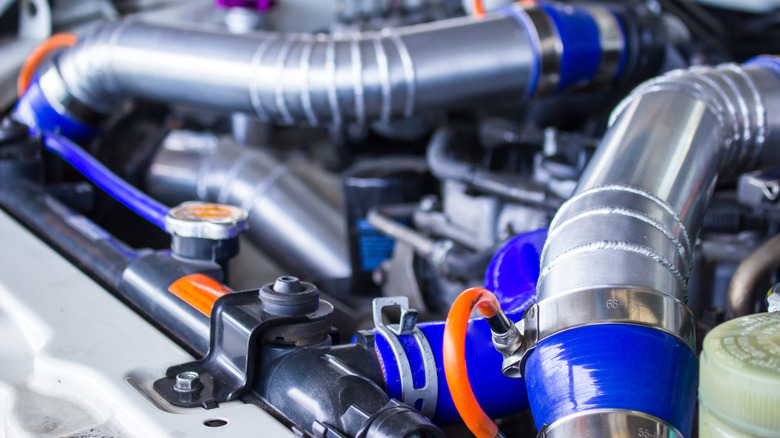
Diesel engines are more thermally efficient than gasoline engines, but they emit massive amounts of heat. You need to focus on two primary heat exchangers: a high-capacity radiator and a turbo intercooler. The radiator setup is simpler, only needing a massive core and a high-flow fan setup. Mechanical fans are preferred over electric ones as they are more reliable under high-load conditions and are able to move massive amounts of air. The intercooler is also critical because diesel engines require cool, dense air to make power and keep exhaust gas temperatures in check. If the latter is not controlled, it could lead to melted pistons and warped cylinder heads. You'll need to figure out how to fit both a large intercooler and the plumbing for it.
A diesel fuel system is different from a gasoline setup, so you'll need to look into that, too. Gasoline fuel systems have the fuel pump submerged in the fuel tank, while diesel systems typically use a lift pump system. You will need a dedicated diesel lift pump with a FASS or AirDog filtration system to ensure the injection pump is always primed and free of air bubbles. As diesel fuel is denser than gasoline, you will also need larger (minimum 3/8th inch diameter) fuel lines.
Diesel fuel is hygroscopic, which means it absorbs water. Water contamination can ruin your diesel injection pump and fuel injectors, so you have to get a high-quality water separator as well. Ensure your fuel tank is vented properly, as diesel engines return a large volume of warm fuel into the tanks. Finally, change your fuel filler neck to a diesel-compatible one for easier fueling at the gas station.
Final integration: Electronics, mounts, and fabrication
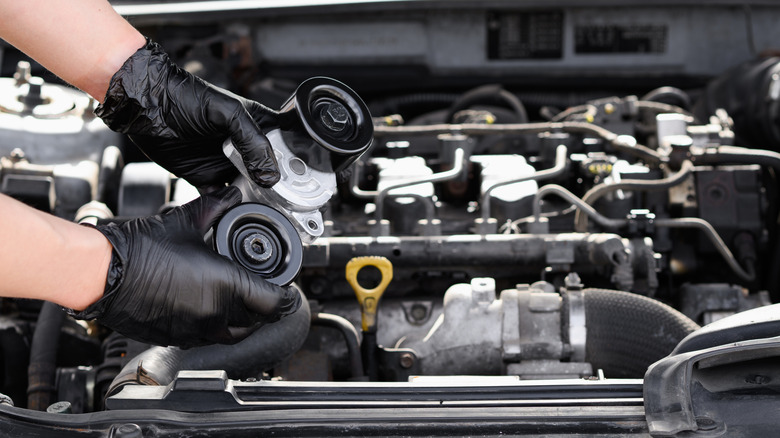
With a diesel swap, you are modifying a vehicle to house an engine it was never designed for. Even if you go for the mechanical engine, you still need to pair it with the rest of the vehicle. For the gauges on the dashboard, you might need to recalibrate everything or go for aftermarket gauges. For the tachometer to work, you can opt for a magnetic pickup on the crankshaft or a signal from the alternator. For the oil pressure and temperature gauges to work, you might have to tap and drill the engine block to accommodate the original sensors.
Engine mounts are critical, as diesel engines are heavy and vibrate enough to destroy stock rubber mounts. With engines like the 6BT, you need to invest in heavy-duty liquid mounts. Given the heavy engines, you will need to reinforce your frame make sure your mounts can absorb vibrations. If the mounts are rigid, the rumbling can cause stress cracks in your frame over time.
Your engine needs to power your old truck's hydraulic power steering, brakes, and air-conditioning. Opt for aftermarket accessory brackets that allow you to fit standard GM or Ford power steering pumps and A/C compressors to the engine block. Unlike gasoline engines, diesel engines don't create an intake manifold vacuum, so your stock power brake booster will not work. You will have to install a belt-driven pump or go for a hydro-boost system to run your brakes. The latter allows you to use hydraulic pressure from the power steering pump to provide braking assistance.
Legal hurdles and maintenance

While swapping a diesel engine for a racing or off-road rig is fine, you have to consider the legal aspects if you plan to use it on public roads. In the U.S., the Environmental Protection Agency dictates that an engine swap is legal only if the engine is of the same year or newer than the chassis and comes from the same class of vehicle. For example, you can only use a light-duty truck engine in a light-duty truck. This is especially critical if you live in a state with strict inspections. Before you buy an engine, check if it complies with your local laws. Otherwise, you might end up with an expensive piece of machinery that can't be driven on public roads.
Once your build is up and running and the legal hurdles are cleared, you need to take care of your new ride more than you would for your previous gasoline rig. The "built, not brought" tag comes with a caveat that there's always something that can go wrong and manifest itself in the form of a leak or a loose part. Maintenance will have to be proactive, not reactive. Compared to gasoline engines, you need to check a diesel engine's oil level more frequently, replace the fuel filters every 10,000-15,000 miles, and always keep an eye on your exhaust gas temperature.
A diesel swap is a long-term commitment. It's loud, it vibrates, and it will occasionally leak oil on your pristine garage floor. However, if you have done your fabrication work correctly and upgraded your transmission and cooling system, you'll have a rig that might just outlast you.