

Unreliability Of F1's New Ruleset Rears Its Head In China
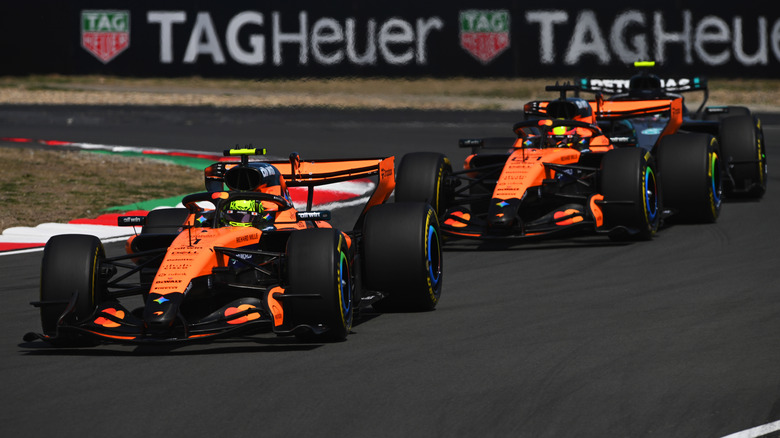
The first year of any new Formula 1 technical regulations is typically a war of attrition, but the 2026 season so far has upended an unprecedented run of reliability in the world championship's recent seasons. Sunday's Chinese Grand Prix featured 15 race finishers out of a 22-car field. The unique twist was that four cars failed to start due to technical issues. Even the in-race retirements were the cause of issues considered bizarre by modern standards, like Fernando Alonso's Aston Martin vibrating so violently that he lost feeling in his extremities.
The chaos in Shanghai began after McLaren failed to get Lando Norris' car to the grid before the pit lane closed for pre-race ceremonies. The team stated there was an electrical issue with the reigning world champion's Mercedes power unit. On the grid, McLaren discovered a different electrical issue with Oscar Piastri's power unit and wheeled his car back to the garage. The problems with both papaya-colored cars couldn't be fixed in time for them to make the start. According to ESPN, the Australian became the first McLaren driver to DNS in back-to-back races since the team's founder Bruce McLaren in 1969. The British team was joined by Gabriel Bortoleto's Audi and Alex Albon's Williams, both suffering hydraulic issues.
Despite the retirements, Shanghai proved to be an entertaining race with a memorable winner. Mercedes' Kimi Antonelli took his maiden F1 race victory. The 19-year-old became the second youngest race winner in the championship's history, after being the youngest polesitter in history at the same race. Also, Antonelli wasn't even alive the last time an Italian won a grand prix.
Struggling for reliability is a feature, not a bug
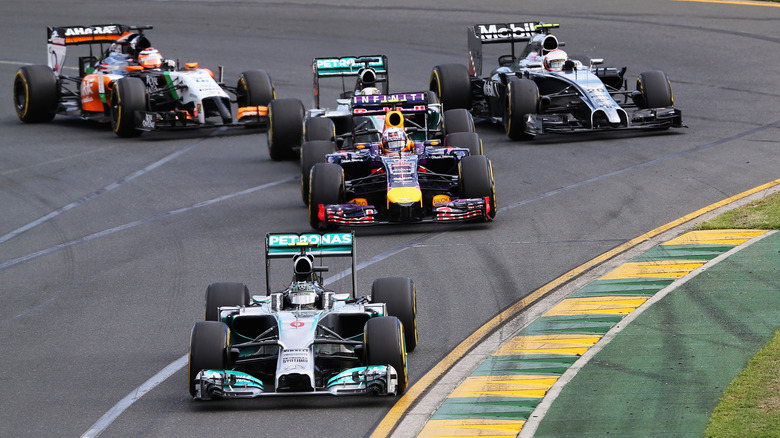
High attrition during the first year of a new ruleset isn't anything new for F1. The 2014 Australian Grand Prix, the debut of the previous generation's turbo-hybrid V6 engines, only featured 13 classified finishers. However, current fans have become acclimated to the near-perfect reliability. It became commonplace in recent years to have multiple races per season where every driver crossed the finish line. For comparison, the 1961 Dutch Grand Prix was the only F1 race in the entire 20th century where every starter finished.
Obviously, no one would willingly sign up for a struggle and the drivers not at the front have been vocal about how much they hate these new cars. While no fan wants to see their favorite driver taken out of a race by their own car, unreliability adds an element of unpredictability to racing. It's also a reminder that F1 is an engineering competition. The thousands of people back at the factory should be challenged by the regulations. The teams are competing to build the best cars, not just the fastest but also the most reliable.