

What Is A Tri-Five Chevy And Which Models Fit The Bill?
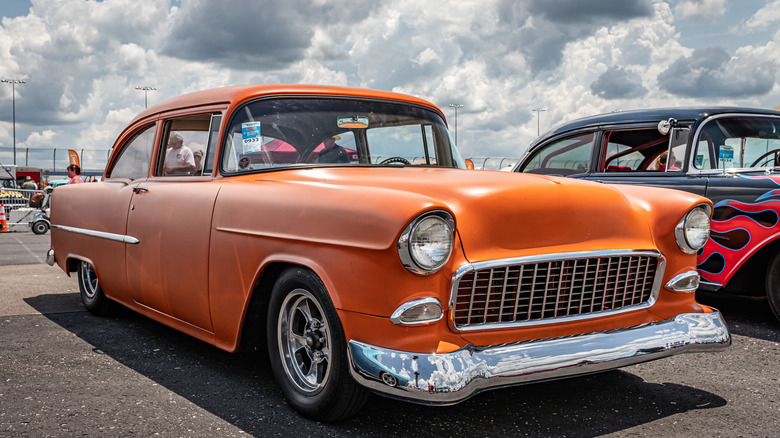
Chevrolet didn't produce a single model dubbed the Tri-Five; rather, the phrase refers to a selection of passenger cars produced for the 1955, 1956, and 1957 model years. Trims include the popular 150, 210, and Bel Air, in addition to lesser-cited sub-trims such as the Nomad (no, not the frog-shaped electric Ariel), Handyman, Delray, Townsman, and Beauville.
While similar in design and construction, the various model trims differed in important ways. The 150 was the entry-level model, which would have appealed to buyers on a budget, or perhaps fleet buyers. The 210 was a little more aspirational thanks to an extra helping of exterior trim and some more lavish interior appointments. For the more deeply pocketed individual, though, only the Bel Air would do. It was packed full of luxurious amenities, heavily adorned with chrome, and sold with catchy two-tone color schemes.
Within those three distinctive trims, a smattering of body styles were available. Buyers had the choice of a wide array of body styles, including two- and four-door sedans, coupes, convertibles, and station wagons — the most notable of which was dubbed the Nomad. It took inspiration from a Corvette-based concept car that debuted in '54, and thanks to its relative rarity (just 22,375 were ever produced), it sits as one of the more desirable iterations for collectors today.
However, should you not have a six-figure sum ready to sink into a restored Nomad, not to worry. Chevrolet built more than 4.5 million Tri-Five cars in total, and so some sedans and coupes can still be had for reasonable prices.
After production, Tri-Five Chevrolets became cultural American icons
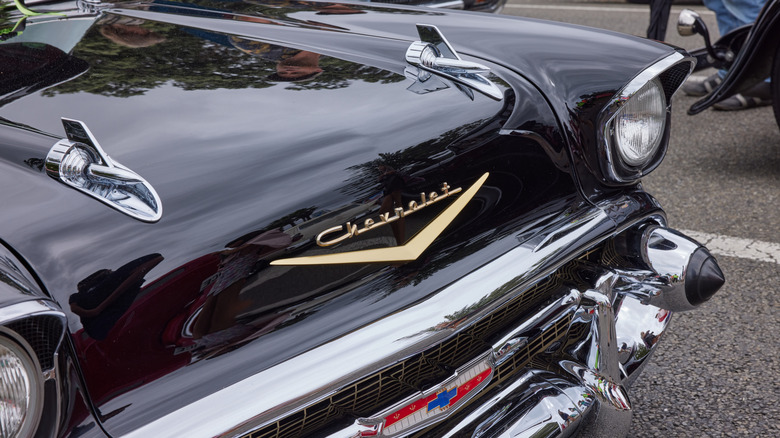
The Tri-Five model signaled the beginning of a new era for Chevrolet in terms of both design and motivation. These models sported wraparound windshields, all-new small block V8 engines, and striking tail fins that would later disappear from Chevrolets. Chevy really nailed the brief here, shifting its image to suit an ever-expanding generation of youthful buyers who were more affluent than the war-stricken generations preceding them.
While clearly popular in their own period, the Tri-Five's reputation grew long after those millions left showroom floors. Their influence has only grown over the decades, likely due to the importance of those small-block V8 engines and the timeless design language. And the mid-'50s was a particularly exciting time for American car culture anyway, what with the muscle-car genre just waking up.
Furthermore, as Chevy's small block V8 only grew in popularity and developed further technically, the tuning potential of these Tri-Five models exploded. Sure, the fuel-injected models were impressive with their 1-horsepower-per-cubic-inch output, but tuners soon found ways of squeezing notably more out of these plentiful Chevys. Early hot-rodders learned to love them, so the Tri-Five was deeply cemented into the American tuning scene from early on. That recipe of confident styling, influential engines, and decades of hot-rod culture has kept these three model years at the center of American classic-car enthusiasm.