

How Long, In General, Does An Oil Filter Last?
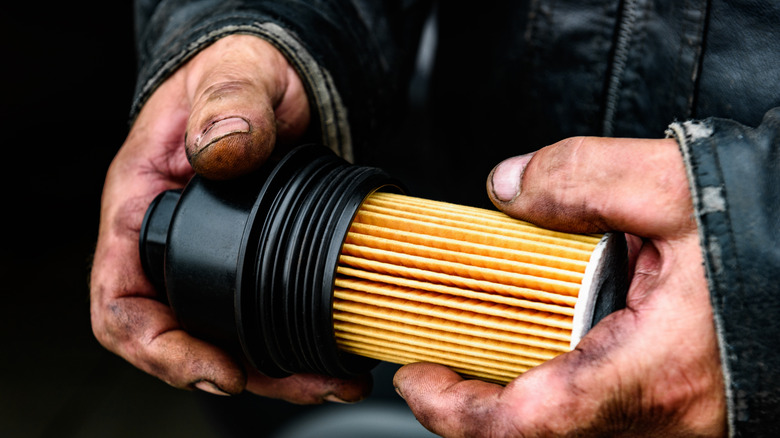
Discussing an oil filter's lifespan is quite interesting since it's common practice to install a new one with every oil change. Besides, oil filters are quite affordable and offer cheap insurance against potential engine issues. Car owners focus more on the brand or type of engine oil, often paying big bucks for name-brand lubricants. But with the oil filter keeping the oil clean, fresh, and contaminant-free, it's equally important to pay attention to its own type and quality.
There are two main types of oil filters: cellulose and synthetic. These designations refer to the type of filtering media inside the can or cartridge. Synthetic oil filters have a longer service life and are more resistant to clogging, making them capable of lasting up to 10,000 miles or longer. Meanwhile, cellulose oil filters are typically standard in most modern cars and older vehicles. Cellulose filters are nearly as efficient as synthetic oil filters in capturing dirt and debris, all while being more affordable.
However, the filtering efficiency of cellulose oil filters drops significantly as they fill with debris, and they're particularly vulnerable to chemicals, deterioration with age, and collapsing from moisture and contaminants. It's why cellulose oil filters should be replaced at no more than 5,000 miles. Technically, your engine can go longer, but why bet your engine's life on something that costs $10 in most applications? You probably heard this before, but oil and filter changes cost less than a rebuild, overhaul, or a new motor — so why risk it?
What happens if I don't change the oil filter?
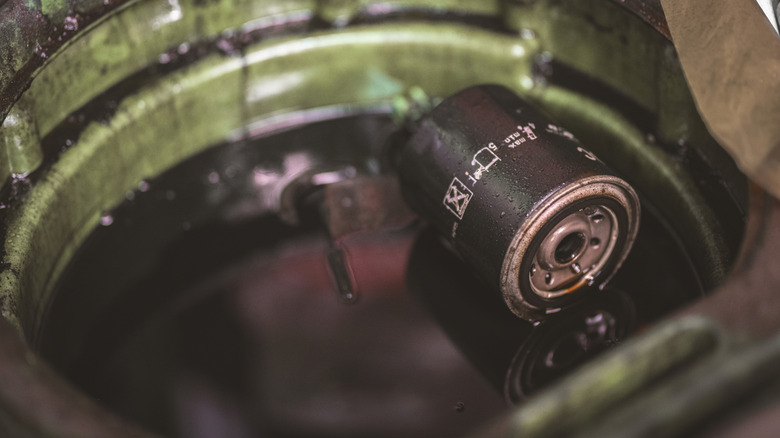
The oil filter is just as much of a consumable item as the oil itself. They won't last forever, and neglecting them could turn costly in the long run. You probably know by now that the oil lubricates, cools, and absorbs contaminants, and it gets worn or dirty in doing so. It's why oil changes every year or every 5,000 to 10,000 miles are generally recommended, and it also depends on whether your engine is using conventional, semi-synthetic, or full-synthetic oil. It doesn't matter what oil you're using, since it won't last long without a quality oil filter. Putting the wrong oil won't necessarily be the end of your precious motor, but neglecting to change the filter will have dire consequences in the long run.
Besides dirtying and contaminating fresh oil, a dirty oil filter will eventually clog up, possibly restricting the oil pressure. Sure, the bypass valve inside the filter will ensure the motor is never starved of oil if a clog hapens, but it also means the oil will reach your motor without going through the actual filter. When that happens, dirty oil will circulate inside the engine, including all the contaminants that should have been removed in the first place. Dirty oil significantly increases the risk of engine damage, either via increased friction or potential overheating.
To sum it up, since oil filters are not that expensive, you might as well take advantage of their lower price. It's better to replace them with every oil change rather than waiting a bit longer. You can change the oil filter without changing the oil, but doing both at once is a better option that benefits both your engine and your pocket.