

Signs Your Car's Nuts And Bolts Weren't Torqued To Spec
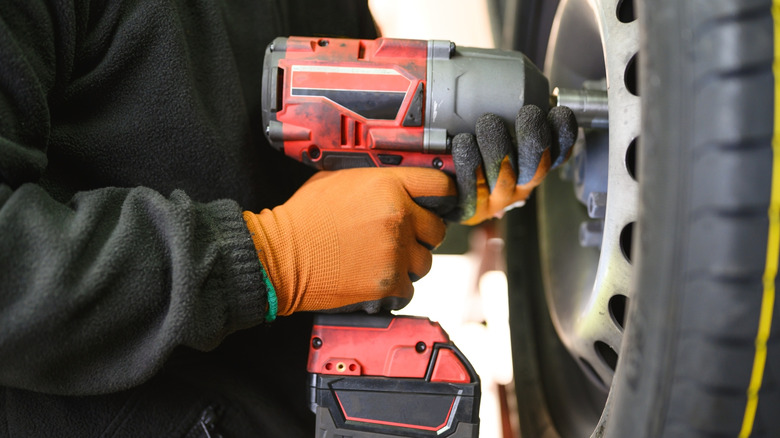
There are a myriad of things you can be irrationally scared about when behind the wheel of a car. You might want to avoid a "Final Destination" situation involving a lumber truck by staying a few car lengths further back, for example. But another irrational fear we've likely all experienced at some point is the thought of a wheel fleeing from the car while we're motoring along; the last thing you want is car parts falling off while you're driving. While this is not exactly common, it can happen, and from a very simple oversight: not tightening up your lug nuts to the correct torque spec. These aren't the only nuts and bolts that need to be torqued up correctly on your car, either, as virtually every fixing will have a manufacturer-set correct torque setting.
For the uninitiated, torque is essentially a measurement of how much force is applied when something is tightened up. Apply too little torque when tightening, and the wheel bolt could work itself free. If you apply too much torque, you could damage the bolt or restrict movement of the part behind it. So, rather than just going for finger-tight, or hitting it with an impact wrench until you hear that "ugga-dugga" sound a few times, perhaps you should be paying closer attention to the recommended torque settings. If you've purchased a used car or had someone else carry out maintenance for you, then you can still look out for a few tell-tale signs that point to something being torqued up incorrectly. Thread damage and loosening over time are just a couple of clues you should be keeping an eye out for.
How to tell if a nut or bolt has been torqued too tightly
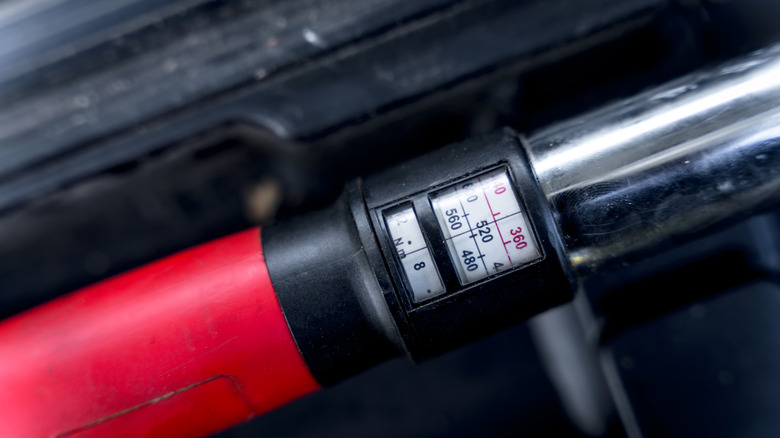
We'll start by focusing back on wheel bolts, just in case we've made you fear that yours are about to fall off. If wheel bolts have been over-torqued, they may stretch slightly, strip the threads of the bolts themselves, or even cause damage to the brakes and wheel hubs. If you're unsure, you could always remove a wheel bolt to check for damaged threads. Just be sure to torque it back up correctly afterward.
Other concerns with over-torquing include snapping the bolt itself, compressing the material of which you're tightening the bolt into, or deforming the bolt. That deformation could happen either by affecting the threads (which you won't see, making it an easy issue to miss), or by rounding the head. All of these consequences will likely result in difficulty removing it in the future, and it could outright reduce the effectiveness of the nut or bolt — despite the fact you've clearly tightened it up.
Signs that your nuts and bolts are too loose

On the other side of things, your car shouldn't have anything rattling around or swinging loosely. If there are any parts affixed by nuts and bolts that are showing such movement, it's probably best to start there when checking torque specs. As your wheels are pushed against the ground by heavy metal, they won't exactly be swinging loosely around. However, if the lug bolts (or lug nuts for older cars) are loose, then there will be untoward motion while you're driving. If you feel the wheel wobbling when driving, that's a sign to stop and check it out. As serious as leaving wheel bolts loose is, it's an oversight that's easily done. If it can happen to Bubba Wallace, it can happen to you.
A quick visual check under the hood can be useful, too. If you see something that clearly should be flush, but isn't, then the bolt or screw holding it in place is probably a little too loose. Try turning it with your finger; if it can be turned with next to no force, then it's worth consulting your manual to find out the correct torque spec. Remember, torque specs are always there for a reason, whether it's for quality (reducing noise, vibration, and harshness levels) or for safety. Take the time to read through them and tighten up the car's fixings appropriately.