

10 Ford Fox-Body Cars That Lived In The Mustang's Shadow
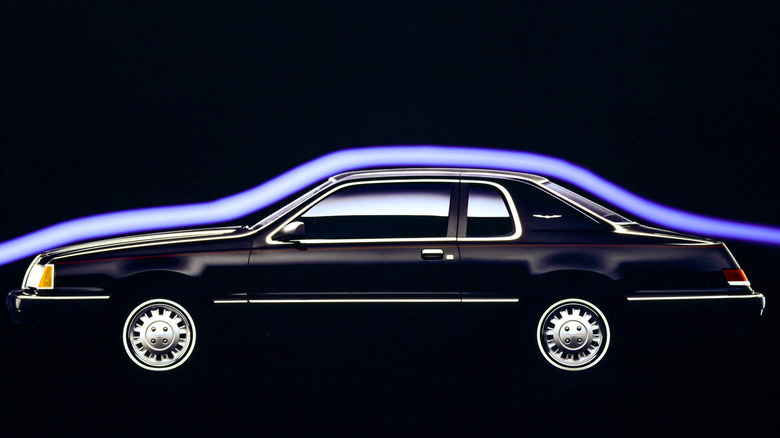
Innovation in the auto industry doesn't always begin in-house. The reality is that many of the decisions that have led us to the current state of the auto industry were made in response to urgent external factors. Take, for instance, the decision by Ford more than four decades ago to place its iconic Mustang on an all-new chassis.
The Fox platform was a response to a variety of external pressures, such as the stricter emissions regulations of the 1970s and other incentives to downsize the Ford lineup. Gone were the days when American brands bragged about how heavy their cars were – now, families wanted transportation that wouldn't chug gas. At the same time, the industry wanted more uniformity within their respective lineups in the name of interchangeability and cost savings.
Of course, the Fox-body Mustang was the best known car that used the chassis, but there were plenty of other memorable examples. So while there's no doubt the Fox-body Mustang deserves its legacy, we wanted to shine the spotlight on 10 other cars that share the Ford Fox platform.
Ford Fairmont
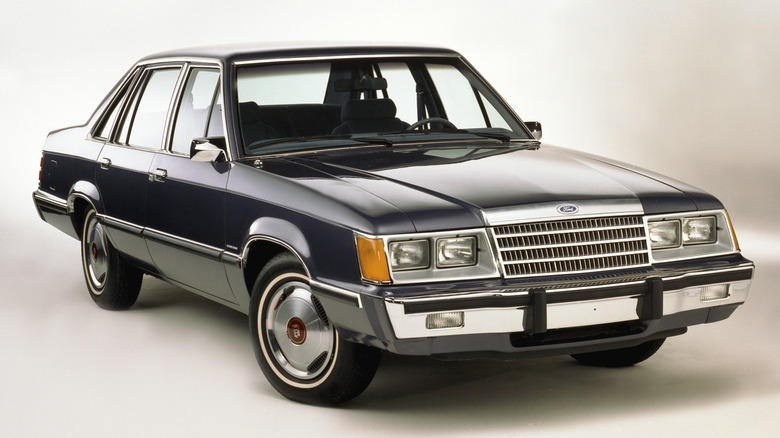
Not to be confused with the Ford Fairlane, the Ford Fairmont was one of the only truly new Fox platform names. While most of the cars you'll see on this list have nameplates dating back decades, "Fairmont" was something America had never heard of before (the name was used by Ford's Australia division since the 1960s), and was the first to debut on the new platform in 1978. But while the name was new, its concept, the compact family car, was tried-and-true for the blue oval. Its spiritual lineage goes back to the ever-popular Ford Falcon from the early 1960s, and continued with the Maverick that replaced it in 1970. The Fairmont, then, was the direct successor of the Maverick.
There were multiple versions of the Fox platform, mostly differing in size to accommodate models with separate functions. But even though the Fairmont was a compact, its wheelbase was 5 inches longer than the sporty Mustang it shared its underpinnings with. Upon launch, the Fairmont was offered in sedan form (both two and four-door configurations) and even a wagon body style. Soon after, a funky-looking coupe variant, the Fairmont Futura, would debut.
Under the hood of the Fairmont were three different engines, and a fair warning: the 1980s were a difficult time. The mid-tier engine, the 200-cubic-inch straight-six was actually the least powerful engine in the Fairmont lineup, as the base 2.3-liter inline-four produced 88 horsepower compared to the six's 86 horsepower. At the top of the pile was the well-loved 302 c.i. V8. However, the Fairmont's version was only a two-barrel carburetor-equipped unit producing 138 horsepower. Ford sold 1.6 million Fairmonts from 1978 until its discontinuation in 1983.
Mercury Zephyr
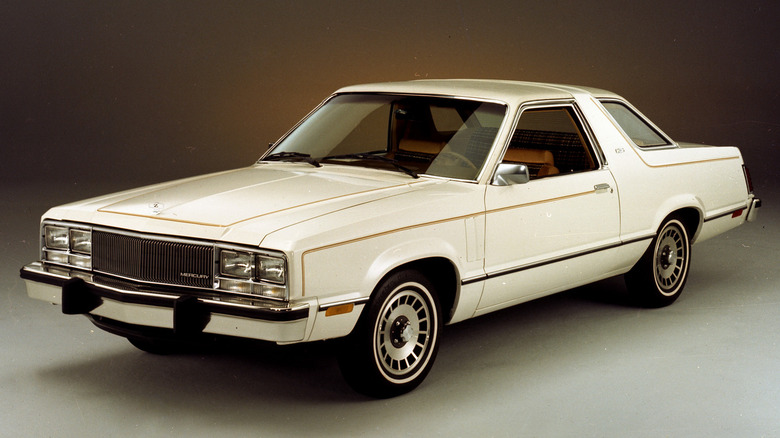
While both Lincoln and Mercury produced bespoke models over the years that didn't share platforms with Ford products, the vast majority of models since the mid-century era did. We mention this because our next Fox platform entry, the Mercury Zephyr, was exactly the same underneath as the Ford Fairmont Futura.
The Zephyr debuted the same year as the Fairmont (1978), sharing the inaugural glory of the Fox platform. It was a model that, for all intents and purposes, acted as the swanky, unique alternative to the Fairmont, and a fancier version of its Futura twin. In a way, the Futura and Zephyr were Ford's attempts at creating a smaller, more affordable personal luxury car like the Thunderbird. Its advertising campaign, particularly the Z-7 trim, was all about convincing buyers to "put fire in their life," touting bucket seats, a "slant Z roof," and — because it was the late 1970s — the competitive fuel economy rating.
What they left out, likely on purpose, were its not-so-performance-oriented engine options. Like the Fairmont and many of the other Fox cars of the time, the Zephyr came with the base 2.3-liter inline-four, the 200 c.i. straight-six, and a V8 option. There was a special fourth option for the 1980 model year, though — a turbocharged variant of the 2.3-liter four-pot, which could put down 120 horsepoweror about 32 more than the base engine. Because the Zephyr was forever linked to the Fairmont it was based on, it would also be put to rest by the end of 1983.
Mercury Capri
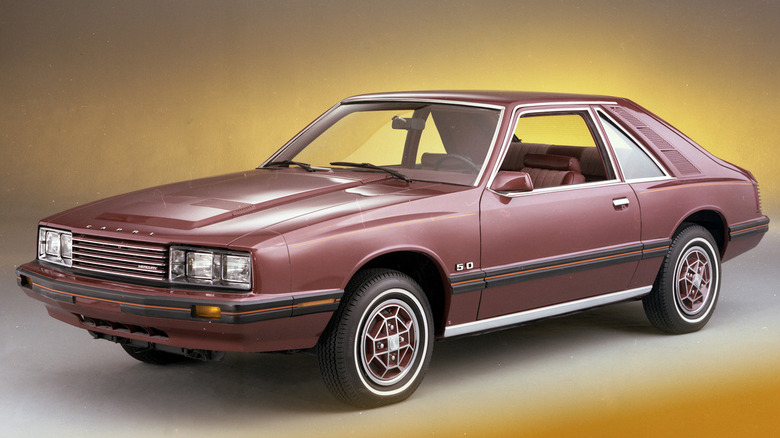
Whereas the Fairmont was a fairly new face to U.S. buyers, the Mercury Capri was far from it. The Capri name has a long history within Ford Motor Company, dating back to its debut as a trim level of the Lincoln Cosmopolitan in the 1950s, before it would show up in Great Britain as a Ford Consul-based trim in the early 1960s. In 1970, "Capri" became the name of its own model for the U.S. Mercury lineup (though it was built in Europe) as a small economy coupe.
In 1977, the European-bred Capri was gone, but just two short years later, it would become the twin of the Ford Mustang. Outside and in, the new-for-'79 Capri was nearly identical to the Mustang, save for a slightly different rear glass (depending on options), fenders, and a flatter front fascia than the Ford. Basically, this was the closest you could get to owning a Fox body Mustang without actually owning one. Today, they're considerably cheaper to buy second-hand than a Ford-branded Fox Mustang.
Produced from 1979 to 1986, its run matched the "quad-headlight" Fox body Mustangs made before the 1987 facelift. The Capri came in several different flavors, including the base model, the Capri Ghia, the GS, the RS, and the RS Turbo trims, all with varying levels of powertrains. Mercury offered the 2.3-liter inline-four in both naturally aspirated and turbo forms, a 200 c.i. straight-six, the 255 Windsor V8, and of course, the 302 V8, also known as the 5.0 (there would also be a 3.8L V6 option later). The 5.0 would initially make less than 180 horsepower, but by the mid-1980s, that number would grow to 210 horsepower, and the "5.0" designation would replace the RS trim as the Capri's direct Mustang GT/5.0 counterpart.
Ford Thunderbird
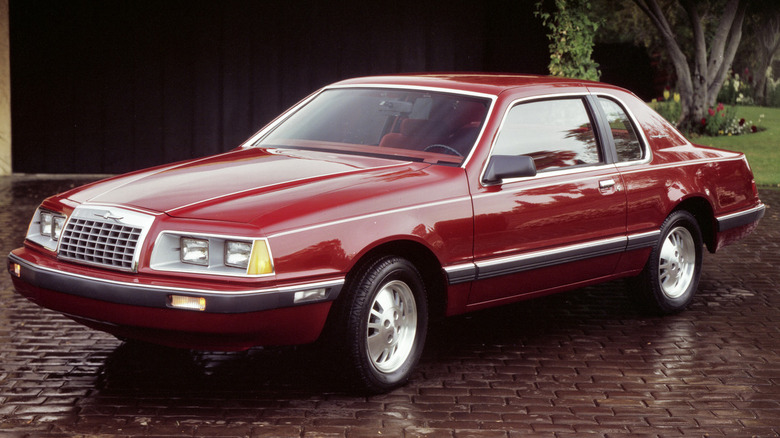
The Thunderbird name deserves to be in Ford's all-star rafters next to the Mustang, F-Series, and Bronco. It is a quintessential American staple that debuted all the way back in the mid-1950s and defined the American luxury sports car experience. What's remarkable about the Thunderbird is just how frequently it evolved in such a short time. From the time of its 1955 model year debut until 1980, it had seen eight generations in only 25 years. For comparison, it took the Corvette nearly 70 years to progress through eight full generations.
Speaking of 1980, that also happened to be the dawn of the first Fox platform Thunderbird. It was, once again, a tale of downsizing and increased efficiency, leading Ford engineers to shorten the overall body length by 16 inches and drop more than 700 pounds compared to the seventh-gen car. The new T-Bird came standard with the 3.3-liter (the 200 c.i. straight-six) but could also be optioned with the 255 and 302 V8s.
This eighth-generation car only lasted three model years before Ford would once again utilize the Fox platform for the ninth-generation Thunderbird. Its 1983 debut was a shock to the public, ditching all remnants of the square, big and long body styles of the past, and doubling down on an even smaller chassis (4 inches shorter than the eighth-generation model) that would become home to a new sleek and aerodynamic body. The 3.8-liter V6 would return, this time as standard equipment, alongside the 5.0-liter V8 and the turbocharged 2.3-liter inline-four. This is where the "Turbo Coupe" package was born. It originally made around 145 horsepower, but by the late '80s, it would push out 190. This trim also came with cool gizmos like electronically-controlled suspension, four-wheel ABS, and sporty cosmetic and aero additions.
Mercury Cougar XR-7
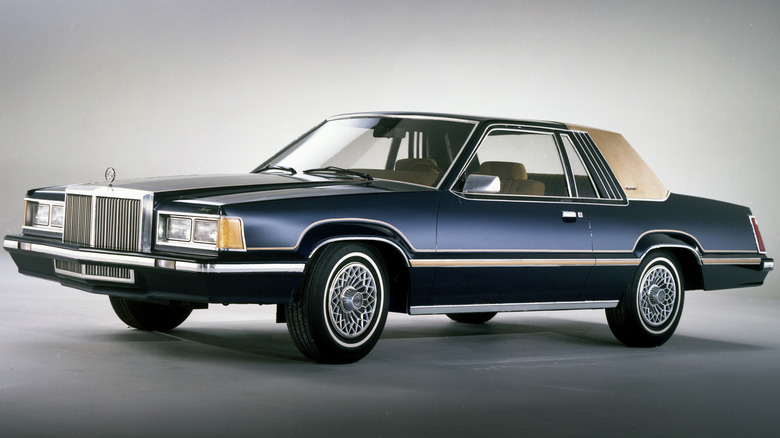
The Cougar has always been fascinating. It lived in the Mustang's shadow for much longer than most people realize, offering a mix of sport and luxury that some Mustang buyers may have been missing out on. But for the 1980 model year, a lot changed. The XR-7 variant was the only one available, and it was no longer directly related to the Mustang, as the Capri had just taken over those responsibilities within FoMoCo.
The new fifth-gen Cougar XR-7 used a 108.4-inch wheelbase and came with V8 options, including the 255 and 302 V8s, which made 115 and 130 horsepower, respectively. Going back and looking at the options is really fun, too. For 1980, the XR-7 could be had with whitewall tires, a button-based keyless entry system, a factory 40-channel CB radio, leather lounge-style seats, and wire wheel covers. It was properly luxurious, and no wonder why — it was a rebadged twin of Ford's flagship Thunderbird coupe.
By 1981, the XR-7's reign as the only Cougar came to an end. Mercury would then add new body styles that had formerly been a part of the lineup, including a two-door and four-door sedan as well as a wagon. The typical Ford engine options of the time also followed with the reintroduction of the larger Cougar family, with the base 2.3-liter inline-four and 3.3-liter straight-six, as well as the 4.2-liter (255 c.i.) V8. The only engine that wasn't available in the non-XR-7 models was the 5.0 V8, though it was a trade-off, as the XR-7 trims were not available with the four-speed manual, while the base, GS, and LS Cougars were. The Cougar would continue on the Fox platform until 1988, and the model would see its permanent discontinuation in 2002.
Ford Granada
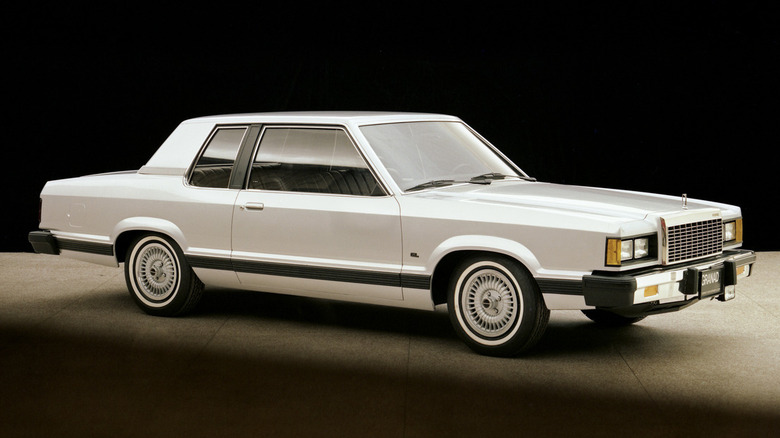
The Granada started life as a European Ford product in the early 1970s, but in North America, the Granada name took on a completely different platform for the 1975 model year. It shared the Maverick's platform, but was advertised as the more opulent alternative. By 1981, Ford downsized the Granada to fit on the Fox platform, though more specifically, on the Ford Fairmont's version of the Fox platform.
Customers could choose from three different trims: the L, GL, and range-topping GLX, as well as both two and four-door body styles for each trim. Over 60 different options were available on the Granada, covering all the lavish 1980s add-ons you would expect, such as fancy interior trim materials, power mirror adjusters, carpeted luggage compartments, and the oh-so high-end interior warning chimes. For the oily bits, the Granada's standard powertrain was the 2.3-liter inline-four and a four-speed manual. Decide to splurge, and additional engines like the 3.3-liter straight-six and 255 c.i. V8 awaited you, both of which could be paired with a three-speed automatic transmission.
In 1982, the Granada expanded its options list to include a wagon, but it didn't do much for its sales. These compact luxury vehicles, especially those from the main Ford brand, were supposed to be a consistent supplemental sales driver for the company, but it seemed that nobody wanted these cars in the 1980s. As such, the Granada was killed off for 1983 and replaced with the LTD (which we'll get to soon).
Lincoln Continental
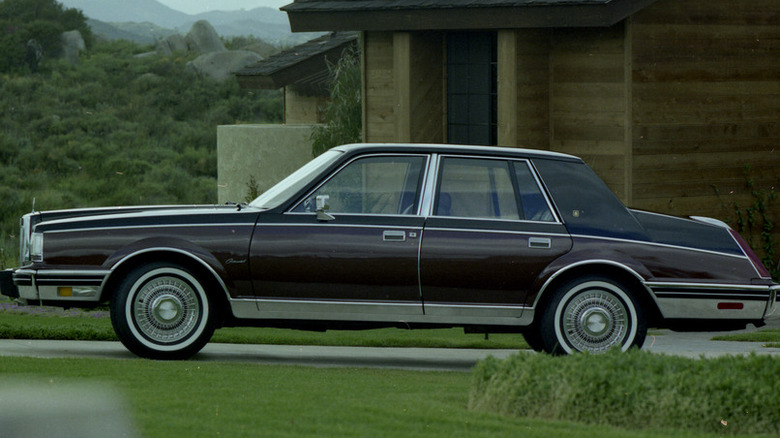
As one of the Ford Motor Company's most iconic models of all time, it's almost fitting that the Lincoln Continental and the Thunderbird of similar status had similar trajectories in the transitional era that brought the Fox platform. Just like the T-Bird, the Continental needed a firm base for its future endeavors in the early 1980s, but Lincoln — like Ford — didn't quite have the long-term picture painted yet. And just as the Thunderbird underwent that awkward shortened eighth generation, so too did the Continental — at the same time.
The Continental didn't sit on the Fox platform for this brief '80 to '81 period like the Thunderbird did from '80 to '82. Instead, it utilized the larger Panther platform to satisfy its full-size, body-on-frame needs until Lincoln was ready to unveil the next true chapter of the Continental lineage. This short Panther platform run was also the last era for the V8-only Continental, as it used both 302 (5.0L) and 351 (5.8L) V8s. For 1982, the Continental would once again be reduced in size to fit the Fox platform, receiving power from a 3.8-liter V6 for the first time ever as the standard option below the 5.0-liter V8.
During this time, the Continental, Town Car, and Lincoln Mark line of cars would all begin to diverge. The Town Car, which had, for a long time, been a staple trim/sub brand of the Continental, became its own model. The Mark, which was still a Continental at this time, was also getting ready to make a profound change to its image and borrow the Thunderbird's new underpinnings.
Ford LTD
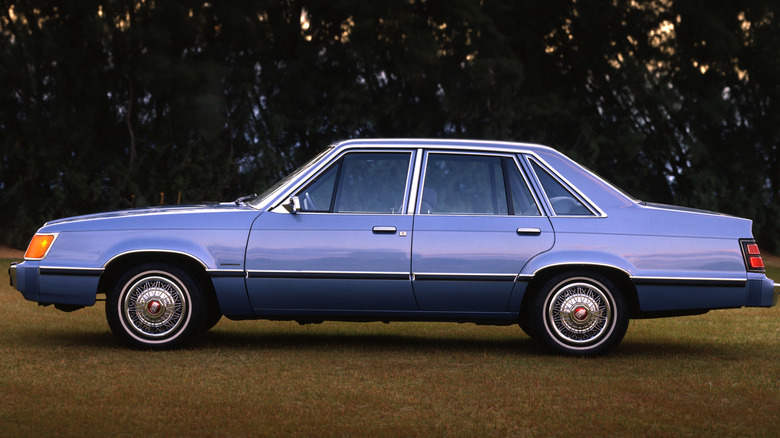
More well-known than the Granada and Zephyr but less impactful than the Continental or the Thunderbird is our next entry — the Ford LTD. Those three letters stood for, well... nothing, really. The origin of this mysterious nameplate has been debated heavily, with some claiming an abbreviation of "Limited," while others bet on "Luxury Trim Decor." Regardless, the LTD had, for decades, been a bona fide full-size American sedan.
At least, that was until the late 1970s, when it followed the exact same path as the Continental we just covered. Looking to downsize, as all big three brands were at the time, Ford knocked its full-size luxury cars like the Continental and LTD down a peg in size. Now, the LTD was on the brand-new — and substantially smaller — Panther platform. Gone were more than 600 pounds of weight, 15 inches of length, and all the big-block V8s from the previous iteration. In was a trio of smaller V8s — one 302 and two 351 options.
By 1983, Ford had given up on the LTD's Panther dreams and further shrunk the model to sit on the smaller, more refined Fox platform. For this first year, the LTD had no standard V8; in fact, it had no V8 option at all. Instead, Ford doubled down with the typical early-1980s plethora of choked motors — the 2.3-liter inline-four, the 3.3-liter straight-six, and a 3.8-liter V6, as well as a propane-powered version of the 2.3-liter four in 1984. Interesting stuff. By 1985, the 5.0-liter High-Output V8 was available, and the straight-six was dropped. In 1986, the LTD would begin to be phased out in favor of the new Crown Victoria. The Victoria, in case you didn't know, was one of the iconic cars from the "Men in Black" franchise.
Mercury Marquis
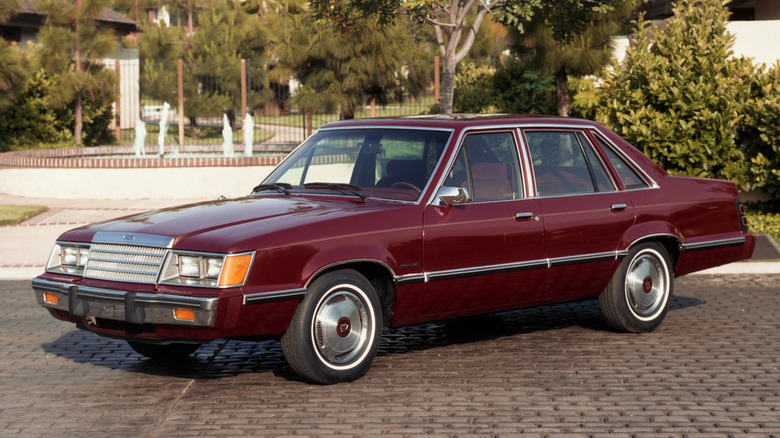
Continuing with our Panther/Fox body situation, we now return to 1983, when Mercury, rather confusingly, split the Marquis lineup into two very different cars. The first was the Grand Marquis, which sat on the larger Panther platform, while the second, the regular Marquis, used the Fox platform. The latter was essentially an LTD in a Mercury uniform, with that subtly recognizable Fox body C-pillar.
The major options for the Marquis were fairly simple and reflective of the larger Ford family of cars. These included a four-door sedan and wagon body style, as well as the same four-ish engines you've been reading about for the past several minutes, but we'll reiterate in case you're skimming. In standard base form, the Marquis came with the 2.3-liter Lima inline-four and a four-speed manual transmission, but the trusty 3.3-liter straight-six and 3.8-liter V6 were also available, as well as the 5.0-liter V8 in later years.
The Fox-based Marquis would only see four years of production from '83 until '86. After that, Mercury would reorganize its mid-size offerings, replacing the Marquis with the Sable. However, the Marquis badge lived on in the form of that larger Panther-based Grand Marquis, staying in production until the final year of the Panther platform in 2011. Poetically, 2011 would also be the final year of the Mercury brand. The final car to roll off the line? A Grand Marquis.
Lincoln Mark VII
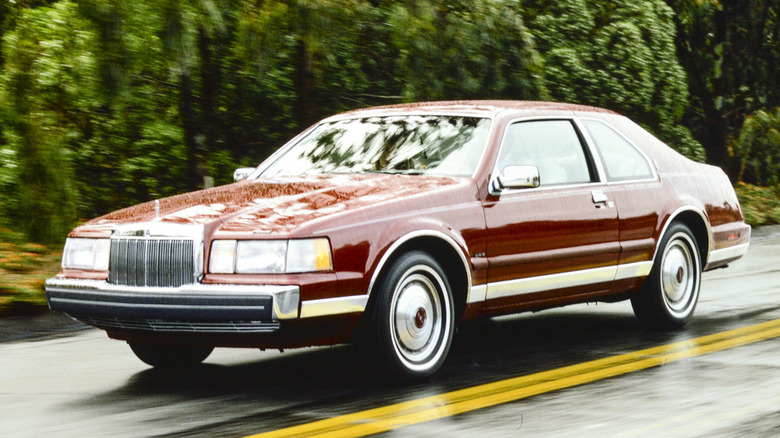
The whole "Mark" business is confusing — we know. And to go even further than that, the Continental as a whole is confusing. It all began with the mid-1950s Mark II, which happens to be one of the most valuable 1950s American collector cars. It debuted the new Continental as its own brand, somewhat separate from Lincoln. Real Lincoln nerds will get mad at you for saying "Lincoln Continental" instead of "Continental Mark II." But as the years passed, "Lincoln" and "Mark" would take on different meanings, with the regular Continental representing the sedan, and the Continental Mark representing the more exclusive and lavish coupe or convertible options.
Fast forward to the early 1980s, and Lincoln is rearranging everything. The downsizing had begun with the Continental in 1982, at the same time that the Town Car would become its own model. For 1984, Lincoln debuted the new Continental Mark VII, which basically took everything above the chassis from the slick new Thunderbird. Otherwise, its stretched Fox frame and powertrains were shared with the Continental.
Finally, in 1986, Lincoln decides to diversify even more, splitting up the Continental and Mark names, leaving the Mark VII as simply, the "Lincoln Mark VII." Are you confused yet? Truthfully, all you need to know is that after 1986, the Mark became its own coupe-only model. It would continue as such through the Mark VIII until Lincoln cancelled it altogether. The Continental sedan, on the other hand, would last (with a big break from 2002 to 2017) until 2020.