

F1 Cars Have New Lights This Season, And They Can Tell You A Lot
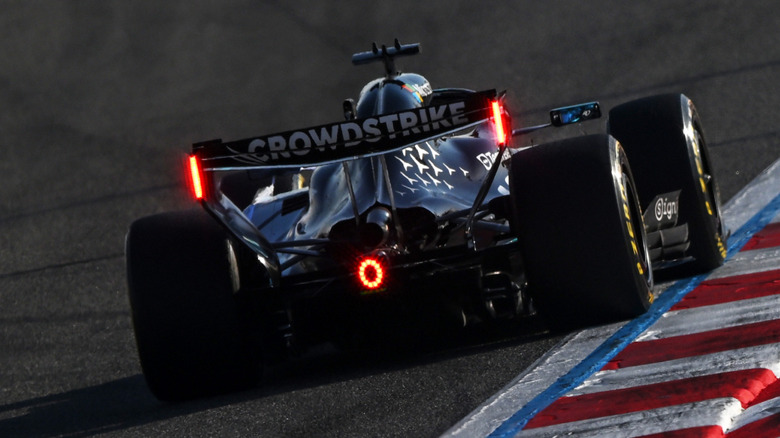
There's an all-new rule set for the 2026 Formula 1 season that introduces an entirely new car that's smaller than before, has a greater emphasis on electrification, and — crucially for our purposes — features significantly more lighting than the cars it replaces. Previously, F1 cars had just one square blinking red light near the rear diffuser and a couple of LED strips on the rear wing for wet weather only. Now, there are five total lights on every F1 car, two at the front and three at the back, and they serve far different purposes than the lights on the cars you and I drive ... unless you count their base purpose, which is illumination. In that case, they serve the exact same purpose, but that's neither here nor there.
All 22 F1 cars on the grid this year (20 if Aston Martin can't get its act together) will have one oval-shaped light just below the center-mounted exhaust pipe on the rear crash struture, one vertical light strip on both the left and right pillars on the spoiler, and one small square light facing forward on each of the left and right rearview mirrors.
Together, they work to tell alert other drivers to everything from cars that are down on power and who doesn't have a full FIA Super License to when a safety car is out on the track and when a car is stopped. Of course, there's a slew of other functions these lights have, so the FIA decided to put out a video explaining just what the new lighting system is capable of. Let's dig in.
Lateral Safety Lights
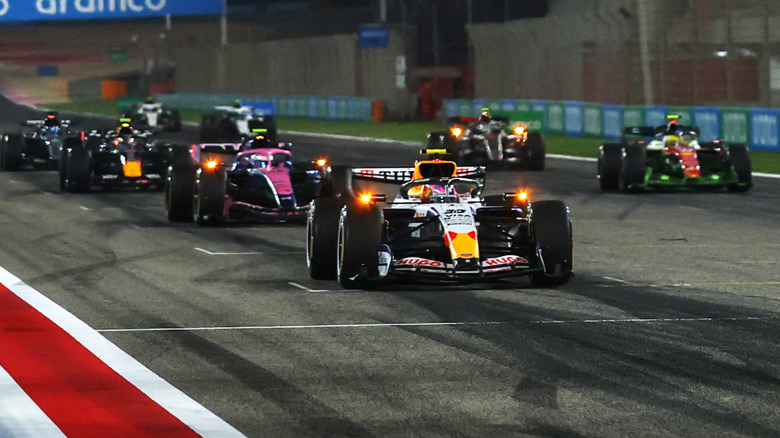
Probably the biggest departure — lighting-wise — between last year's F1 cars and this year's are the new amber "Lateral Safety Lights" on either rearview mirror, visible from the front and sides of the car. While they might look like turn signal indicators, they're anything but. They're also not meant to be flashers drivers can activate when they want to get by someone else, though that would be fun and I certainly wouldn't be against that feature being added in the future (I'm mostly kidding).
These lights only activate when a car is at or below 20 km/h (12.4 mph) or stopped on the track, in order to warn other drivers. They're also on during race starts when the car is both stopped and in neutral. Once the car is put in gear, the lights switch off. It'll be interesting to see how long those lights stay flashing as drivers come to terms with their teams' individual starting procedures.
The Rear Impact Structure Light, noobs and the MGU-K
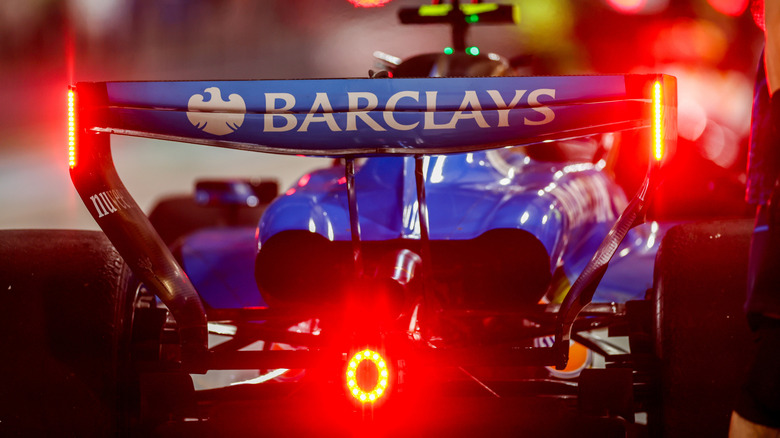
This is the only light on the car that can change color, but don't get too excited — it'll primarily be red, and every once in a while blue to signify that someone without a full FIA Super License is driving, such as a driver with a Free Practice Super License. It's sort of a warning to other drivers that this guy might not know what the hell he's doing.
Still, this light is by far the most dynamic. It serves a lot of purposes, and exactly zero of them are "brake light." Mostly, it warns other drivers when the power unit's output has been reduced to manage energy. With the 50-50 split between electric and gas power this year, power management is vital.
Here's how it breaks down:
- One flash: The Motor Generator Unit-Kinetic (MGU-K) — basically the car's electric motor and generator — is delivering less than its max 350kW (469.4 horsepower).
- Two flashes: The MGU-K isn't delivering any power but isn't recharging.
- Fast flashing: The MGU-K is recharging while the gas motor is running flat out.
That last one is definitely going to be the most controversial, as it's being called "super clipping" by the F1 community. You'd think that if you're running a car flat out you'd get full power, but the batteries on this year's F1 cars seem to drain so quickly, drivers are being left down on power despite their right foot being glued to the floor. Since the MGU-K is switched to generator mode, it works agains the combustion engine, and that resistance is used by the MGU-K up to 250 kW to charge the battery. It'll certainly make for an interesting year of racing. I don't know if it'll be good, but it will be interesting.
The Rear Impact Structure Light and everything else
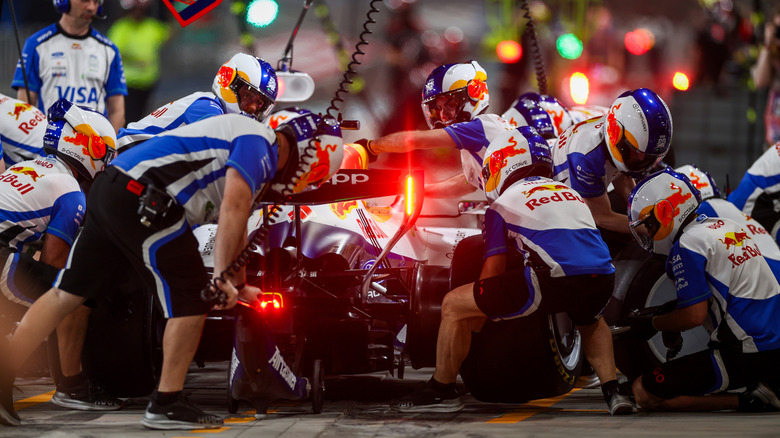
Those features are just the tip of the iceberg, though. The Rear Impact Structure light can also signify things such as:
- A safety car
- A virtual safety car
- Low grip conditions (set by Race Control)
- Anti-stall
- False Neutral (when the transmission is stuck between gears)
- Speed limiter
- Engine stopped on track
- Car slower than 12.4 mph (the same as the Lateral Safety Lights)
- Car in a double yellow secor
- Car fitted with intermediate or wet tires
Real F1 dorks probably noticed that the light is a different shape than it has been in previous years. It went from a solid rectangle made up of small LEDS to an oval made up of LEDs. The new design apparently saves 180 grams (0.4 pounds) of weight, which doesn't sound like much, but in the world of F1, every gram counts. It also now includes a rear-facing onboard camera and microphone to bring us, the viewers, just that little bit closer to the action.
Another addition out back you're sure to have noticed are the Rear Wing Endplate lights on the rear wing's left and right support structures. They're always red and mirror whatever the Rear Impact Structure Light is flashing (other than the blue non-Super License light), so everything that's been said for that light can apply to these as well.