

6 Cars That Missed Out On The Hemi They Deserved
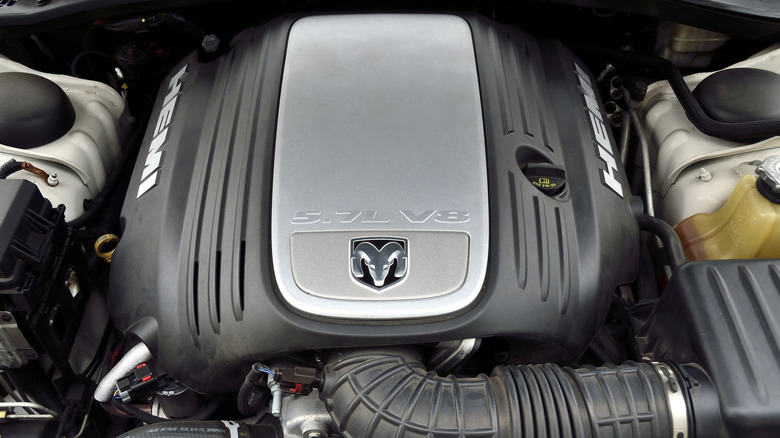
It feels like the third-generation Chrysler Hemi engine has been in production since the beginning of time. It's as much a part of the world around us as the air we breathe or the internet we argue on. In reality, though, the Hemi was introduced for production in 2003, a mere 23 years ago. While that's absolutely a lifetime in terms of engine production years, it's nothing when you consider the engine's ubiquity.
There are millions of these engines out there, and given the state of Stellantis' electrification plans, likely millions more to be made in the future. This old-school behemoth eight-cylinders-in-a-vee engine has powered just about everything under the Chrysler sun; from pickup trucks and super SUVs to muscle cars and normie dad wagons. But what stands out to us here at Jalopnik are the myriad vehicles that theoretically could have had a Hemi, but ultimately soldiered on without one.
The Hemi has progressed significantly over the last two decades. You can, right this very minute, go buy a used 5.7-liter version of the Hemi which made a staid and stable 345 horsepower, for practically pennies. Given enough spare cash, you can find any number of 6.2-liter supercharged "Hellcat" versions of the engine making over 700 ponies, or, you even call up Mopar Performance and get a crate "Hellephant" delivered to your house ready to make four-digits of horsepower in whatever project car you choose to employ it. While it's not particularly an efficient powertrain, the Hemi has proven a reliable and ready way to make pretty much whatever level of horsepower you can afford. For those reasons, a variety of vehicles could have benefited from getting Hemi'd. Here are six of our favorites.
Dodge Dakota

The third-generation Dodge Dakota was a mid-sized pickup truck that deserved better than the short shrift it was given by its parent automaker — it certainly doesn't get enough credit for being the first Dodge pickup with the TRX name. From its 2005 revamp until its untimely death in 2012, the pickup sold fewer units every year, implying to me that the truck could have seriously benefitted from an injection of Hemi excitement. Once a mainstay of Dodge showrooms, the Dakota's 4.7-liter "PowerTech" V8 dates back to an ancient American Motor Corporation patent design from the 1980s.
With 302 horsepower and 329 lb-ft of torque on tap by the end of its run, the PowerTech was sufficient for the Dakota's duties. For its day, it was a pretty decent engine as it was compact, lightweight, and fairly efficient for its power output. The larger and louder Hemi was given its own advertising campaign at the time, though, and if it wasn't Hemi-powered, consumers didn't want it. Couple that with a high per-unit production cost, and the PowerTech V8 died after just a few short years in use. Perhaps if the Dakota had been designed around the larger engine, it would still be around.
Chrysler Crossfire
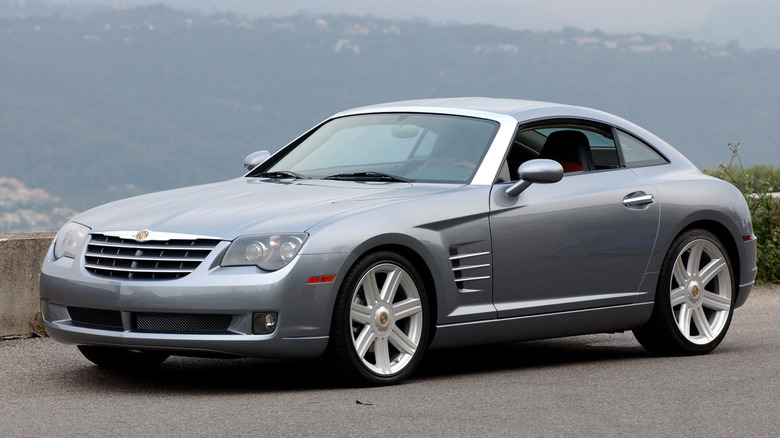
One of the strangest pieces of the Chrysler puzzle is the Crossfire sports car. Meant to inject some excitement into the Chrysler showroom, the pinstripe-bedecked sport coupe was itself a reskinned Mercedes-Benz SLK, a German-built vestige of Chrysler's ill-fated partnership with Daimler-Benz. A 330-horsepower supercharged V6 "SRT-6" model was pushed into production for 2004, a drivetrain which Car And Driver maligned at the time as having power delivery that is "felt but not heard." And what good is an American sports car that doesn't brashly announce its arrival with a throaty V8 exhaust note?
While corporate infighting between Chrysler and Mercedes likely would have made a Hemi Crossfire impossible, to say nothing of the diminutive size of the vehicle and its engine compartment, I believe it could have been a serious contender were it allowed to exist. Priced to compete with Corvettes on this side of the Atlantic and BMW M3s from the other side of the pond, a proper V8 could have really helped this little machine become successful. Especially so if it could have been paired with a manual transmission.
Lancia Thesis
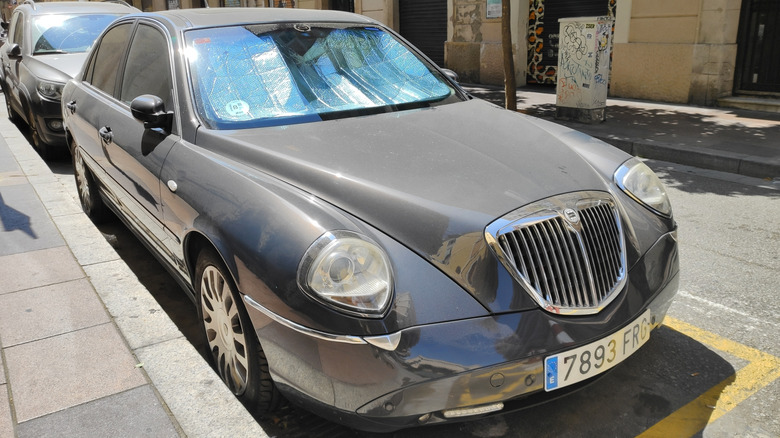
Okay, so this one requires a little suspension of disbelief and some unhelpful timelines, but stick with me here. The thesis behind Lancia's Thesis luxury automobile was an intention to compete on level footing with the Audi A6 and Mercedes-Benz E-Class. Unfortunately, Lancia was in dire straits at the time and couldn't fund a proper luxury kind of machine. As such, it was fitted with tiny five- and six-cylinder Fiat and Alfa hand-me-down engines, and front-wheel drive.
Still several years from its merger-of-equals with Chrysler, the Fiat Group might have been desperate enough to partner with a then-also-desperate Chrysler née Daimler for an interesting development. Chrysler, for its own part, had already developed a front-wheel drive version of the Hemi engine and was looking for a reason to produce it. As it stands, the only vehicle to ever actually receive a front-driver Hemi V8 was the 2006 Chicago Auto Show Dodge Rampage concept. Hand the V8 reigns to Lancia, and perhaps it wins back some of the sales it lost in the doldrums of the aughts decade.
It wouldn't be the first time Lancia borrowed an overpowered V8 for one of its staid front-wheel drive luxury sedans, either.
SRT Viper
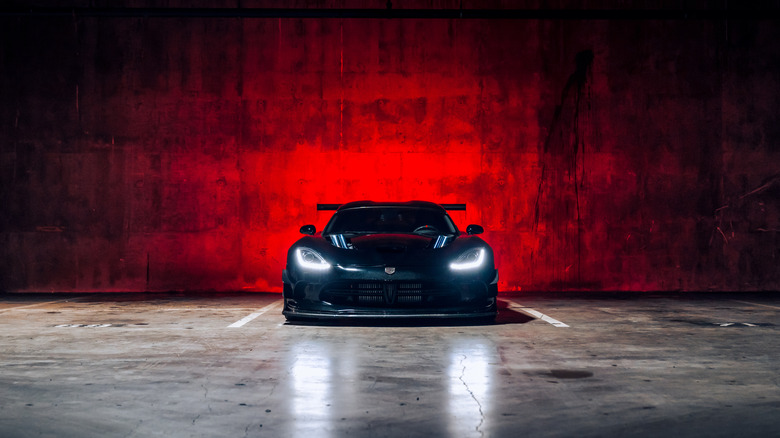
At least until the Corvette moved to a mid-engine layout, Dodge's Viper was the single greatest American-made performance car of all time. But what good is an American supercar without a giant throbbing V8 under the hood? Yeah, a V10 is nice, especially a yowling, howling, whirling dervish of a V10 like the one in the Viper, but American muscle is always, always, always better with eight. A big, honking, rootin' tootin' V8 just sounds better, and tucked in under the long hood of the Viper probably would have handled better and made more tractable power, too.
With the right upgrades and adjustments, a Hemi V8 could easily have made at least as much power as the 6.4-liter V10 in naturally aspirated form, and would have positively decimated the V10 once equipped with a supercharger. If Dodge and SRT had kept the Viper in production and found a way to get the 1,000-horsepower seven-liter Hellephant engine under the hood, there could really be a title fight going on against Corvette's new ZR1 for top dog.
Alfa Romeo 8C
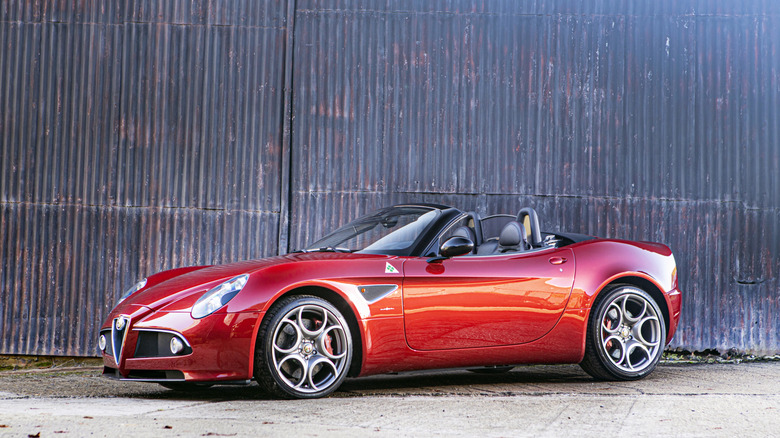
The Alfa Romeo 8C is among the most beautiful cars of all time, and while it came with a perfectly acceptable Ferrari-derived 4.7-liter dual overhead-cam V8 making 444 horsepower, I'm not sure it was a truly fitting engine for the 8C nomenclature. The original Alfa 8C was a totally raucous supercharged straight-eight in a lightweight racing chassis, and it sounded like pure deep near-satanic thunder. The modern 8C sounded far too light and zippy, rather than having the growling grumble of its forbears.
Here we have another time-shifted, could-have-been, Fiat-Chrysler, head-cannon creation; just imagine this beautiful bodywork combined with the neck-snapping torque and manic supercharger whine of a Hellcat engine. It could have been a combination that created one of the greatest sports cars of all time. This is one of those lost opportunities of history, something that certainly could have been, but wasn't.
I would argue Alfa could have really cemented its place in the U.S. with a totally ridiculous Hemi-powered 4C sports car, too, but you guys aren't ready for that conversation.
Ferrari 458
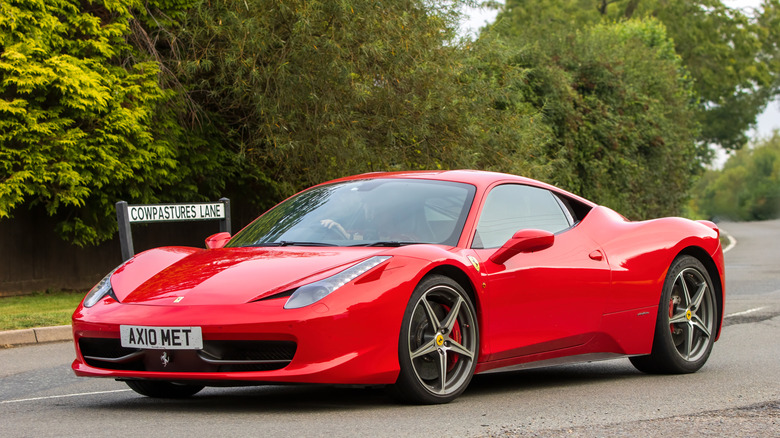
I'm probably going to get some pushback on this one, but bear with me. There was a brief moment in time when Chrysler and Ferrari were both folded under the Fiat Chrysler Automobiles umbrella. FCA was established in January 2012, and Ferrari was spun off into its own independent entity in 2015. For that brief three-year period, Ferrari could have easily called the good folks in Auburn Hills, Michigan, and asked them for a few hundred good-ol' American Hemis to pop into the middle of their 458 sports cars.
The 458 Italia is defined, largely, by its high-revving and sonorous 4.5-liter 562-horsepower V8. This mid-engine Ferrari builds its speed in a delicate and svelte kind of manner, completely at odds with the way a supercharged Hemi does, but you cant say you don't want to know what a mid-engine Hellcat feels like — even just out of curiosity.
Chrysler could have rebodied this chassis with its own design, used its own engine, and made the world completely forget about the then-dormant Ford GT supercar. Oh, what might have been!