

What's The Difference Between The Mopar 440 And 440 Magnum Muscle Car Engines?
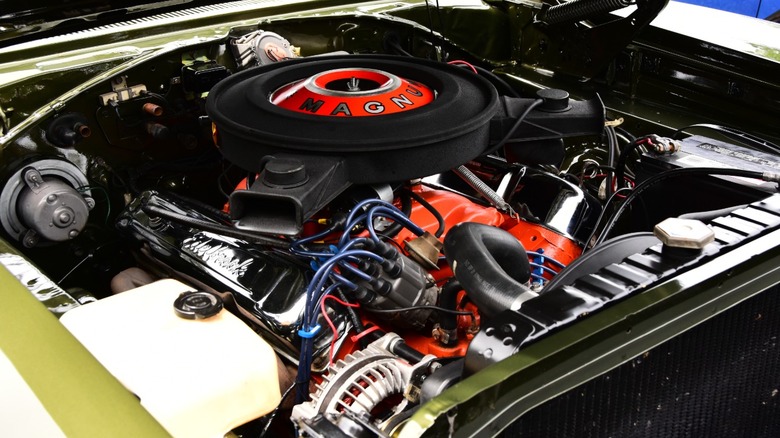
The Mopar 440 saw its way into several cars in the late 1960s, as did its high-performance variants, like the 440 Magnum, 440 TNT, 440 Super Commando, and the most powerful of the bunch, the 440 Six Pack. The ones that were put in Dodge vehicles were the 440, 440 Magnum, and the 440 Six Pack. It's pretty obvious why the Six Pack stood out — it had three carburetors, after all. But was there much of a difference between the base 440 and the 440 Magnum?
While the two engines were similar and shared the same core build, there were, in fact, significant differences that allowed Dodge to squeeze out about 25 more horsepower for the Magnum. Most of the mechanical differences had to do with air and gas flow. The Magnum had wider exhaust valves, a larger carburetor, a dual snorkel air cleaner, and a dual exhaust system. It was also built with a more assertive camshaft, with the base 440 cam often being termed as "mild". Performance-wise, the Magnum in the early years of production was rated at 375 hp, compared to 350 hp for the base 440. Either way, a driver who bought a vehicle with a 440 or one of its variants was in for one powerful ride. Of course, Mopar built other big engines back then. You might want to check out how the 440 compared with the 340 and 383.
How the Mopar 440 and 440 Magnum were alike
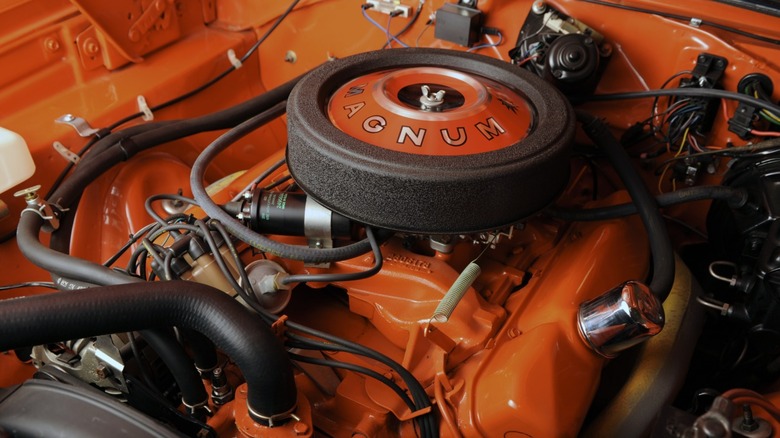
The Mopar 440 Magnum was basically the Mopar 440, but with a high-performance package. The base Mopar 440 and 440 Magnum shared the same core, the Chrysler RB big‑block. That means they both had a displacement of 440 cubic inches (4.32-inch bore × 3.75-inch stroke) and wedge-shaped combustion chambers, which is why it was known as a "wedge" engine.
The Chrysler RB ("Raised Block") engine was called that because its deck, at 10.725 inches high, was almost three-quarters of an inch higher than the Chrysler LB ("Low Block") engine, which was 9.98 inches high. The extra height accounted for the 3.75 inches in stroke. It had five main bearings, stamped steel rocker arms, and hydraulic tappets. The tappets kept the rocker arms stable so they wouldn't have to be adjusted all the time. The stamped steel rocker arms themselves were used because they were dependable and inexpensive to manufacture.
Other common traits of the 440 engines included the fact that their oil pumps were on the front, as well as their distributors. These engines also had shortened intake and exhaust ports to help make the engine lighter. Additionally, they had deep skirt areas for extra stability. Overall, these engines were very durable and were designed so that parts would be easy to reach.
How the Mopar 440 and 440 Magnum differ in components
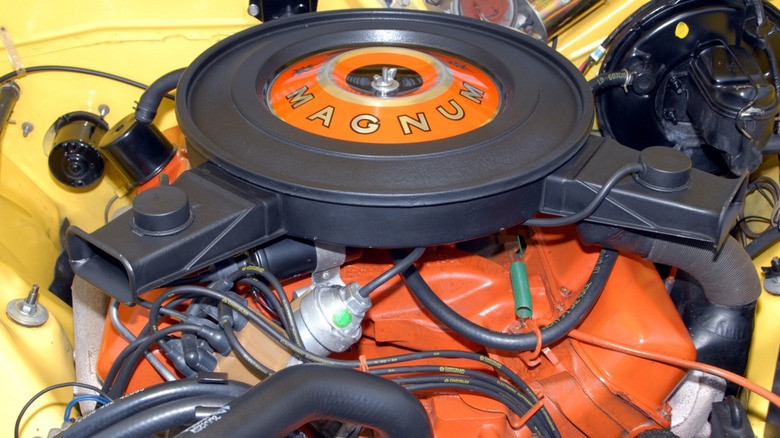
As we said, the 440 Magnum was the high-performance version of the Mopar 440. "Magnum" was the name given to the HP version when it was placed in Dodge vehicles. It was branded as the 440 "TNT" in Chrysler cars and the 440 "Super Commando" in Plymouth automobiles.
One of the ways that the high-performance 440s differed from the base 440 was the width of the exhaust valves. In order to increase gas flow and help facilitate enhanced performance, the valves on the Magnum had a wider diameter, at 1.74 inches compared to 1.60 inches in the base Mopar 440. Airflow was increased for the Magnum with a dual snorkel air cleaner and dual exhaust system. It was fitted with a larger carburetor, though it was still a four-barrel carb, like the base 440.
The camshaft for the 440 Magnum has been described as aggressive when compared to the base 440, with timing at 268-degree intake and 284-degree exhaust with 0.450/0.467 inches of lift, and an overlap of 46 degrees. The camshaft on the 440, on the other hand, is categorized as a mild camshaft, as it was designed not to put too much wear on the valvetrain. But even this arrangement is a bit conservative, especially with today's camshaft technology, leaving a lot of power on the table. That's why the 440 camshaft may seem like an ideal target for a modder hoping to milk more horsepower out of the engine.
Performance differences between the Mopar 440 and 440 Magnum
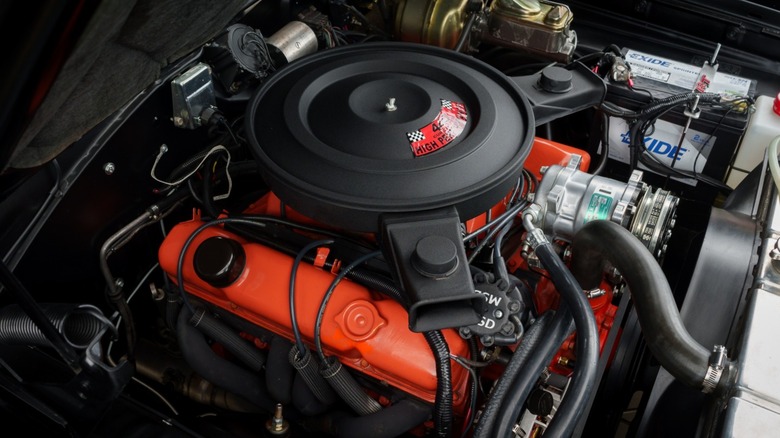
The main difference in performance was the little bit of extra horsepower that could be eked out of the Magnum. The base 440 was factory rated at 350 hp, while the Magnum was rated at 375 hp. There might be some question as to how much additional power the Magnum could actually crank out, however. According to Hot Rod, old racing bulletins quoted Chrysler factory engineers as saying the NHRA's rating of 375 was "too high," and that Chrysler literature indicated that it was closer to 330. However, we can't find the literature they refer to, nor can we corroborate it. So the official horsepower rating for the Magnum is 375 hp at 4600 rpm. That might not seem like much by today's standards, but it wasn't too shabby compared to some big-block engines.
Horsepower ratings would decline over time, though the specs might be a little misleading. Emissions standards became stricter during the 1970s, and compromises to meet those standards often translated to less power. However, it was during this period that automakers began switching from gross horsepower to net horsepower in their ratings.
As far as torque goes, both engines could produce 480 lb-ft of torque when the Magnum came out, just at different RPMs. The rating for the base 440 was 480 lb-ft at 2800 rpm, compared to 480 lb-ft at 3200 rpm in the Magnum. Compression in both engines stayed at 10.1:1 until the 1970s.
Mopar 440 vs. 440 Magnum: the cars they powered
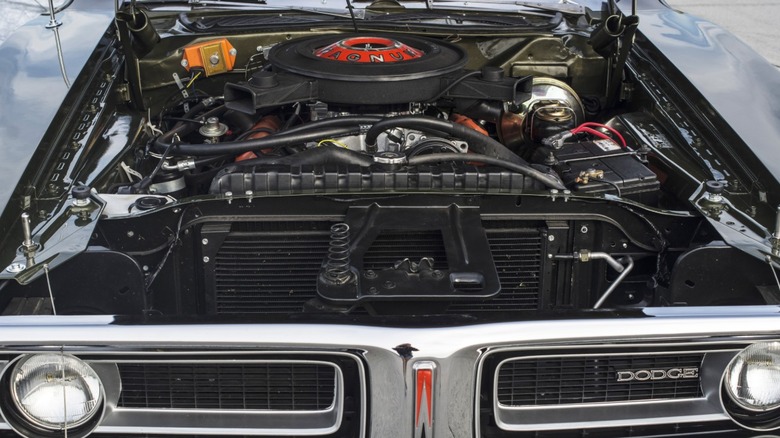
Like we said, 440s with the Magnum label were specifically for Dodge vehicles. But they weren't in all Dodge vehicles. Some Dodge models were equipped with the base 440. Specifically, the base engine was put in full-size C-body cars and luxury models. The base 440 was used when torque, towing, or comfort were prioritized over performance. Models that had the base 440 — either standard or as an option — included the full-size Polara and Polara 500, as well as the luxurious Monaco and the C-body Royal Monaco. Dodge pickups also had the base 440, presumably to optimize towing.
The 440 Magnum was mostly reserved for the muscle cars in the Dodge lineup, especially the R/T trims. For example, it was standard in the Charger R/T and the Coronet R/T, but it was optional in the Challenger R/T. It was also an option for the Super Bee and Monaco 500. The Polara Pursuit with specialized police packages used the 440 Magnum, and it was in the Rallye for a very brief time in the early 1970s.
The 440 era saw quite a few drivers experience the raw power of a big V8. Both the 440 and the 440 Magnum were impressive powerplants for their time, especially when you consider that some huge engines produce surprisingly low horsepower.