

Here's How Airports Get Named After Presidents
According to the FAA, the U.S. has 5,146 public and 14,336 private airports. Some places have a greater concentration of air travel venues, such as Texas, which includes 26 commercial airports. One of those is named George Bush Intercontinental Airport, located in Houston. But why name an airport after a president?
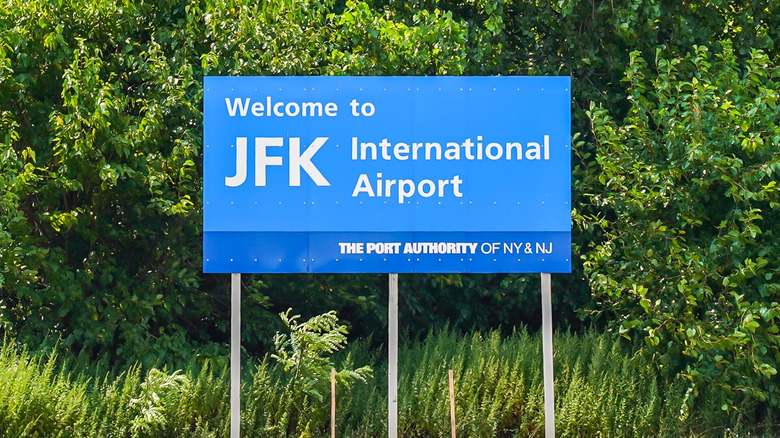
There are a few reasons as to why a major air travel hub will get a president's name. It could be that the previous commander-in-chief was strongly associated with the area, which was the case of George H.W. Bush, a long-time resident of the Houston area. In some cases, an airport takes on the name following a tragedy, in order to commemorate a leader after their passing. For example, Idlewild Airport in New York changed its name to John F. Kennedy International Airport in 1963 following the 35th president's assassination.
JFK International Airport was actually the first to start the presidential naming practice. Although, earlier presidents prior to JFK have since received the honor, with examples such as Illinois' Abraham Lincoln Capital Airport. Fortunately for them, they don't seem to be tarnishing the names of those they honor. We asked you about the worst airports you've ever traveled through, and none of the ones named after former presidents made the list.
How does the process of changing an airports name work?
There are several considerations taken into account prior to an airport name change. This includes how much the change is going to cost, where the funding is coming from, the scope of adjustments to things like signs, and the impact on FAA systems. While it might sound straightforward enough, naming an airport after a president could end up with a multi-million-dollar price tag and take up to two years to complete.
All these questions and concerns are often debated among politicians and the local public. The next step begins with state-level politicians working to draft and pass legislation to switch the airport's name. If the bill is voted through, in some cases, the Federal Aviation Administration is asked to sign off on the change as well. For instance, when a bill was introduced that sought to name Palm Beach International Airport after President Trump, Florida's Committee on Transportation required the bill to be approved by the FAA. Even beyond those caveats, the process of renaming an airport isn't always a smooth one. In the case of Florida, Trump filed a copyright for the airport name.
Airports around the world don't always follow the same naming patterns as the U.S.
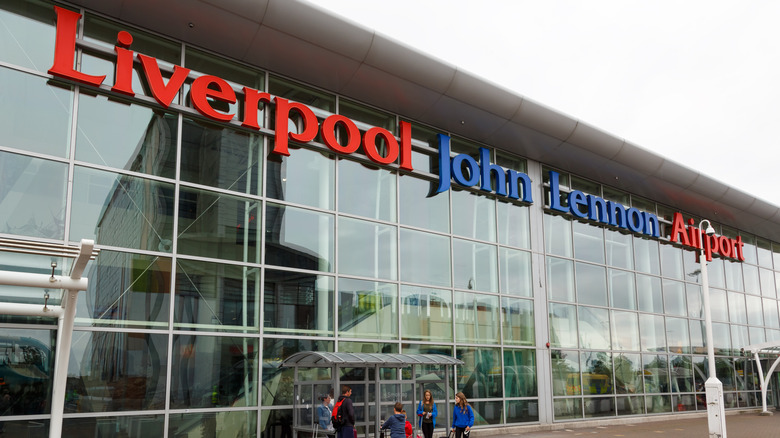
American airports feature the names of political or military figures and major cities — except for a select few instances, like New Orleans' Louis Armstrong International Airport. (In one strange case involving an airport and a politician, Chicago's former Mayor destroyed an airport under the cover of night.) However, outside the states, names are expanded to include a range of historical figures. For example, you can find airports named after inventors such as Nikola Tesla, authors like Ian Fleming (the creator of James Bond), and ancient conquerors such as Alexander the Great. England even named an airport after one of the Beatles: the Liverpool John Lennon Airport.
For all intents and purposes, this approach might offer a less contentious process for naming, as political figures (especially those of the past decade) can tend to be highly polarizing. On the other hand, someone who isn't a fan of the Beatles or James Bond stories isn't necessarily going to be against an airport named after them. Even figures such as Alexander the Great — a man that has been criticized by historians for brutality — are thousands of years removed from modern times.