

Why It Matters That Engine Hours And Idle Hours Are Different
Car owners would typically refer to the owner's manual to determine servicing requirements such as how many miles before the oil needs to be changed. However, there's a reason why manufacturers often categorize their service intervals under normal or severe driving conditions. For instance, Honda recommends oil changes every 7,500-10,000 miles, but it also recommends earlier changes (preferably every 5,000 miles) if the vehicle is driven in severely cold or dusty conditions.
Moreover, Honda suggests changing the oil at least once a year if the car isn't driven very often. This is because time also matters in an oil change, since oil can go bad even if it settles for months inside the crankcase. There's another aspect to consider when maintaining your ride, and it has to do with engine hours and idle hours. Although both are mainly considered in diesel truck maintenance, even gas cars can benefit from knowing the difference between the two, since analyzing the engine and idling hours might help you point out the line between normal and severe driving conditions.
Engine hours refer to how long the engine was running, regardless of whether the vehicle was cruising on the highway or sitting in traffic. Idle hours refer to the amount of time the vehicle is parked or not moving while the engine is on. Idling for a few minutes will not kill your motor, and it's somewhat unavoidable in the daily drive. However, habitually idling for hours each day will lead to significant engine wear if you aren't clocking miles on the odometer, and that could be a problem if you change the oil or service the vehicle based on mileage alone.
Idle hours are more applicable to fleet operators
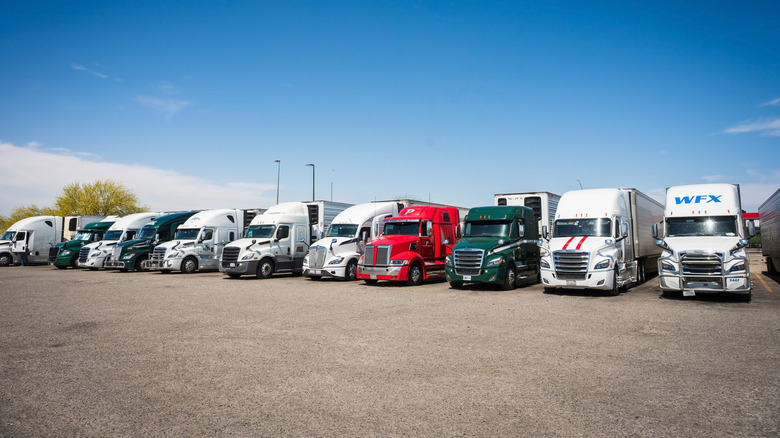
Trucking operators and fleet managers need to track, analyze, and adjust the idle hours of their vehicles to minimize downtime, save fuel, cut maintenance costs, and reduce emissions. According to the U.S. Department of Energy, a medium-heavy diesel delivery truck (with a gross vehicle weight of 19,500 pounds) consumes about 0.84 gallons (3.1 liters) of fuel per hour of idling. It may not seem like much, but if you have a fleet of, say, ten trucks that idle two hours daily, your fleet is wasting around 6,132 gallons (23,212 liters) of fuel annually. With prolonged engine idling, you have to adjust the servicing intervals of your fleet before premature wear sets in.
Those figures apply to diesel trucks, but what about gas cars? A compact sedan with a 2.0-liter gasoline engine can drink fuel at a rate of 0.16 gallons (0.60 liters) per hour while idling, while a larger sedan with a 4.6-liter gas engine can waste around 0.39 gallons (almost 1.5 liters) per hour. From that data, minimizing your idling hours will help save gas, and it could also tell if your engine needs servicing much earlier than the prescribed mileage. In other words, an hour of idling can be the same as 30 miles of engine wear.
Excessive idling is bad for internal combustion engines

Higher-than-average idle times can hurt fuel economy, but they can also do a lot of bad things inside the motor, particularly for workhorse diesel engines. Excessive idling can lead to oil dilution, less oil viscosity, and lower oil pressures — all of which are conditions that can induce more wear inside the motor. Idling motors will eat more gas due to a typically rich air-fuel ratio while stationary, which also means the oil and coolant are not circulating as freely as when the engine is revving under load.
A persistently rich ratio leads to incomplete combustion, and this aggravates the formation of carbon deposits caused by a lack of heat. Those deposits will eventually settle in the exhaust gas recirculation (EGR) valves and injectors, which will make your rig run poorly or trigger the check engine light. Overall, extended and unnecessary idling will contribute to early wear, deterioration, or even clogging of the diesel particulate filter and EGR system.
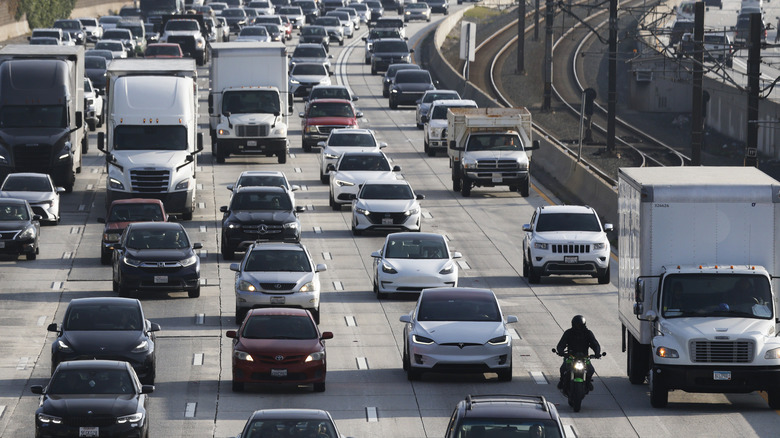
You'll want to service the engine more frequently and adjust the oil change intervals if your vehicle is commonly going through severe operations. For reference, this includes hauling or towing frequently, driving in extreme hot or cold environments, frequently driving in bumper-to-bumper traffic, and — of course — being subject to extended idling.