

AMC Canceled The First Car With An Onboard Computer At The 11th Hour
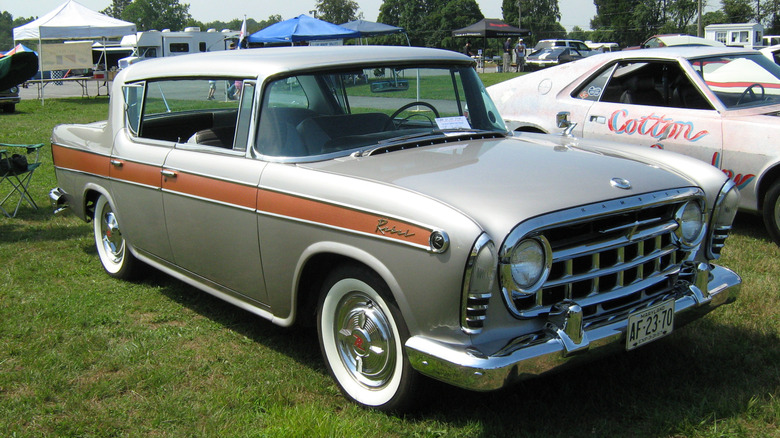
We've covered some hot cars by the American Motors Corporation before, including a 1968 AMC AMX Project and the Gremlin that could beat 454 Corvettes through the quarter miles, but this time we're going back even further. The 1957 Rambler Rebel that was seen as America's fastest sedan of the year. Running on the hard-packed sand of Daytona Beach during the annual Speed Week, the Rebel turned in a 0-to-60 mph sprint of 7.5 seconds.
The model managed this time using carburetors, but it was meant to have an electronic fuel injection (EFI) system instead, under the name of Electrojector. Just imagine how much quicker the Rebel could move if it had what was originally meant for the car. (Actually, you don't have to work your imagination too hard; there's evidence that the system would cut .5 seconds from the Rebel's 0-60 times.) It nearly happened, too, since engineers from AMC and Bendix (the company supplying the fuel injection system) battled the system's reliability problems right up to the point where a handful of fuel-injected Rebels might have made it down the assembly line.
The bottom line is that none were produced, but a good case can be made that at least one show-ready Rebel was indeed fitted with the computerized fuel-injection technology. As for the exact problems that prevented the system's success, the biggest was that it didn't work in colder temperatures. And by "colder temperatures," we mean below 50 degrees Fahrenheit – so not really that cold at all. Needless to say, this would have been a major issue for most U.S. drivers.
What was the Bendix computer designed for?
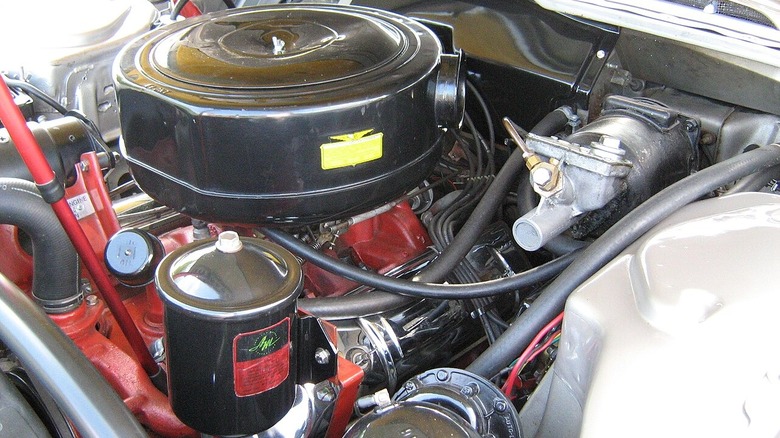
The problem that Bendix's Electrojector was supposed to solve had been around since the birth of the gas engine. The combustion that creates the engine's power needs fuel and air to burn, and getting them into the combustion chamber in exactly the right blend is vital if you want to optimize performance and efficiency. With fuel injection, the mixing occurs right in the combustion chamber, while the other setup has the blend mixed together in the carburetor itself, which is one of the reasons you should know how to clean a carburetor if your car still has one. The sweet spot for the right ratio of fuel to air can change based on factors ranging from engine speed to altitude. Mechanical fuel-delivery systems like carburetors, however, can't automatically adjust themselves to adapt to the different conditions.
That's where the Electrojector's modulator came into play. An analog computer — which treats physical stimuli like current or voltage as data, rather than binary code — used sensors to detect when a change in the fuel/air mixture was necessary, then sent a signal back to the injectors to fine-tune their operation. It even had separate circuits to control fuel flow and air flow individually for increased precision. Among the individual sensors included were those for intake manifold pressure, acceleration enrichment, altitude compensation, and deceleration. For what it's worth, Chrysler sold a very similar system on a small number (about 35) of its 1958 models. But nearly all of them were recalled to have the setups replaced by carbs.
What was the first successful automotive EFI system?
Bendix gave up on the project in 1960, but that wouldn't be the end of the Electrojector. Looking to earn at least something back for its efforts, Bendix entered a licensing agreement with Bosch, the German engineering firm that was founded in 1886 and remains a major automotive supplier today. Bosch had also been involved in trying to transfer mechanical fuel-injection technology from the aviation industry to the car business during the late 1940s.
By 1955, direct injection had debuted on the Mercedes-Benz 300 SL, and GM's Ramjet direct-injection system was available for the Chevrolet Corvette and Bel Air in 1957. Bosch engineers built on the same principles behind these systems and leveraged Bendix patents to install the first successful EFI setup in the 1967 Volkswagen 1600 Type 3. Marking a major milestone for brand, the Type 3 family — which would eventually include hatchbacks, sedans, and station wagons — had premiered in 1961 and was engineered to "offer a new home to Beetle drivers looking to move up the ladder," as Volkswagen itself describes.
By the time the industry entered the early 1970s, brands like Volvo, Citroën, Opel, BMW, and Saab were among the many companies licensing Bosch's EFI technology. Of course, so was Porsche, with its VW-adjacent 914, which could have been a tiny mid-engine wagon if things had gone differently. Then again, things also might have gone differently if AMC had solved the cold-weather starting problems of the fuel-injected Rambler Rebel. It could have been better known the first company to offer EFI in affordable cars, rather than earning the title of "The Last Independent Automaker" in America.