

How To Get A Blackout License Plate (If You're Allowed To)
We may receive a commission on purchases made from links.
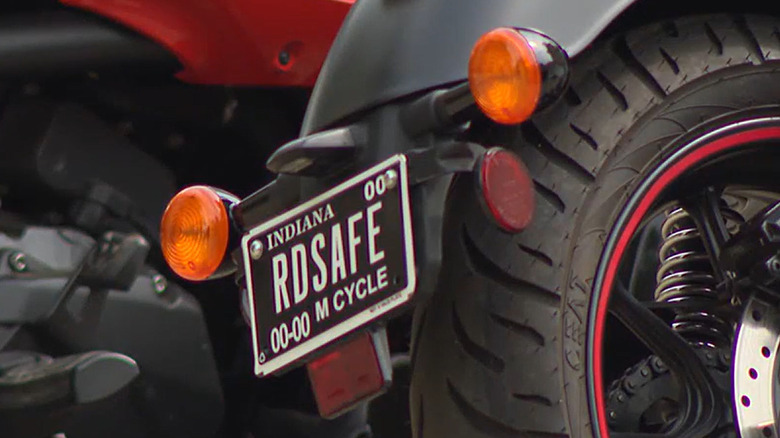
You don't need a vivid imagination to figure out what blackout license plates are. They are just typical license plates, but with a black background. The lettering is usually bright white or lightly colored, and the contrast provides a clean and minimalist look. If you reside in one of the blackout-cooperating states, getting hold of one is actually a pretty simple and straightforward process. Generally, the easiest way is to apply through the Department of Motor Vehicles' website. Most applications will cover eligibility — which can be affected by factors such as the classification of your vehicle — and then you simply select the style you want, which carries an additional fee.
It can be quicker and simpler to either make one yourself at home, or order one from a third-party website. But this will not be a legal approach, regardless of whether you live in a blackout-plate-friendly state or not. Sure, such a plate is fine for displaying at car shows or for getting fancy shots for your Instagram feed, but it's the wrong route to go down if you want to equip it while out and about on the road.
Legalities surrounding who can and cannot have a blackout license plate
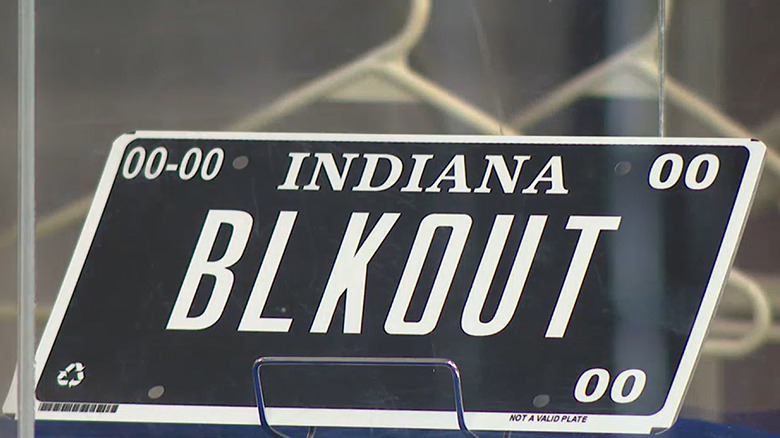
Only a few select states currently allow you to legally rock blackout license plates, so if you're outsideof Iowa, Colorado, Mississippi, Utah, Minnesota, Indiana, North Dakota, Kansas, and Wisconsin, then you're out of luck. Other states do offer similar plates, such as Tennessee's selection of black-backed specialty plates, but for the full blackout treatment, you need an address in one of the aforementioned areas. Having said that, many of the above states have only joined the blackout craze in recent months and years. With the gradual increase in popularity and demand for these plates, it's not unreasonable to expect other states to follow suit.
Kansas is a great example of how growing popularity influenced the state's decision to introduce the design there. Zach Denney, from the Kansas Department of Revenue, told Fox 4 that "Kansans take pride in their license plates, and we've heard how much they love the blackout plate design offered in surrounding states, so we knew we had to bring this design to Kansas."
While you aren't meant to get them outside of going down proper routes, there are heaps of sellers retailing blackout or 'ghost' license plates. Typically, though, these will be listed as show plates or similar, and marketed as for off-road use only. In other words, they are not legal. Rock them at your own risk, and perhaps just save them for once you've pulled up and parked at the local Cars & Coffee event (if it's in a privately owned car park, of course).
So, what's the big deal with blackout plates?
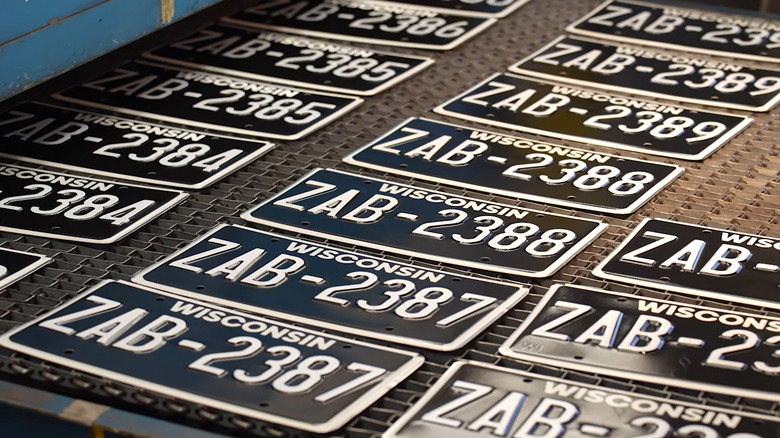
As with many things, if you're not a part of the culture behind a movement (in this case, we are referring to car culture), then it can be tricky to understand the hype. Well, the hype around blackout plates stems from the fact that they just look cool; they're one of the best vanity plate ideas we've seen for a while. Gearheads spend years and thousands of dollars perfecting their car's look with trick three-piece alloy wheels, wide body kits, pricey paint jobs, and trick custom interior installs, all for standard license plates to stick out like a sore thumb. In today's world of minimalist builds and monochromatic paint schemes, the blackout plate design blends in seamlessly, and car fanatics love them for it.
It's not just a win for the driver, either, as the providing state wins, too. The fee attached to the design is often directed back towards the state itself, allowing it to use that money on other projects. Drivers and the government both end up winning with these plates, which might explain why more states are jumping on the trend.
The history of blackout plates goes back further than you'd think
Blackout plates seem fairly new, and they really suit the modern minimalist aesthetics that are so popular right now. But, in truth, they aren't actually new at all. It's true that fashions always come around again, and if we wind the years back on the license plates, we find that the blackout style has been seen before, decades ago.
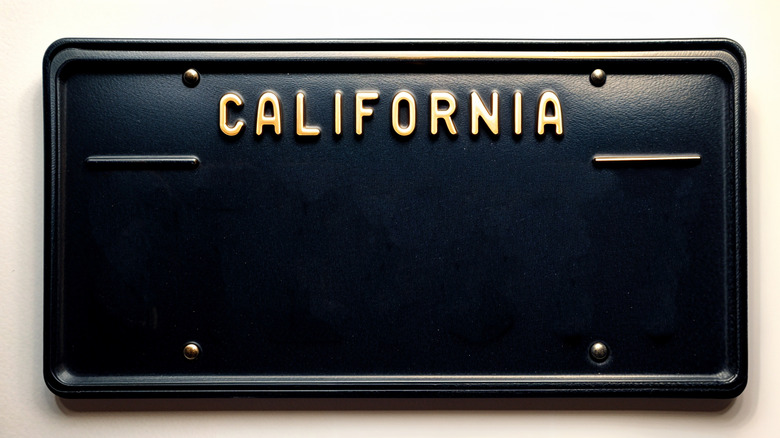
Just look at Colorado. The state reissued a selection of historic plate styles back in 2023, and among them was the ever-popular blackout style, which was first issued way back in 1945. Another great example would be the reintroduced black-and-yellow historic plates in California. These were first seen in the 1960s, and they were revived for 2012 with a new (but still black) reflective backing. Sure, these don't follow the true blackout style as they sport yellow lettering, not white, but it's the simple black background that's more iconic. In many ways, old license plates used to be so much cooler, so it's really no surprise to see some of these historic designs making a comeback.
For a final example, look to Utah. The state used to change license plate colors almost annually, and between 1909 and 1968, black and white plates were chosen no fewer than 17 times. There won't be too many cars from this time still rocking the style, but it just goes to show that the blackout design isn't as modern as it might look.