

3 Weird Ways Radiators Were Destroyed (And What's More Likely To Give You A Headache)
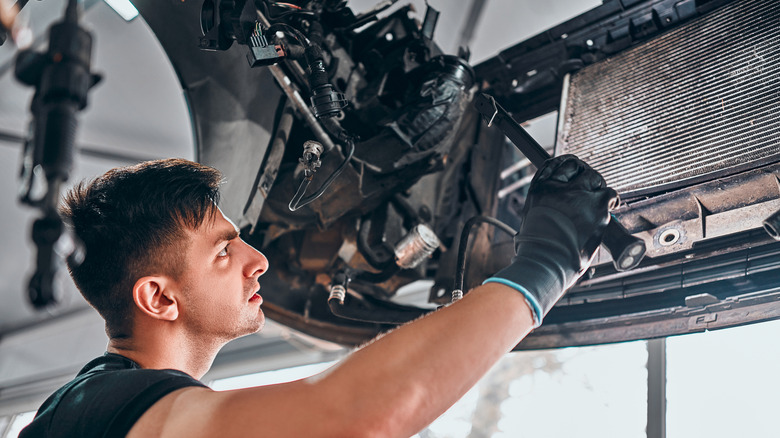
Failures can crop up anywhere on a car. While some disable the vehicle immediately, others at least allow you to keep on motoring while you hatch a plan for repair, like a downed sensor triggering an annoying dash light, for example. Well, a failed or destroyed radiator falls into the former category — you certainly won't be going far with a compromised radiator, and you'll risk causing heaps more damage under the hood if you try.
Whether it fails internally from corrosion, from dried-out, cracked, and split seals, or from some external damage caused by road debris flung its way, you're in for a bad day if your radiator dies. The radiator is a crucial part of your car's engine cooling system, allowing for the dissipation of heat and keeping engine temps where they need to be. However, if a compromised radiator gives the coolant a way to escape, it's only a matter of time before more serious issues are afoot.
You'll typically be given plenty of warning signs, such as plumes of steam rising out from under the hood, a low-coolant warning on the dash, or a similar warning for high engine temps. While those are common issues to watch out for when it comes to your radiator's health, before we jump into these warning signs, let's check out some of the wildest and weirdest ways in which motorists' radiators have failed in the past.
Self sabotage
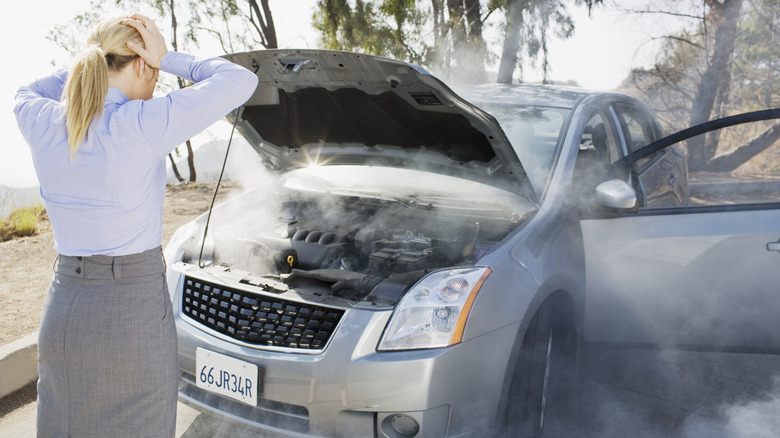
It's not difficult to imagine how a car's radiator could become compromised while out on the road. A stone could easily be flicked up by a vehicle in front of you and smash into the radiator. Sometimes, though, on very rare occasions, the debris won't come from another road user, and it is instead flung from within the engine bay itself.
One user who posted on the ChallengerTalk forums noted a situation just like this, in which their SRT's fan simply exploded while they were driving. Plastic shards were fired off like shots, piercing the radiator as they drove. The really weird bit? This was the second time it had happened in the span of 12 months, and the user swears they used OEM parts the first time around, too.
Many users doubted the legitimacy of the post, instead suggesting they may have left a screwdriver under the hood or something. However, it wasn't long before other users chimed in, explaining that they, too, had experienced the same issue.
Elsewhere, on Reddit, the owner of a 2011 Honda CR-V claims their new AutoZone radiator simply blew up on them, spewing out a strange goo in the process. What actually happened is anyone's guess, but apparently — according to the original poster — there are no signs to suggest head-gasket failure. It's possible that the problem here was down to user error – perhaps they mixed IAT and OAT-type coolants, which can cause a gel-like substance to form, but either way, its certainly a bizarre failure for a radiator to suffer.
Damage by foreign objects

While it's evident that, on rare occasions, something within the car itself will compromise the radiator, it's far more likely to be pierced by something flung from another vehicle. For example, another member of the Jalopnik team once had their (get ready, lazy badge-engineering lovers) Saab 9-2X's radiator pierced by a truck-flung steel cable. It hit the road, whipped up into the air, and then promptly made its way through the radiator.
It's not uncommon for bits of debris and rocks from the road to be flung up by trucks, which is perhaps one of the best reasons for you to finally give up that tailgating habit of yours. There are numerous accounts of rocks flicking up into the air and piercing radiators, and the first clue that this has occurred is often a soaring temperature gauge. There isn't an awful lot you can do about instances like this — apart from maybe fitting a strong mesh guard between your bumper and radiator, as suggested by some enthusiasts. However, there's no way of telling how effective these types of DIY mods may be, and you may end up compromising the airflow, too.
Thankfully, debris firing through your radiator is still a very rare occurrence, and there are other maintenance-related concerns to be aware of, which, thankfully, you can spot and prevent a whole-lot easier.
Poor maintenance will only lead to bigger bills
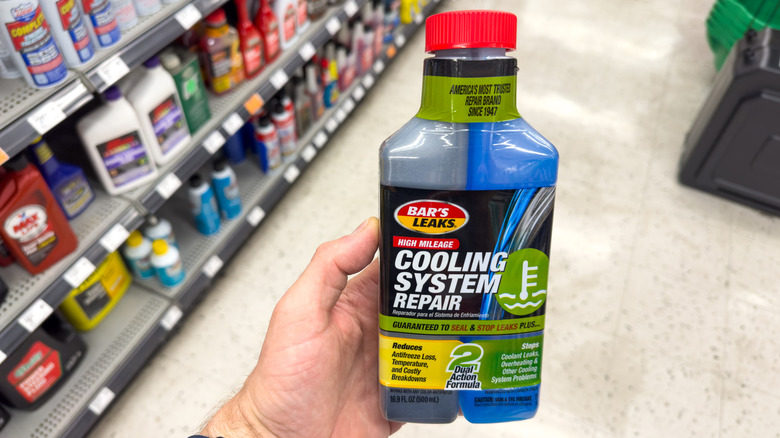
It goes without saying that auto maintenance is important, and poor maintenance practices can be just as harmful as no maintenance at all. Say you notice a leak springing from your radiator –- in an attempt to save a few bucks, you may be tempted to use a stop-leak product, and it's easy to understand why. Such products generally only cost around $20, which is far cheaper than a new radiator. They are easy to use, and they can put a stop to your leak within minutes. If money really is an issue, though, skip the $20 additive, and just crack an egg into your radiator.
However, stop-leak should only really be used as a temporary measure, rather than a permanent fix. See, as clever as the additive may be, it can't tell the difference between a crack in a radiator and a narrow coolant channel. In other words, if it can, it'll happily block both, which could lead to poor coolant circulation, as well as overheating issues and repairs far more costly and involved than simply dropping in a new radiator.
Another poor maintenance practice that could put your radiator at risk is diluting antifreeze. Yes, it's fine to dilute antifreeze to a certain point. However, if your radiator is leaking and you're simply replacing that lost fluid with tap water for convenience, you may wind up diluting it so far that the antifreeze properties are longer effective in cold temperatures. So, when winter weather hits, you could end up with a burst radiator, in addition to split pipes, and, once again, you'll be wishing you'd just forked out for a new radiator in the first instance.
Tell-tale signs that your radiator needs attention
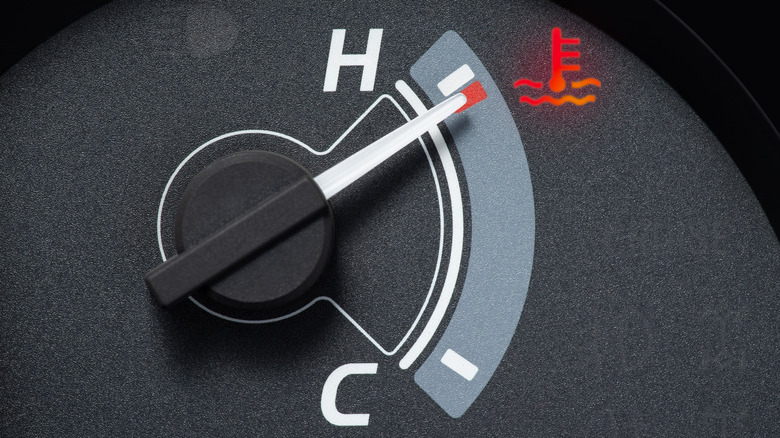
Rather than watching for incoming pebbles on the highway, or pre-emptively changing your fan in case it explodes, your time would be better spent keeping an eye out for these warning signs. First, watch out for visible leaks, easily spotted on your driveway in the morning. Leaking coolant doesn't necessarily mean your radiator has failed — it could easily be a split hose or water pump issue, but it certainly justifies further investigation. Another symptom is a rising temperature gauge. Again, there are many reasons why your car may be running hot, but the bottom line is that the system isn't being cooled efficiently enough. Potentially, this is down to blockages in your radiator or bent/damaged fins.
Rust is another culprit. If rust forms, especially near hose connections, you could easily end up with contaminants thickening the coolant, forming sludge and causing blockages. If you spot these symptoms, it may be time to replace your radiator. Costs will obviously vary, depending on what you drive, where you buy replacement parts, and if you do the work yourself. However, generally speaking, a radiator replacement shouldn't be too tough to tackle from a financial perspective.
Taking the 2025 Toyota RAV4 as an example — one of the best-selling cars in the U.S. last year — Toyota sells a replacement radiator for $343.72 (a sale price, down from $512.77). On the other hand, you can buy an aftermarket version for just $70.97, representing some considerable savings. Yes, aftermarket items may not always fit so well, and they may offer reduced performance. But if you're happy to roll the dice with aftermarket versus OEM parts, they could wind up saving you hundreds.