

It's Not Just Dust – Why There's White Powder Covering Your New Car Parts
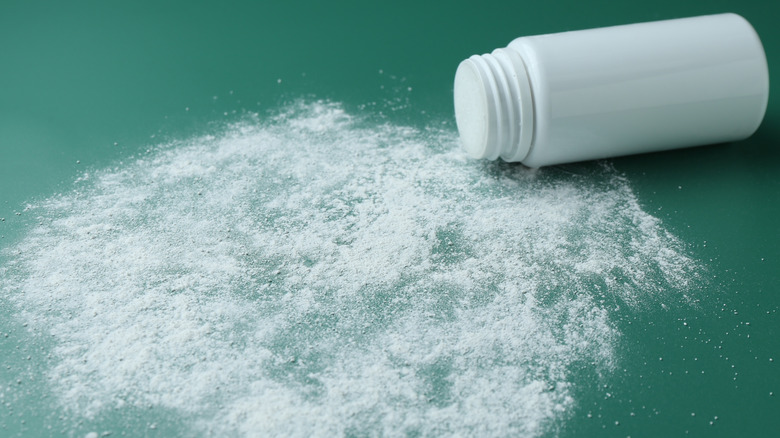
If you ever stumble across new old-stock Delorean parts, it's not surprising to see a little white powder on them. But that material can actually be found on a lot of shipped auto parts today, and it's nothing you have to call the cops over. The stuff is most likely ground-up talcum powder, and it serves an important purpose in making and shipping parts. For starters, when it comes to parts delivery, talc powder in one among the lost list of materials — like bubble wrap, styrofoam peanuts, and real popcorn – that companies have tried using to prevent damage in-transit.
But those alternatives can cause issues of their own, especially when you're transporting parts with painted or soft surfaces. In particular, they can risk damage from scrapes and abrasions, even with exceptionally careful handling during the shipping process. Meanwhile, softer protective fillers, like bubble wrap and foam, can leave behind their own unsightly marks on the paint. Sure, there are DIY scratch removal methods that actually work, but using talcum powder instead helps minimize potential problems such as these before they can occur. You can chalk that up to the fact that talc — which is mostly a mix of magnesium, silicon, oxygen, and hydrogen– is the very softest mineral on the Mohs hardness scale.
Talcum powder can also help if you want to get grease out of your car's interior, but you'll have to be careful around it regardless. That's because naturally-occurring talc can often be found mixed up with asbestos, which is a known carcinogen that can end up contaminating talc. Johnson & Johnson is still fighting a massive class-action suit about asbestos contamination in its talcum power.
Talcum powder is used in the parts, too
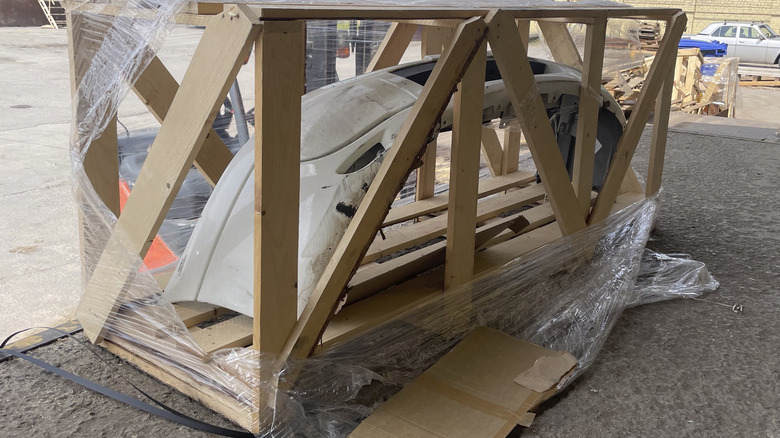
Another source of that talcum powder actually comes from the parts themselves, as well as the other substances used in them. One common example is polypropylene, which is used for car parts ranging from bumpers to carpet fibers. Known for its ability to combine durability and versatility, polypropylene is often reinforced by talc to make it stiffer and less likely to be affected by temperature extremes. In other words, products made with talc-enhanced polypropylene won't expand and shrink as much when getting hot or cold, making them great to have a vehicle's engine bay.
Some manufacturers consider adding talc as a way to make plastic production slightly more environmentally friendly. It takes the place of other synthetic materials (like plastic itself) in the final parts. How much of an actual difference it makes in the real world is up in the air, but when you consider that your car's cabin is a hotspot for microplastics already, using a little less polypropylene couldn't hurt.
In addition, talc is a popular choice as a nucleating agent for both polypropylene and another oft-used family of automotive plastics, polyethylene. Nucleating agents work after hot plastic is formed and starts to cool, which is when they help tailor the growth of tiny crystals underlying the plastic's structure. As a result, because talc is so fine can easily get into the air, some of it can settle on the parts and leave that white residue. Which is also fine.