

How To Get Grease Out Of Your Car's Interior Without Ruining It
We may receive a commission on purchases made from links.
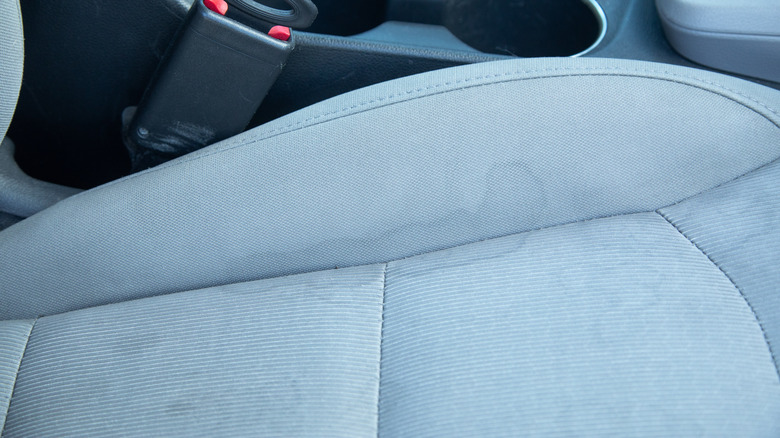
If seemingly harmless deeds like wiping paint with a dry towel or frequently visiting automatic carwashes can do more harm than good, it's not hard to imagine how the wrong approaches or cleaning products can ruin your car's delicate interior. Sure, those cabin plastics can take a beating, and some materials are more resistant to wear and tear than others — but cloth seats, leather interiors, door sidings, and the headliner can get gummed up with nasty stains that may prove challenging to remove. Leather or cloth seats are not that difficult to keep clean, and even the headliner can be kept spotless without expensive cleaning products. However, oil or grease stains are a different matter.
Stains from your dirty hand when changing the oil or tinkering under the hood won't come off easily with a simple wipe, and grease stains from spilled Chinese takeout or leftover French fries demand extra care to prevent discoloring, damaging, or ruining the material permanently. Not only will uncleaned oil or grease stains leave ugly, stinky, and uneven blotches on the materials, but they will also hurt your bottom line when it's time to sell or trade the car — making it all the more important to do correctly.
Removing oil and grease from carpets and fabric seats
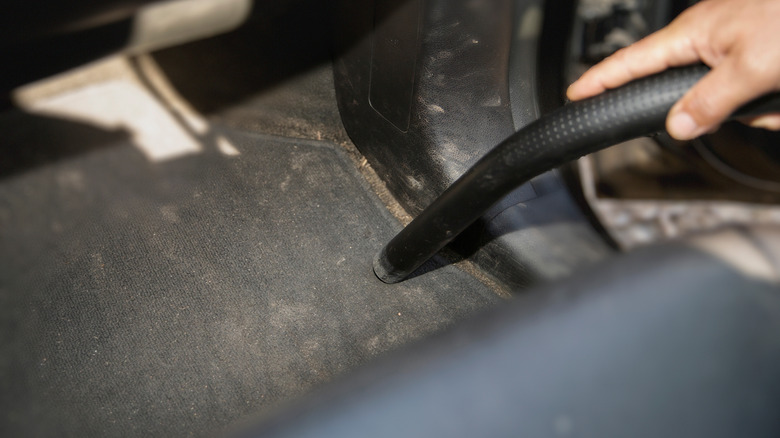
You can utilize the same procedures for removing oil from the cloth seats and carpets of your car. The first step is to grab a vacuum cleaner and suck out all the excess dirt and dust from the surface. Next is to remove or scrape off excess oil or grease with a spoon or butter knife. Now is not the time to use brute force when scraping, since doing so may damage or puncture the material — so be gentle. After removing the excess grease or oil, it's time to get out the stain. Products like the Goo Gone Spray Gel and Legendary All-Purpose Interior Cleaner will make quick work of oily or greasy stains, but you can achieve the same results using a few products in your cupboard or kitchen.
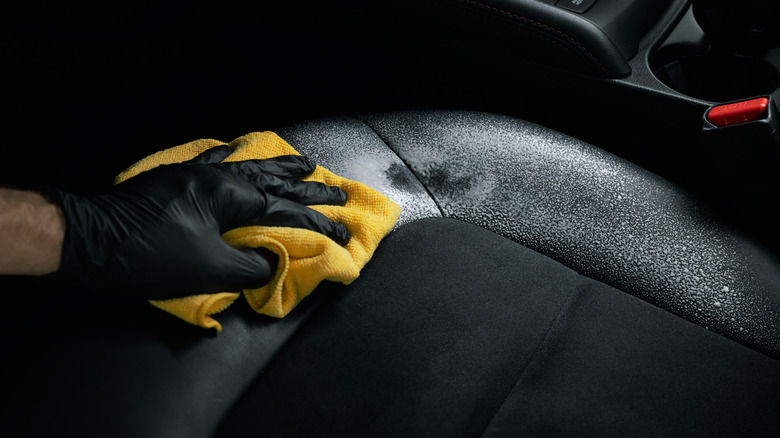
Leave a layer of baking soda on top of the stain for a few minutes, vacuum it up, and then mix a few drops of dish soap with water in a spray bottle and spray the solution into a folded microfiber towel until mildly damp. Next, blot out the stain using the damp towel, pressing gently over the affected area. Whatever you do, do not rub or agitate with force. Doing so may push the stain deeper into the fabric, and the excess friction could damage the fibers and give you an eyesore. The final step is to turn the towel over and to press gently to lift the stain off the fabric. If there's still some leftover oils after the initial clean, you can go back through and repeat the steps as many times as necessary.
How to remove oily stains from leather upholstery
Leather is non-porous and is actually easier to clean than cloth interiors. In most cases, wiping them down with a damp microfiber towel weekly is enough to keep leather seats looking new. But if the cowhide has oily stains from food or liquid spills (especially on cream or light colored leather), using a dedicated leather cleaner like the Chemical Guys Leather Cleaner and Meguiar's Gold Class Rich Leather Cleaner & Conditioner is the way to go. Both products are tough enough to rid leather seats of dirt and grime, yet the formulas contain leather-nourishing ingredients and additives to keep the material supple and protected.
If you don't have leather cleaners, you can make your own by mixing equal parts of white vinegar with distilled water in a small bowl. Grab a clean microfiber towel, dampen it with the cleaning solution, and gently blot out the stain. Again, do not rub the cloth against the stain, as doing so may push the stain deeper or damage the leather. If that doesn't work, you can use a cloth soaked in a mild solution of dish soap and water for more stubborn or older stains. Finish off by gently blotting with a dry towel to remove the excess liquid. If the stain persists, try sprinkling it with cornstarch or talcum powder and letting it sit overnight.
As a final note, conditioning freshly cleaned and degreased leather seats with a leather conditioner will restore the natural oils of the material after cleaning, especially after using vinegar or dish soap. Products like those mentioned above have nourishing ingredients to keep leather seats supple, but Leather Honey is equally great in moisturizing and conditioning leather surfaces after deep cleaning. Simply follow the directions on the bottle and you're golden.