

12 American Race Tracks Every Gearhead Should Visit
For about as long as there have been cars, there have been drivers eyeballing each other and sizing up who can get from point A to point B the fastest. Prior to the 1900s, when automotive racetracks weren't really a thing, Americans with a need for speed were predominantly getting their kicks over open terrain, with one of the earliest documented examples being Alexander Winton, who managed to cover a mile in a bit under two minutes. It was an interesting and culturally significant contrast to what was happening over in Europe at the time, where top-end speed was (probably sneeringly) eschewed in favor of twisty courses that put an emphasis on vehicle handling and driver skill.
Nonetheless, American racing did evolve out of the wide open spaces and onto the road, first in distance races between major cities and later on improvised street circuits. And while the American racetrack was perhaps inevitable, the death of early racing legend Bob Burman in a race that took place on the city streets of Corona, California began pushing racers onto rudimentary tracks and closed circuits. The rest, as they say, is history. Tracks evolved and today's gearheads have no shortage of places to call their favorite racetrack in the country. Our list makes no claims about the biggest or the best, but does run you through 12 American racetracks that are well worth a visit.
WeatherTech Raceway Laguna Seca (California)
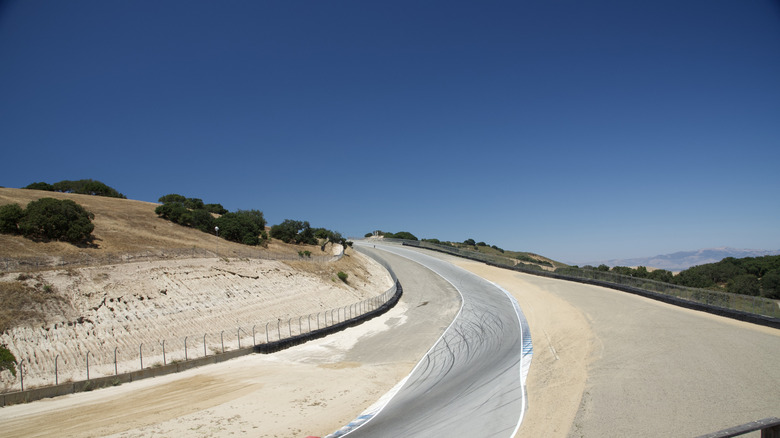
Laguna Seca exists because American road racing reached a point where public roads were no longer sustainable, and something permanent had to take their place. The track opened in 1957 after the Pebble Beach Road Races were shut down over safety concerns, moving competition off open roads and onto a purpose-built course carved into what used to be Fort Ord.
Laguna stands out not for its size or outright speed, but how completely the terrain dictates the experience. The lap is short, but the elevation change, blind crests, and awkward approaches make it feel constantly unsettled, especially climbing toward the Corkscrew, a left-right drop taken over a rise where drivers must commit before they can see the pavement waiting on the other side.
Laguna Seca works because it's accessible without being forgiving: you can stand on a hillside and immediately understand why cars look uncomfortable there, and why mistakes echo long after the corner is over. And for the best of the best, for both vehicles and drivers, the ongoing and chaotic battle for the Laguna Seca lap record is a heck of a thing.
Indianapolis Motor Speedway (Indiana)
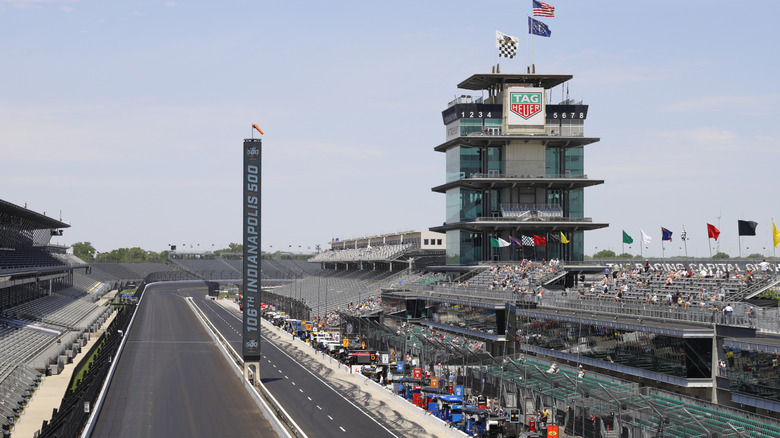
Indianapolis Motor Speedway is what happens when American racing stops improvising and starts building an automotive institution. The place opened in 1909 as a purpose-built proving ground for the auto industry, laid out as a 2.5-mile rectangular oval with long straights and four quarter-mile turns.
Early on, the original surface proved treacherous enough that it was repaved with 3.2 million bricks in 1909, a decision that gave the Speedway its "Brickyard" identity. Even though the track is now fully asphalt, a nod to history remains in the form of a brick strip at the start/finish line that remains today.
For race fans of the oval variety, the Brickyard is notable for its simplicity and scale, anchoring an event that's been running since 1911 and placing unusual emphasis on consistency, traffic management, and long-form decision-making over outright technical complexity. It's absolutely dripping with heritage, perhaps now more than ever thanks to a $60 million renovation of the Indianapolis Motor Speedway Museum.
Daytona International Speedway (Florida)
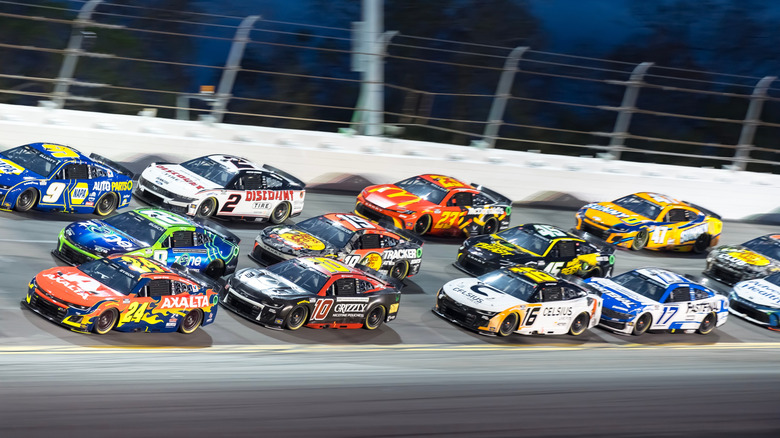
Daytona didn't exactly define American racing the way the Brickyard did, but it did help draw a line in the sand that we weren't going to keep driving on, well, sand. The track opened in 1959 to replace the Daytona Beach and Road Course, moving competition off sand and public roads and into a permanent, enclosed superspeedway designed to handle higher speeds and larger crowds.
What began as a more than three-mile course that combined the beach, the track, and public roads through town has since evolved into a fully-contained 2.5-mile tri-oval with steeply banked turns, a layout that fundamentally reshaped how stock-car racing functioned.
Daytona is defined not by subtlety, but clarity: drafting, pack dynamics, and risk are not side effects here, they're structural features of the place. You don't have to love ovals to understand why figuring out how to follow NASCAR's Daytona 500 is an expertise unto itself.
Road America (Wisconsin)
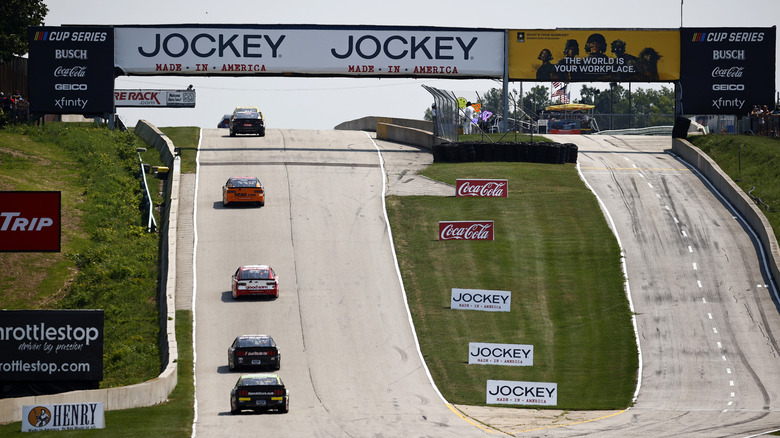
Road America didn't come out of a grand plan so much as a refusal to give up racing when public roads stopped being viable. (When the state banned road racing, we're imagining a real 1950s "Footloose" kind of showdown.)
After years of street races around Elkhart Lake, the permanent circuit opened in 1955 on wooded land outside town, preserving the long-distance, high-speed character of those early events instead of replacing it with something tighter and safer-feeling. At just over four miles long, it remains one of the longest road courses in North America, built around long straights, fast sweepers, and braking zones that punish impatience and reward commitment.
Scale separates Road America from other race tracks. The lap takes time to unfold, the terrain shapes the racing more than artificial complexity, and the experience encourages you to walk, watch, and understand how speed carries across distance. It's why the track is often held up as a pure expression of American road racing, one that prioritizes flow and forethought, with challenging corners and exciting passing opportunities. Just be prepared for the fact that Road America really is in the middle of nowhere, with nearby Elkhart Lake boasting a population of about 1,000 people.
Watkins Glen International (New York)
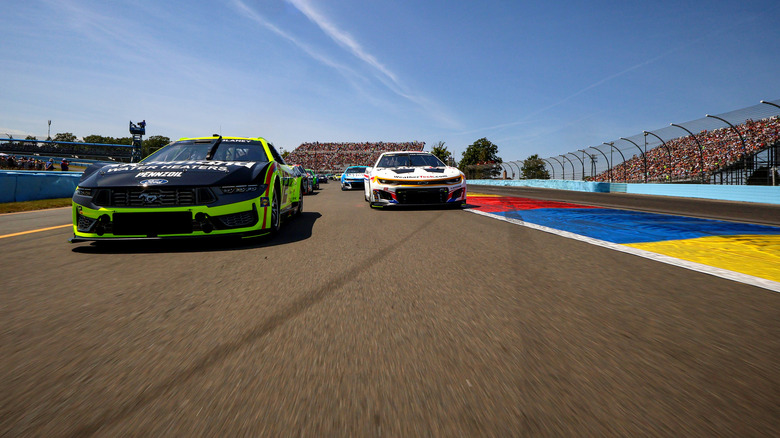
Watkins Glen's origin story is literally on the street, with racing beginning in 1948 on a 6.6-mile course that used village streets and surrounding public roads in and around Watkins Glen, New York. That version of the sport hit a wall after fatal accidents in 1952 made continuing through the village untenable.
A "second course" followed in 1953 south of town, still road-based but deliberately relocated away from the village itself. By 1956, the track completed the move to a fully permanent road circuit, locking the Glen into the American shift from improvised road racing to purpose-built venues.
Watkins Glen's modern 3.4-mile layout is still defined by speed and flow rather than fiddly technical tricks, with fast corners and big, open sections that reward commitment and horsepower. It no longer hosts Formula One, but it's still treated as one of the most important tracks in North America, largely due to everything that's not at the track.
Sebring International Raceway (Florida)
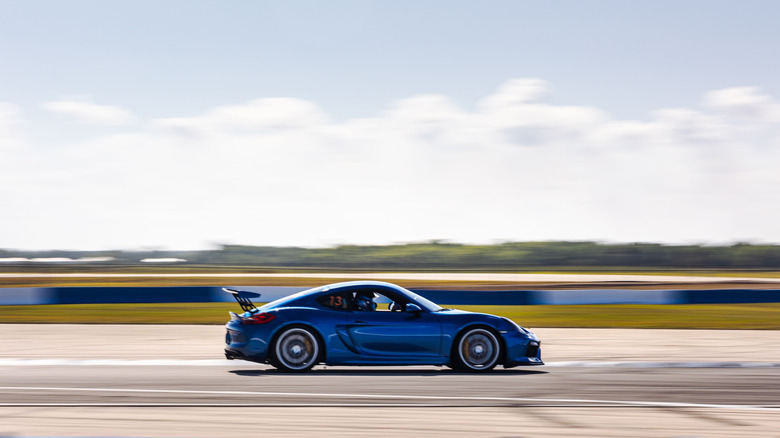
Sebring is a racetrack that looks and feels the way it does because it was never designed to be one. The circuit occupies the remains of Hendricks Army Airfield, a World War II–era military base whose concrete runways and access roads were repurposed for racing beginning in 1950. That origin still defines the lap: long straights stitched together by abrupt transitions, with a surface made up largely of aging concrete slabs that were never meant to carry race cars at speed.
The track became inseparable from endurance racing after the first 12 Hours of Sebring was held in 1952, cementing its reputation as a place that rewards durability and judgment as much as outright pace. What makes Sebring special to enthusiasts is that nothing about it has been softened to make life easier.
The bumps, vibrations, and physical punishment are part of the curriculum, which is why driver-training organizations still treat Sebring as a benchmark for mechanical sympathy and car control. It's also why Sebring is consistently singled out as one of the great American circuits: not because it's pretty or polite, but because it's honest about how hard racing can be.
Circuit of the Americas (Texas)
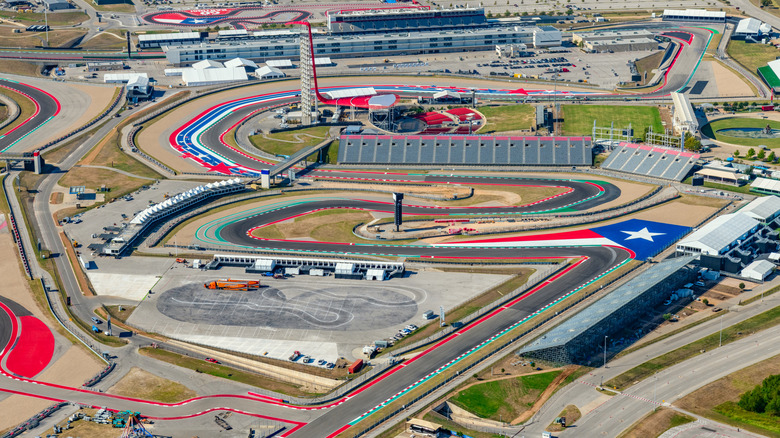
Circuit of the Americas was built very deliberately, at a time when American motorsports infrastructure was tired of borrowing or adapting and wanted something purpose-built instead. The track opened in 2012 outside Austin, Texas, as the first permanent U.S. circuit designed from the ground up to meet modern standards for series like Formula One and NASCAR, rather than being retrofitted after the fact.
The full Grand Prix layout measures 3.426 miles and incorporates significant elevation change, most notably the steep climb into Turn 1, which was designed to create a genuine braking and overtaking zone at the start of the lap. The rest of the circuit mixes long straights with linked corner sequences intended to support wheel-to-wheel racing rather than single-line procession.
Unlike some race tracks, COTA largely delivers on its promises. The track races the way it was designed to race, and its continued use by Formula One alongside other major series like MotoGP reflects a facility that functions as a working circuit, not a one-weekend stage.
Virginia International Raceway (Virginia)
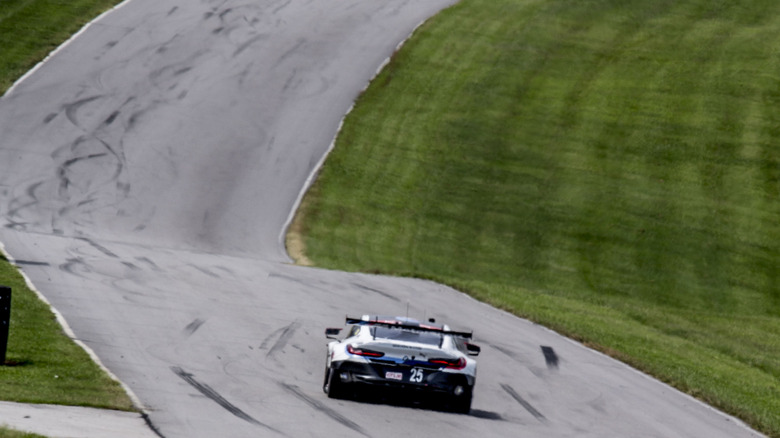
Virginia International Raceway has the unusual distinction of being both a time capsule and a reboot. The original circuit opened in 1957 near Alton, Virginia, hosting major Sports Car Club of America competition before closing in 1974.
The modern VIR opened in 2000 after an extensive rebuild, with its reputation shaped less by grandstands or single marquee events than by how the circuit actually drives. The full course is 3.27 miles and the facility offers multiple configurations, which is part of why it's used for everything from professional racing to testing and driving schools.
What makes VIR especially appealing is its emphasis on elevation change, varied layouts, and a design that rewards smooth, committed driving over stop-and-go simplicity. It's also a track whose modern reputation was earned, not inherited: the rebuild didn't just resurrect a name, it restored a certain kind of American road course that we're glad endures, especially when it comes to Barbie Jeep racing.
Talladega Superspeedway (Alabama)
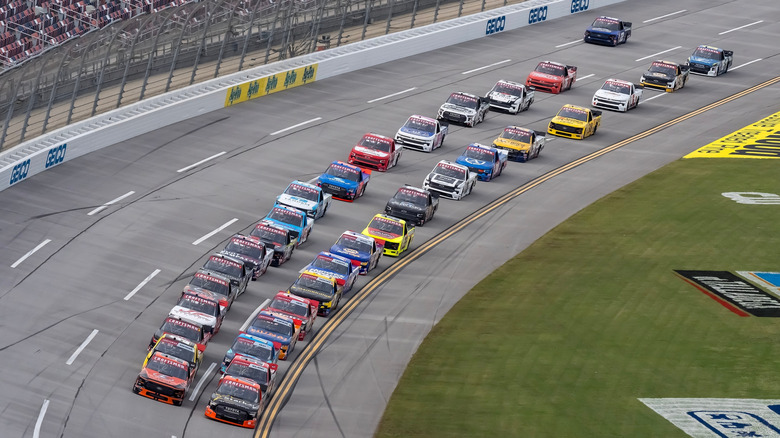
Talladega Superspeedway was built to be bigger, faster, and less restrained than anything American stock-car racing had seen before. The track opened in 1969 on a former military airfield site in Alabama as a 2.66-mile oval, immediately surpassing Daytona in both length and scale.
The defining features of Talladega Superspeedway are extreme width and steep banking, with turns banked at up to 33 degrees, creating sustained high speeds and racing conditions that rarely allow cars to separate into small groups. Talladega's exceptional length, width, and steep banking make drafting unavoidable, keeping cars in close proximity for extended portions of a race rather than allowing them to spread out naturally.
Unlike Daytona, where precision and timing often decide the outcome, Talladega amplifies uncertainty. You go there not to watch perfection, but to watch order barely hold together at full speed, as demonstrated by some of NASCAR's most unforgettable moments taking place there.
Sonoma Raceway (California)
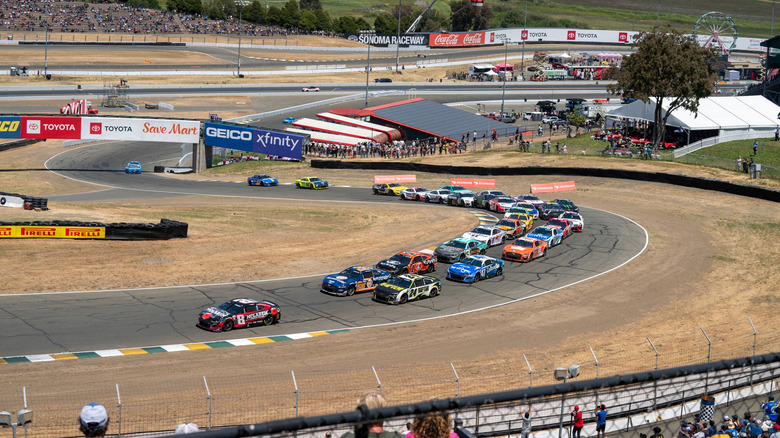
Sonoma Raceway sits in the hills of Northern California's wine country, and the terrain is not just scenery; it's the track's defining feature. Originally opened in 1968, the circuit is a 2.52-mile road course laid across steep elevation changes and lots of transitions that prevent any one rhythm from settling in for long.
The layout places heavy emphasis on car control and weight transfer, with elevation changes that challenge drivers throughout the lap. Sonoma is an enthusiast favorite because of how technical and physical it feels at any speed. The lap rewards precision, patience, and car control, with mistakes compounding quickly because of the elevation and narrow margins.
Sonoma Raceway is also one of the few places where major stock-car racing and road-course driving genuinely intersect, all in a complex that uniquely supports industry, amateur driving and professional racing to a degree that you just don't see all in one place.
Michelin Raceway Road Atlanta (Georgia)
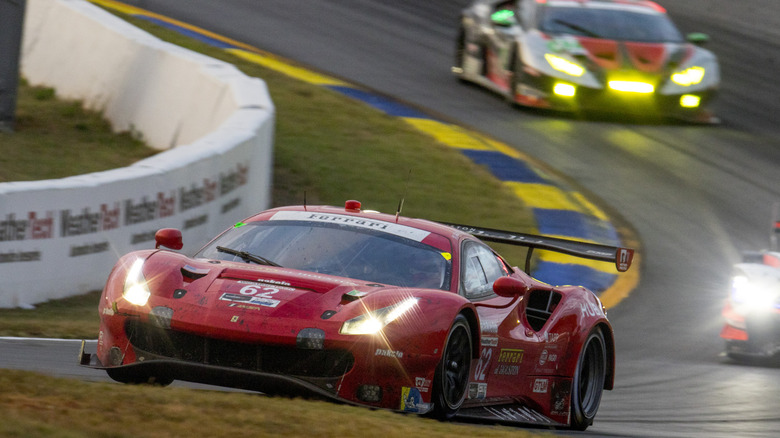
Road Atlanta opened in 1970 in Braselton, Georgia, as a purpose-built road course laid out on natural terrain rather than adapted from public roads or existing infrastructure. The main circuit measures 2.54 miles and is set across rolling hills, a characteristic that has defined the track since its opening and distinguishes it from flatter American road courses.
The layout has a lot going on, with elevation changes and corner sequencing that complement the terrain, earning it a reputation as being among the very best road courses in the country. Over time, the track became closely associated with sports car and endurance racing, most notably as the long-time home of Petit Le Mans, first held there in 1998 and now a cornerstone event on the IMSA calendar.
For enthusiasts, the appeal comes from that continuity: a circuit whose identity has been shaped by terrain, distance, and endurance. Oh, and it's also fun to watch Porsche GT3 Cups become bumper cars at Road Atlanta.
Willow Springs International Raceway (California)
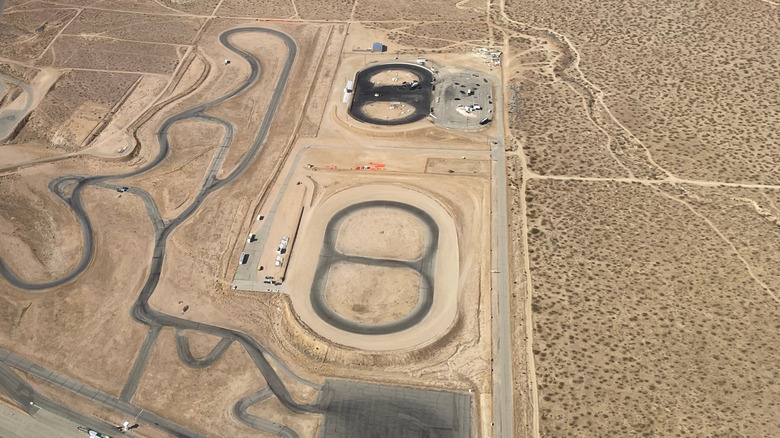
Willow Springs International Raceway sits in the high desert north of Los Angeles, and from the beginning it was built with speed, not scenery, as the priority. Opened in 1953, it is widely recognized as the oldest permanent road course in the United States, created on remote desert land where noise, runoff, and expansion were non-issues.
The main course, Big Willow, measures 2.5 miles and is defined by long, fast corners and minimal visual reference points, a layout that reflects its era and its isolation. Willow Springs is all about bluntness. There is little attempt to disguise speed or soften consequences, which is why the track has long been used for testing, driver development, and outright record chasing.
That character is also why the circuit's recent reimagining has been treated carefully, with updates focused on preservation rather than transformation. It doesn't try to modernize its reputation away; it survives by staying exactly what it has always been, even as Willow Springs finally gets a much-needed repave.