

How Is The Harley-Davidson Panhead Different From The Shovelhead?
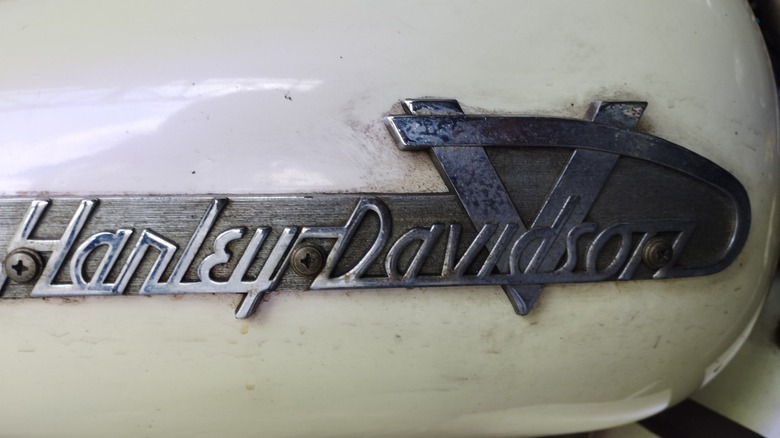
Harley-Davidson introduced the Panhead V-Twin in the fall of 1947 as a replacement for the Knucklehead engine for the upcoming 1948 model year. It would go on to power a number of iconic Harley-Davidson motorcycles made famous in movies through 1965, but Harley-Davidson replaced it with the Shovelhead for the 1966-1984 model years. The Panhead engine name is descriptive of its cake-pan shaped valve covers, and underneath those iconic covers resides Harley-Davidson's second generation of V-Twin engines to use overhead valves. The Knucklehead, produced from 1936 to 1947, was the first.
The Panhead's new design was intended to combat a prevalent problem with oil leaks, albeit unsuccessfully. It featured cast aluminum cylinder heads and hydraulic valve lifters, which contributed to the engine weighing eight pounds less than its predecessor. The Panhead debuted with V-Twin displacements of 61 and 74 cubic inches. By the end of Panhead production, its horsepower figures had gone from 55 to over 60 on some models.
The Shovelhead engine got its name from valve covers that resemble old-time coal shovels. It featured numerous improvements to the cylinder heads, valves, and pistons, as well as Harley-Davidson's first 12-volt electrical system. They were available with displacements of 74 and 80 cubic inches, and early 74 cubic-inch Shovelheads had a claimed 65 horsepower rating.
Is the Harley-Davidson Panhead or Shovelhead more reliable?
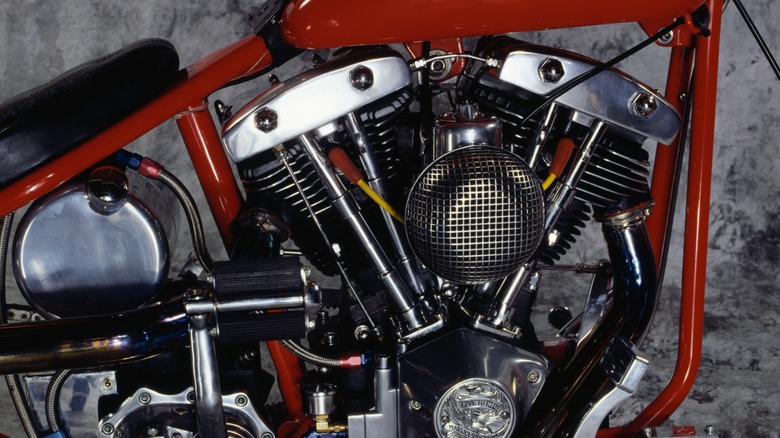
Both Panhead and Shovelhead V-Twins are highly prized among collectors. The main differences between the two engines are cylinder head and valve cover design. The fact that they utilize older but well-tested technology helps ensure reliability. However, authentic Harley-Davidson replacement parts are sometimes difficult to obtain, and the engines are notoriously finicky without proper maintenance. Panhead V-Twins feature an older design that was improved upon with the Shovelheads, so they're a little less refined than their successor. However, both engine types share the Knucklehead V-Twin design as a common ancestor, making them relatively reliable and easy to maintain and repair with simple tools.
Given its place in history, some feel that the Shovelhead damaged Harley-Davidson's reputation among its faithful supporters. Others point out that changes instituted by AMF caused that damage more than anything else. Many Harley-Davidson models from the AMF years were powered by the Shovelhead V-Twin, but AMF control over Harley-Davidson spanned from 1969 to 1981. Considering this fact, it's obvious that the Shovelhead came before — and outlasted — any AMF influence.
TwiZted Biker from the Harley-Davidson Forums claims to have "put a half million miles on shovels" over 30 years of riding them. They also say that most of the repairs and updates required to correct the Shovelhead's common problems are relatively inexpensive. Despite this, owners agree that any older Harley-Davidson V-Twin — regardless of whether it's a Panhead or Shovelhead — can be temperamental. This isn't helped by the fact that few people have owned a Panhead or Shovelhead since it was new. As a result, modern bikers usually have to rely on information from experienced owners to perform the proper maintenance.
The Panhead V-Twin's place in history
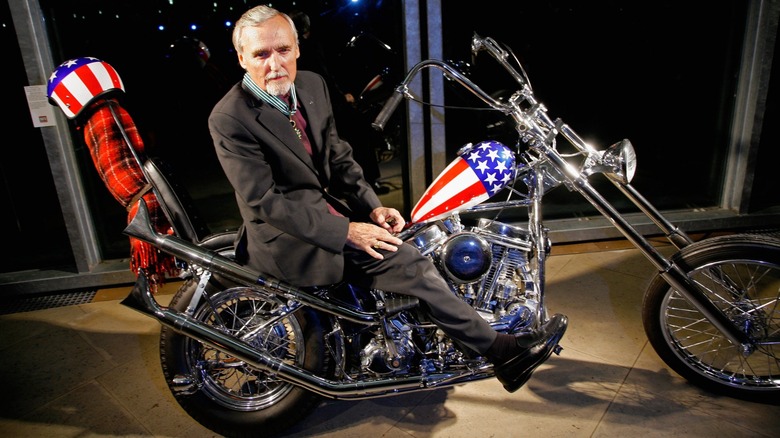
The Captain America chopper is among the most memorable Harley-Davidsons from movies and television shows. Not the Softail ridden by Steve Rogers in "Captain America: The First Avenger," but the red, white, and blue Panhead-powered bike adorned with stars, stripes, and chrome ridden by Peter Fonda in the 1969 cult-classic film, "Easy Rider." The movie also featured another Panhead, known as the Billy Bike, ridden by Dennis Hopper as the pair make their way from Los Angeles to attend Mardi Gras in New Orleans. Both bikes had duplicates built for the movie's promotional tour.
There are a number of conflicting stories surrounding those motorcycles today. Ultimately, it seems the whereabouts of the original motorcycles used during the filming of "Easy Rider" are unknown. One Captain America bike was wrecked during filming and the original Billy Bike was stolen as filming was wrapping up. Some say there were copies of both bikes used for the film while others say the duplicates came later to support the film's promotional tour. Regardless, it's hard to say what truly happened to the original Panheads that made it onto the big screen.
The Shovelhead was also seen on the big screen, with films like "Elecra Glide in Blue" and "Hell Ride" to its credit. While both movies featured big-name stars of the era, like Michael Madsen, Dennis Hopper, and Robert Blake, neither were as iconic as "Easy Rider."
What's the most desirable Shovelhead?
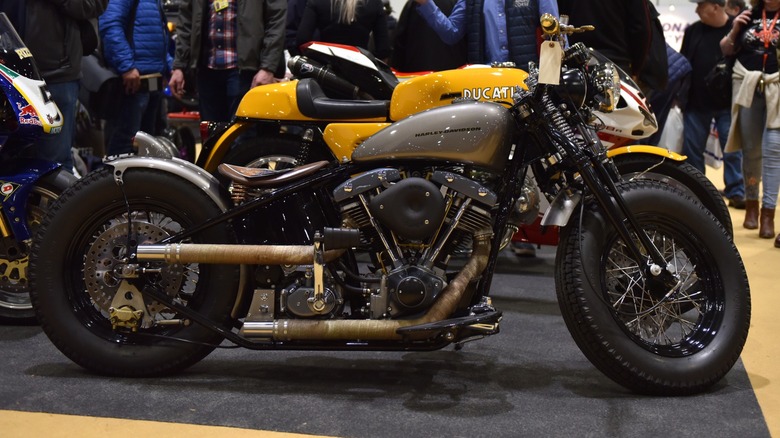
While most Harley-Davidson enthusiasts would gladly welcome well-cared-for examples of any Shovelhead into their garage, the most desirable Shovels are from the years before AMF took the reins in 1969. That leaves the models spanning the Shovelhead's debut in 1966 to the 1969 models, such as the FL and FLH Electra Glide.
Avoiding AMF model years may be unnecessary since it doesn't mean your Shovelhead will be free from flaws. Just like how the Panhead design failed to cure the Knucklehead's propensity for oil leaks, the Shovelhead didn't do any better. However, one of the most significant upgrades to the Shovelhead came during the AMF years with the addition of Harley-Davidson's first rubber engine mounts on the 1980 FLT Tour Glide.
If you want to ride a Harley-Davidson without having to worry about untimely repairs or a finicky nature, models with Panhead or Shovelhead engines might not be the best choice. Instead, look for a newer Harley that fits your style and has a newer V-Twin engine. But if you don't mind tinkering with an old bike and you can stick to a dedicated maintenance routine, firing up either one of the old engines will surely put a smile on your face.