

11 Classic Car Investments That Could Reap Big Rewards
As car enthusiasts, most of us dream of buying a classic car. Even better is buying and driving a classic that appreciates over time, becoming an investment as well as being your favorite hobby. While the reality of owning an older car – and actually driving it — is that things will break, and you'll be on a first-name basis with your local parts stores, a well-maintained vintage vehicle can actually go up in value, even when driven regularly. The key is finding a car you love that's on the cusp of taking off in value.
To identify vehicles likely to boom on the collector market, we turned to two expert sources. One is Hemmings, the website of Vermont-based Hemmings Motor News and one of the largest online automotive marketplaces, listing more than 20,000 classics from every era. The other is Hagerty, the website of Hagerty Insurance, Hagerty Marketplace, and several other auto-related brands. Both Hemmings and Hagerty specialize in older or collectible cars, and they know their stuff.
For this list, we focused on cars that received a four-star collectibility rating on Hemmings' list of investment-worthy cars in 2025, as well as those that were included in Hagerty's 2026 "Bull Market" list. To keep this list realistic for most readers, we limited the prices — our selections must be valued at $120,000 or less in "Excellent" condition on Hagerty's list (one step below its top rating of "Concours" condition), or on Hemmings' "average value today." Plus, to keep them within the common definition of a classic, the first year of production for each model must be at least 25 years ago.
1956 to 1957 Continental Mark II
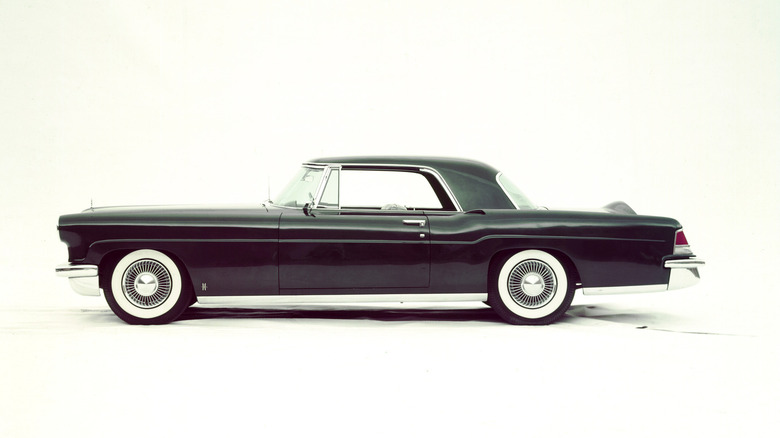
For a time in the 1950s, Continental was its own brand within the Ford family, distinct from Lincoln. The majestic 1956 to 1957 Mark II from this era is set to appreciate, with Hagerty noting that fewer than 3,000 were sold and only about 1,500 remain on the road. Hagerty's stats show that buyers are skewing younger despite the Mark II's vintage age, displaying its enduring popularity and making this the right time to get one.
Even though they're rare, you can buy a Mark II in good condition for a bit over $40,000 or in excellent condition in the low $80,000 range. Concours-condition examples fetch $132,000, making them one of Hagerty's most valuable 1950s American collector cars. That value should continue to rise. The Mark II was expensive in its day, too, carrying a then-stratospheric sticker price over $10,000. Nevertheless, Ford lost money on each one. For a short time, this was considered worthwhile, as celebrity owners like Frank Sinatra and Elvis Presley gave the Continental brand a halo effect for Ford.
1957 to 1958 Cadillac Eldorado Biarritz
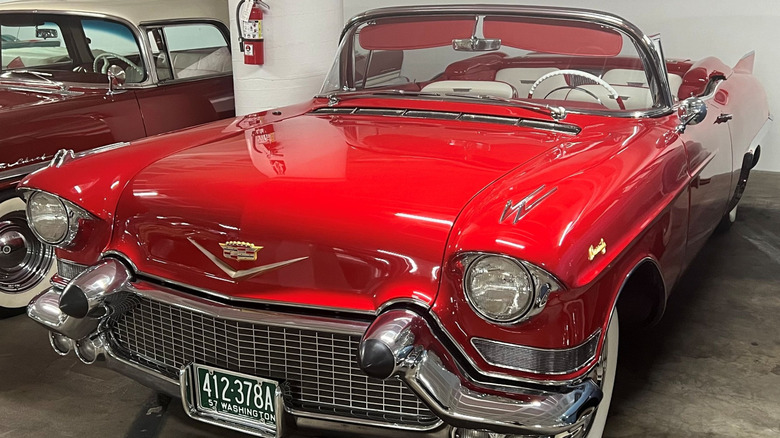
Eldorados are some of the most iconic cars of the 1950s, and the Eldorado Biarritz convertible was one of the most desirable models in the Eldorado lineup. Hemmings gives the 1957 through 1958 Biarritz a four-star collectibility rating, saying that the droptop Caddy "has enjoyed a slow-but-steady upward value trend." Hemmings pegs its average value today at $120,000. The Biarritz was named for a seaside resort town in France, and it quickly became a hit with the 1950s glitterati. One of its most famous owners was Elvis Presley, who drove a 1957 example.
The Eldorado Biarritz was penned by Harley Earl, GM's design chief, who was also famous for designing cars like the Corvette. The big Caddy sported huge tailfins, an eggcrate grille, aircraft-inspired bumpers, and cast aluminum wheels. A 325-horsepower, 365-cubic-inch V8 gave this 222-inch, 5,110-pound car enough power for a 0-to-60 run in about 10.6 seconds, which was respectable by the standards of its day. Luxury touches included power-adjustable leather seats, power windows, and an electric power-retractable roof.
1966 to 1970 Oldsmobile Toronado
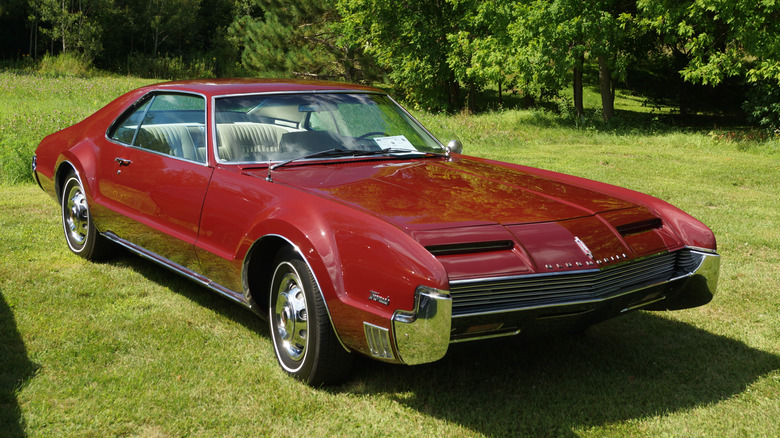
Hemmings gives the first-generation 1966 through 1970 Oldsmobile Toronado a four-star collectibility rating, saying that Toronado values have actually dipped a bit since late 2024, making this a perfect time to scoop one up. Given Hemmings' stellar collectibility rating for this car, it clearly feels that the decline in prices is an aberration and that prices should go back up. Today, you can buy one for an average price of $21,165, or less than the price of a new Toyota Corolla. This makes it almost perfect for enthusiasts who value old-school style and V8 power.
The 1966 Toronado was the first front-wheel drive American car since the 1930s, giving it a special place in automotive history. MotorTrend rewarded its innovations with the magazine's 1966 Car of the Year award. The review noted that the Toronado's design had an "electric effect" on bystanders, but its real strength lay in its handling. In MotorTrend's comparison test with other Car of the Year candidates, it noted, "Handling was so superior that we had no trouble leaving other cars behind." The Toronados' big V8s made them some of the most powerful Oldsmobiles ever made.
1968 to 1970 Dodge Charger
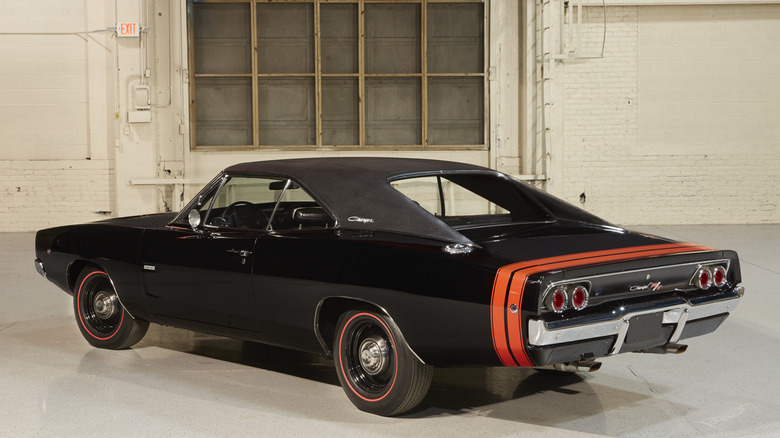
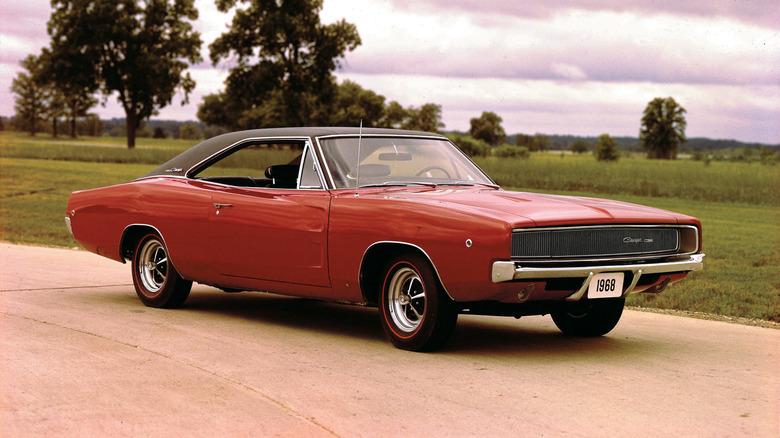
The 1968 second-generation Dodge Charger marked the birth of a legend, with its newly redesigned Coke-bottle styling becoming one of the most iconic looks of the muscle-car era. Hagerty believes this Charger model has cross-generational appeal resulting from its appearance in the "Fast & Furious" movies. Generation X, of course, loves it from that Friday-night staple of their childhoods, "The Dukes of Hazzard." That show destroyed over 300 Chargers thanks to its outrageous stunts, but with 40,000 Charger R/T models built, there's no shortage for collectors.
Of course, what was under the Charger's hood is as famous as its looks. A 383-cubic-inch V8 offered up to 330 horsepower and 425 pound-feet of torque in 1968 and 335 hp in later versions. Other engine choices included a 440-cubic-inch Magnum V8 with up to 390 hp and a 426-cubic-inch Hemi V8 with 425 hp. A Dodge Charger Daytona, easily identified by its huge wing spoiler, was built for NASCAR racing. That Daytona version would be far outside most buyers' price range, but an excellent-condition example of a model like the Charger R/T will cost about $91,450, according to Hagerty, although lesser examples can be had for $45,500.
1971 to 1976 Jensen Interceptor Mark III
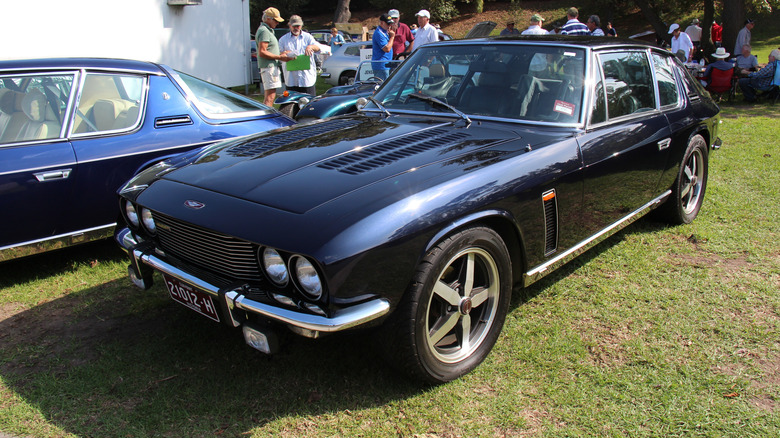
Hemmings gives the British-built, Chrysler-powered Jensen Interceptor Mark III a four-star collectibility rating, noting that a flat recent market for this model makes this an ideal time to acquire one. Its average value today stands at around $40,375, making it an excellent deal for a car with a stunningly unique style and American V8 muscle. A few years ago, we found a 1974 Jensen Interceptor on sale for $29,900, so prices are up since then. The car's exterior styling came from Italy's Carrozzeria Touring design studio, turning this vehicle into a blend of the best of Italy, Britain, and the United States.
For 1971, the Mark III offered some modest changes to the headlights and wheels, but the long hood and bubble-backed style remained mostly the same as the Mark I and Mark II models. The big story lay under the hood, where the Mark III replaced the earlier Chrysler 383-cubic-inch V8 with a 440-cubic-inch V8. A special version of this engine appeared in a model called the SP, where the 440 was fitted with a Mopar Six Pack induction system and cranked out 385 horsepower. Most models, however, are equipped with a four-barrel carb and produce a more modest, but still impressive, 305 hp.
1981 to 1993 Dodge Ramcharger
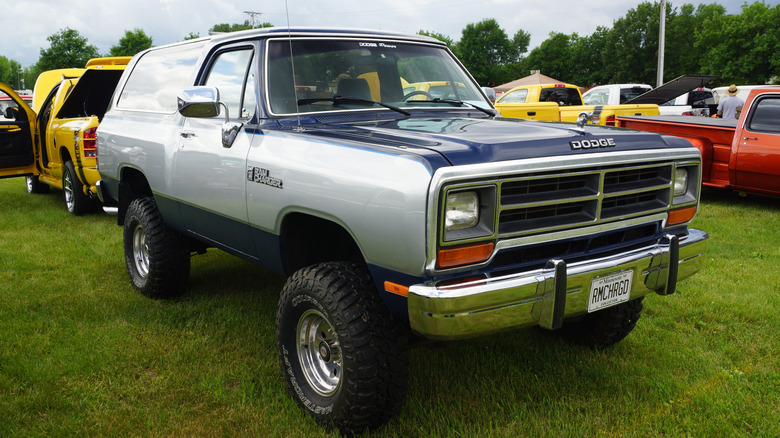
If the Dodge Ramcharger is less well known today than other SUVs, that could be because it faded to black just as the SUV craze was really taking off in America. Hagerty says the second-generation, 1981 to 1993 Ramcharger is poised for a rally, claiming, "The market — particularly younger buyers — is catching on to the Ramcharger's charms, though." Hagerty notes that younger buyers often drive higher values for a classic model. It may be bigger and less refined than today's SUVs, but those qualities are part of its appeal.
Another big part of its charm is Mopar power. Take the 1992 model reviewed by Car and Driver, which got its motivation from a 230-horsepower, 5.2-liter V8 with 280 pound-feet of torque. There was also an optional 190-horsepower, 5.9-liter V8 for that model year that produced 292 pound-feet of torque. Car and Driver called the 5.2-liter model's 10.2-second 0-to-60 time "a reasonable accomplishment considering the vehicle's mass." And yes, make no mistake, this 4,800-pound truck is large, but at only $25,300 for an excellent-condition example, it's a big bargain for collectors.
1990 to 1993 Chevrolet 454 SS
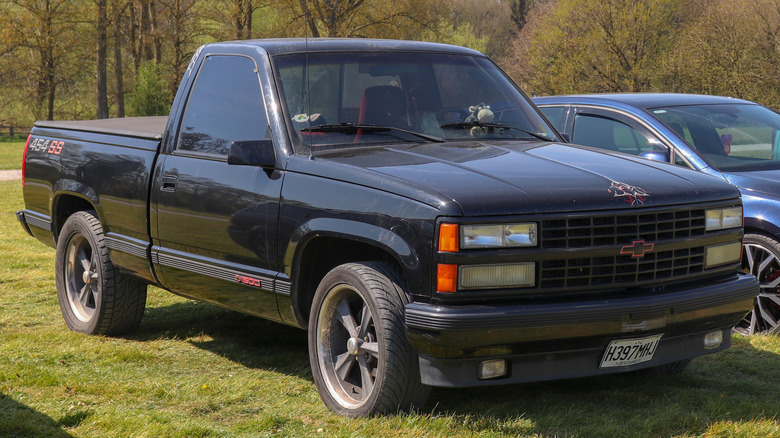
The 1990s were an era of high-performance pickups, and Chevy's entry in the truck horsepower wars was the 454 SS. Hagerty notes that insured values for the 454 SS have increased by 57% since 2021, with buyers under 50 largely driving the trend, which is a great sign that prices on the collector market will keep going up. Hagerty also says, "People who grew up with 454 SS posters on their walls are flocking to them," pegging an excellent-condition example at $59,800, with the full range of values running between $12,600 and $88,600, depending on condition.
It's past time that the 454 SS emerges from the crowd of forgotten Chevrolet pickup trucks to claim its place in the spotlight. Based on Chevy's C1500 full-size truck, the 454 SS featured a 7.4-liter big block V8. Its 230 horsepower and 280 pound-feet of torque seem tame by today's standards, but they were still good for a 7.7-second 0-to-60 time. Importantly, it could still function as an everyday pickup truck. It was relatively cheap when new at about $18,000, and no doubt its black-on-black, Darth Vader-esque exterior helps boost its cool factor.
1995 to 1998 Nissan Skyline GT-R
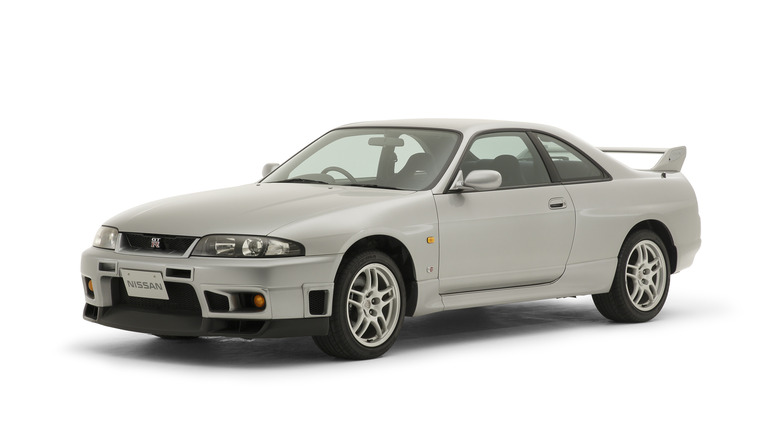
The second-generation Nissan Skyline GT-R, built from 1995 through 1998, just started arriving in the U.S. a few years ago as it reached the 25-year exemption that allows foreign-market cars to be imported here. A favorite of discerning enthusiasts and the "Fast & Furious" crowd, the second-gen GT-R falls in the sweet spot of affordability, relatively speaking, with excellent-condition examples fetching $82,350 recently. Hagerty expects that number to rise, calling the GT-R "the poster child for a rising generation of collectors."
The second-gen GT-R is referred to as the R33 by those in the know. Being a Japanese Domestic Market (JDM) car, the driver sits on the right. Its 276-horsepower twin-turbo 2.6-liter engine powers it to a 5.3-second 0-to-60 time, which was supercar performance by the standards of its day. An all-wheel drive system that Nissan called "ATTESA E-TS PRO" provided excellent traction. The GT-R also offered renowned Japanese quality — in fact, its RB26DETT engine made our list of the most reliable turbocharged engines you can buy.
1995 to 1998 Volkswagen Golf GTI VR6
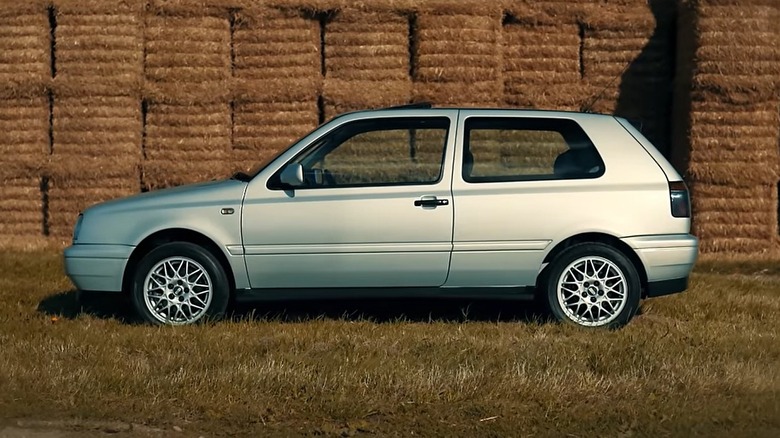
America doesn't always get Europe's fastest hot hatches, but Volkswagen made an exception for us with the Mk3 Golf GTI VR6 from 1995 through 1998. Hagerty expects values to rise as folks who were kids in the '90s start snapping up surviving GTI VR6-flavored Golfs, but for now, you can still get an excellent-condition example for $20,000. This is a hair over the $19,190 sticker price of a 1995 Golf GTI VR6 tested by Car and Driver when the model debuted in the fall of '94.
Car and Driver's review measured the GTI VR6's 0-to-60 time at 6.7 seconds, which was sports-car territory for the mid '90s. It hit a top speed of 129 mph, which was limited from the Euro-spec VR6's 140 mph top speed, due to the tires on the U.S.-spec model. The car's power came from its namesake VR6 engine, a 172-horsepower narrow-angle V6. Standard Bosch ABS brakes gave this VW excellent stopping power, while also providing traction control. The VR6 came with a long list of standard equipment, ranging from heated seats to an electric sunroof and a trip computer, so modern drivers will feel right at home in the VR6.
1995 to 1999 BMW M3 Coupe
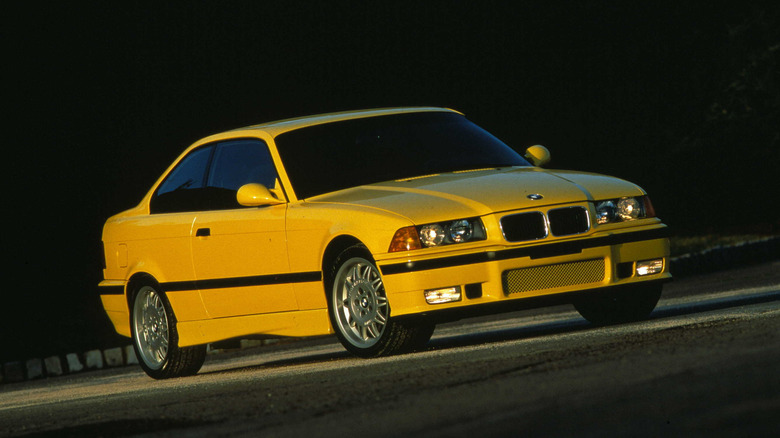
The BMW M3 has been a legend for decades and is still being made in 2026, but Hemmings gives the 1995 through 1999 model in particular a four-star collectibility rating. At an average value of just $26,581 for manual-transmission models and considerably less for automatics, this generation of M3 is much more affordable than today's M-badged 3-series, which starts at over $62,000. According to Hemmings, this generation of the M3 is set to appreciate rapidly, with the company declaring that "now's the time to act before they climb out of reach."
Mid-to-late 1990s M3s were the second generation of the M3, designated with the chassis code of E36. Road & Track notes that the 1995 M3 was a bit controversial among enthusiasts when it debuted, since BMW consciously moved the model into a higher-volume niche than the raw and wild first-generation M3. This discontent was inflamed by the fact that the U.S. model received a 240-horsepower straight six, while European models got 321 ponies under the hood. Nevertheless, collectors have come to appreciate the E36's blend of performance and good manners.
1996 to 2002 Dodge Viper GTS
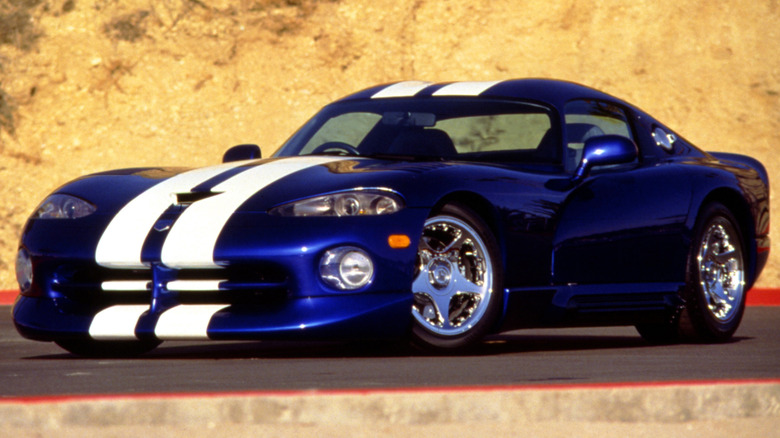
For enthusiasts, the Dodge Viper needs no introduction. When it debuted in 1992, its blend of outrageous style and V10 power made it an instant classic. However, it was very raw, with absolutely no creature comforts, like, say, a roof. The second generation, introduced in 1996, smoothed out some of the raw original's rough edges and introduced a new coupe model called the GTS. Hemmings notes that the GTS doubled in value in the early 2020s, but has leveled off a bit at about $75,000, making this a great time to buy one.
The GTS coupe's distinctive "double bubble" roofline offered room for the driver and passenger to wear helmets. It offered creature comforts like air conditioning and power windows that were alien to the first-gen Viper, as well as lighter weight and a more refined suspension. It also offered more power, one-upping the original Viper's 400-horsepower V10 with 450 horsepower, along with 490 pound-feet of torque. An adjustable pedal box and onboard diagnostics also distinguish the GTS from first-gen Vipers.