

6 Motor Oil Brands Owned By Shell
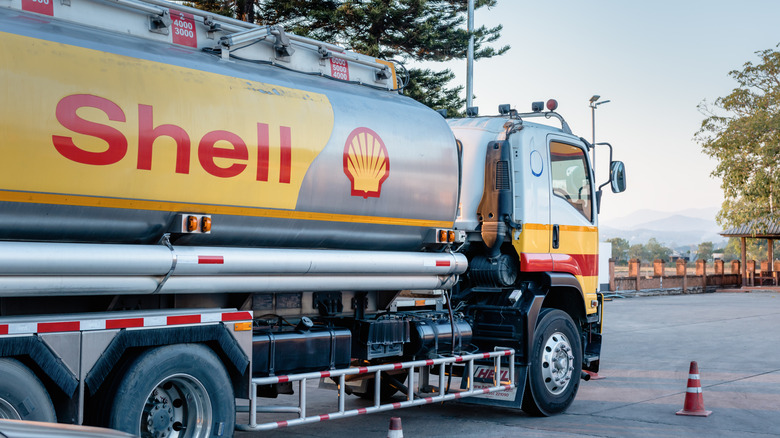
Itself now part of a holding company called Royal Dutch Shell plc, Shell Oil is the fifth largest oil company in the world by market capitalization, according to Investopedia. But it came from far humbler beginnings. The starting point was in 1833, when London businessman Marcus Samuel decided to jump on a then-current trend in interior decorating and began importing sea shells. His sons would expand into the oil business in the 1880s and would soon have their own fleet of ocean-going oil tankers. Then, around 1890, they formed the Royal Dutch Company for the Exploitation of Petroleum Wells in the Dutch East Indies.
Many folks would say the focus was on that sixth word, and still is. For instance, Shell may have recently sold off its holdings in the Niger Delta, but only after doing its share to create "one of the most heavily polluted places on the planet, where decades of oil extraction have caused devastating environmental and human health impacts," as Durham University put it. And many believe Shell's sale was just another way of getting away with it. A further example comes from how Shell allegedly lied about green energy investment.
Anyway, the Shell name was first used as a kerosene brand by the Samuel brothers, and the Shell Transport and Trading Co. began operations in 1897. Beyond exploiting and extracting, Shell has also gotten bigger over the years by adding to its product line — again, by occasionally taking advantage of others' efforts. That's how it ended up owning six motor oil brands, including not only Shell Rotella, Shell Advance, Shell Helix, and Shell Rimula but also former rivals like Pennzoil and Quaker State.
Pennzoil
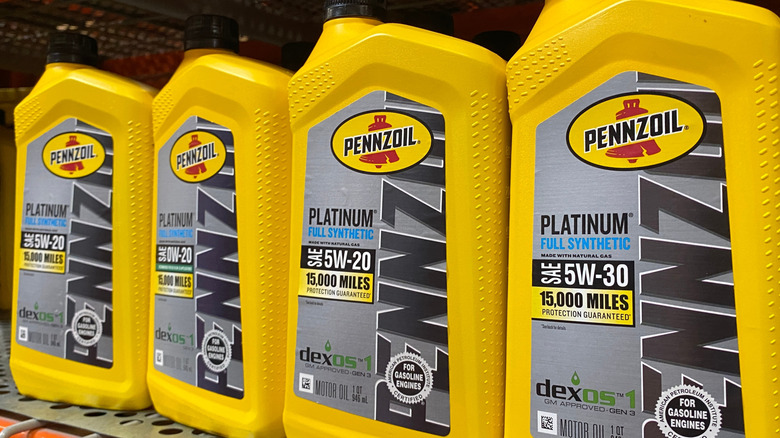
The auto and oil industries pretty much grew hand in hand in the early days of the 20th century, and followed the same pattern of market consolidation. That is, both started with many small companies and ended up with just a few large ones. The story of Pennzoil is a case in point — even before it was purchased by Shell in 2002.
It naturally began in Pennsylvania, with the 1886 founding of the Penn Refining Company by Henry Suhr, Samuel Justus, and Louis Walz. Next came Penn-American in 1917, although the two companies behind that name, Penn Refining and the Germania Refining Company, had actually joined forces three years earlier. The Pennzoil name came into play in 1924 as the outcome of yet another merger, this time between Penn American and the Oil City Oil and Grease Company. Pennzoil, in turn, was gobbled up by a former rival in 1925, when the South Penn Oil Company, originally owned by Standard Oil, acquired a majority stake in the business. How Standard Oil built its toxic monopoly is a story for another day.
Pennzoil — as an oil company — re-emerged in 1963 as the outcome of, you guessed it, another combination of companies. Since this merger included South Penn, stakeholders capitalized on the popular name of that company's motor oil, Pennzoil, for their latest conglomeration. Pennzoil would survive four more decades of oil-industry dealings — backed by its namesake motor oil and a growing range of associated products — before becoming a Shell subsidiary.
Quaker State
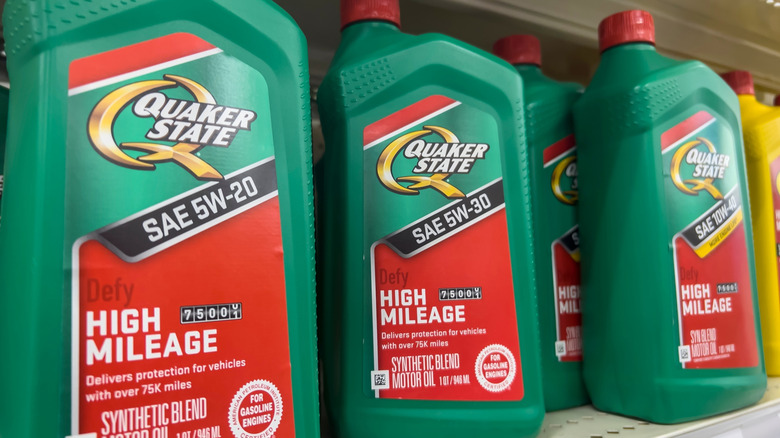
Okay, one major merger we left out of our little history of Pennzoil that's also relevant here, since we're talking about the 1998 tie-up between Pennzoil and Quaker State Motor Oil. Quaker State had a slightly less confusing path to get to that point than Pennzoil, however. It was originally called Phinny's Quaker State Medium Oil and was named for its founders, Thomas and Hopewell Phinny, in 1914. The name was shortened to Quaker State in 1921, and while it was associated with another Phinny enterprise — a partnership in the Eastern Refining Company — the latter concern would become the Quaker State Oil Refining Corporation in the early 1940s.
Quaker State and Pennzoil would spend the next 50-odd years as rivals, not only in stores as oil brands, but also on the track, and especially in NASCAR. Quaker State set the pace here, becoming primary sponsor for King Racing — owned, oddly enough, by NHRA champ Kenny Bernstein — as early as 1986, it had a long and successful run supporting Hendricks Motorsports, and today remains title sponsor of the Quaker State 400. Pennzoil may be best known in NASCAR circles for its ongoing partnership with Penske Racing, which made the wrong kind of NASCAR news in 2025 for completing a trifecta of cheating incidents.
Also, while a merger brought the rivals together, it marked a breakup for part of Pennzoil. The new company would ditch Pennzoil's exploration and extraction business from its retail product and combine the latter with the entire Quaker State operation — before, as mentioned, seeing the joint company bought by Shell.
Shell Helix Oil
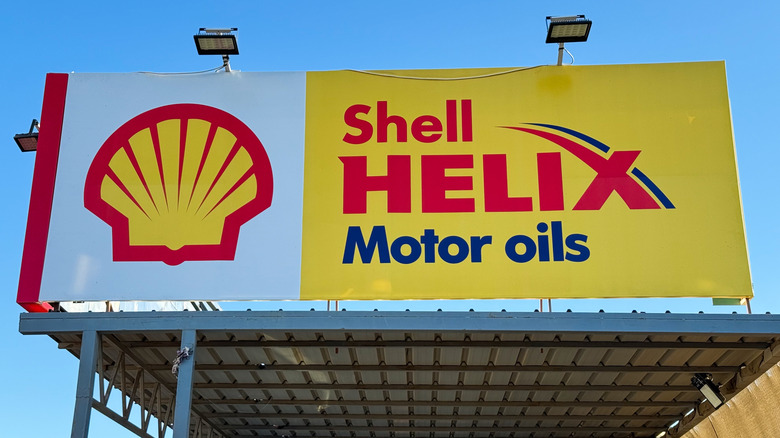
Pennzoil and Quaker State both have long, established histories in the United States, but not in Europe and other international markets in which Shell sells oil. With that in mind, those two names have remained the primary Shell brands for typical passenger cars in the U.S. — each, to be clear, distinguished by its own unique blend of additives — while Shell Helix plays that role in most of the rest of the world.
Finally getting down to some products, Helix sells traditional motor oil, semi-synthetic motor oil, fully synthetic motor oil, and a premium synthetic range made with what Shell calls its PurePlus Technology — a proprietary name for the gas-to-liquid (GTL) technology. This basically means that the starting point for products like Shell Helix Ultra is natural gas, which burns cleaner, with fewer impurities, than either traditional motor oil or "regular" full synthetics. Oh, and don't forget that there are good reasons you should switch to synthetic engine oil whether it's GTL-sourced or not. Also on the shelves of international auto-parts stores are Helix engine oil specifically tailored for hybrid vehicles, enhanced performance, and long-life applications.
Nor is that the end of the line. Helix is additionally an international Shell brand for diesel motor oil and mineral oil — not the kind we looked at when comparing mineral oil vs. DOT brake fluid, of course. Something else to keep in mind is that the Shell Helix diesel engine oil is meant for retail passenger-type vehicles. Shell sells two other brands for commercially focused trucks.
Shell Rotella and Rimula
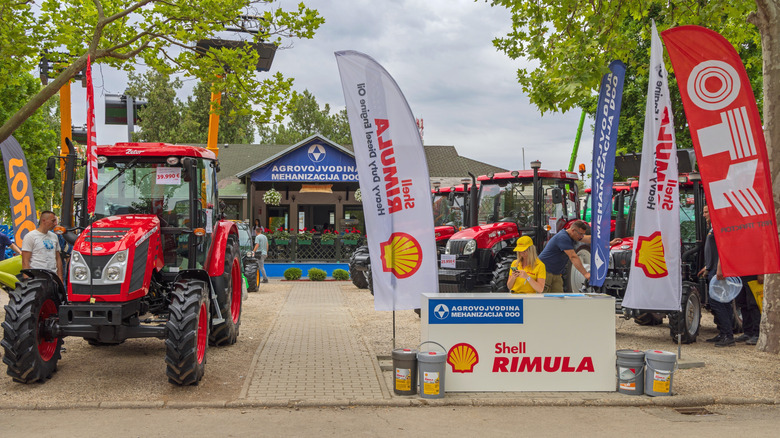
Well, the first sounds like a type of pasta blended with a hazelnut spread, and the second seems like it could be home to some Star Trek aliens, but Rotella and Rimula are, in fact, Shell's two engine-oil brands for HD diesel vehicles. The key difference? Shell follows the same tactics it does with Pennzoil/Quaker State and Helix, so it features Rotella in the U.S. and Canada, and Rimula elsewhere. Rimula also sells specific diesel engine oils for light- and heavy-duty applications, with Rotella mostly targeting only HD trucks.
Shell has a name-brand technology for its diesel engine oils as well, touting its Dynamic Protection Plus products for their ability to adapt to engine conditions and deliver optimum lubrication performance in different situations. Again, it's not a technology that's unique to Shell, but it is a good benchmark for the state of the industry.
Moreover, it's worth pointing out that Shell and its rivals are already preparing for a major next step in the field. Despite recent news that the Trump EPA will start ignoring health benefits when considering how — or whether — to protect the environment, the same group is still on track to introduce its 2027 regulations reducing diesel emissions. And that means the American Petroleum Institute (API) is still scheduled to roll out a new engine-oil standard — PC-12 — to support those rules. Shell naturally claims to be hard at work preparing for the new regs, and all-in on a cleaner environment. It's important to note they've been worried about getting cleaner for decades — they just seem to have made a conscious decision not to do anything about it.
Shell Advance
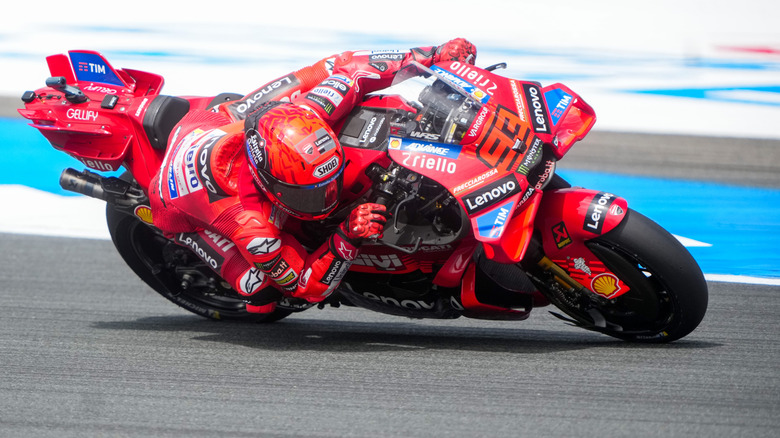
It turns out that nowadays even comparing four-stroke engines, motorcycles get their best performance from oil that's formulated differently from the kind for cars — and that's because the oil has an extended role to play in motorcycles. Motor oil for four-wheel vehicles generally only lubricates the engine, while for many motorcycles, the same oil has to keep the clutch and transmission running smoothly – all while the engine itself is running hotter and faster than a typical car engine. As a result, the motorcycle oil and its additives have to be engineered to handle those more extreme conditions.
That's where Shell Advance comes into play, with specific oils for two-stroke motorcycle engines, four-stroke mills, four-stroke scooter engines, and high-performance track machines ranging from two-stroke karts to four-stroke racing bikes. True, Shell gets some technical assistance for its Advance product, but the oil company's partner is a proven winner.
The technical partnership between Shell and Ducati has been in place since 1999, with the former providing "bespoke" racing fuel and oil to the latter's championship-winning motorsports division, Ducati Corse, and it does the same for the company's roadgoing bikes: each is filled with Shell Advance oil and Shell V-Power gasoline before they reach customers' hands.
For what it's worth, Shell is also the only officially recommended supplier for BMW Motorrad motorcycles — albeit with BMW-branded Advantec oil. And don't worry, it looks like the 2027 BMW F 450GS will continue that tradition.