

Remember Monsoon? These GM Cars Had It
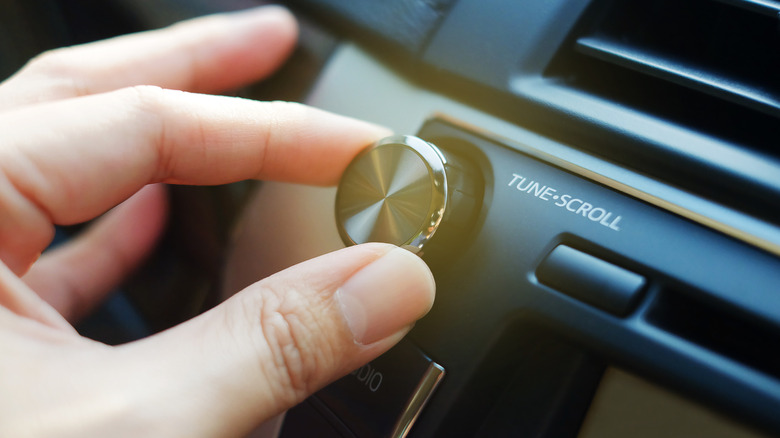
No, don't start going through old weather reports. The Monsoon that blew through GM vehicles in the late 1990s and early 2000s was a brand of audio system that, per its TV commercials, left drivers "drenched in sound." If the Monsoon name doesn't ring a bell with readers, that's likely because it never really caught on outside of GM products. That makes sense, because Monsoon was owned by Delphi, a company that was actually owned by GM when the Monsoon brand was born.
There isn't a lot of non-anecdotal, non-Wikipedia evidence behind this, but cutting through the clutter to get to the U.S. Patent & Trademark Center shows that, in 1995, Delphi filed its application to use "Monsoon" for an "automotive sound system comprised of loudspeakers, audio amplifiers, AM/FM tuner, cassette tape player and/or compact disc player." Delphi filed again in 2010, expanding the brand's coverage to include aeronautical and marine uses, DVD players, GPS tracking devices, and other electronics. Today, the first trademark is listed as dead/cancelled/invalidated, while the second is classified as abandoned.
Yet, during their production run, Monsoon sound systems could be found in rides as varied as the Pontiac Firebird, Hummer H1, Saturn Sky, Buick Regal, and Pontiac Vibe — as detailed below. The Vibe, you may recall, was basically a Toyota product that was the source of perhaps the most ridiculous car rebadging of all time. Also, beyond the Vibe, Monsoon sound systems did appear in a few contemporary GM rivals in the early 21st century, with the Volkswagen Passat and Hyundai Santa Fe being prime examples.
1997 Pontiac Firebird
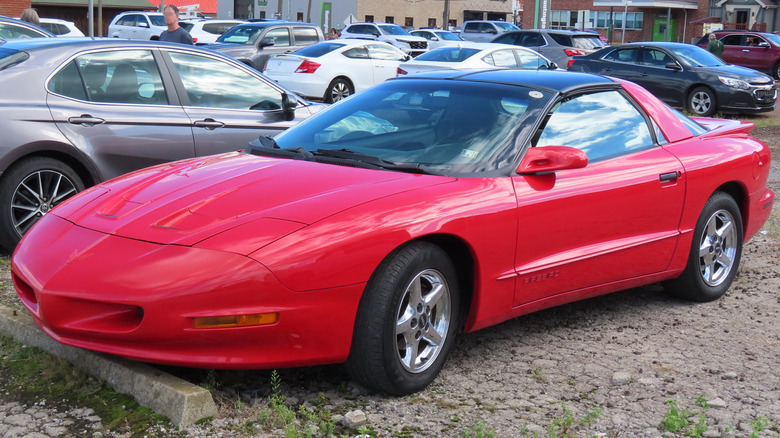
One of the earliest GM vehicles with Monsoon audio was the Pontiac Firebird, which first started offering the setup in 1997 — when the Pontiac's legendary muscle car was about halfway through its final generation, with only 5 more years to live. At the time, the sound-system upgrade clearly showed its Delco roots, too.
All of the radios available for the 1996 Firebird were branded as Delco 2001 Series ETR setups, with the range topper supplying 10 high-performance speakers for the Firebird coupes and six for the convertibles. In 1997, the same Delco units were listed with the car's equipment, but they were described as part of a "500-watt peak power 'Monsoon' sound system" that was even optional on the entry-level model, according to the original brochure. Actually, there was a pair of Monsoon systems on the menu, one with a cassette player and another with a CD player. Additional goodies wrapped up in the same packages included a seven-band graphic equalizer and Delco's TheftLock system. This, in the hopes of keeping the system from being stolen, would render the radio inoperable in certain situations.
Of course, Pontiac did more than just pump up the volume for the Firebird's sound system in 1997, it also upped the ante in the performance department with a separate new package, the WS6 Ram Air option that raised output in the car's 5.7-liter V8 by 20 horses over the stock number, for a total of 305. Check that box and — while you wouldn't get one of the rarest Firebirds ever built — you could end up with one of the most fun to drive.
2007 Saturn Sky
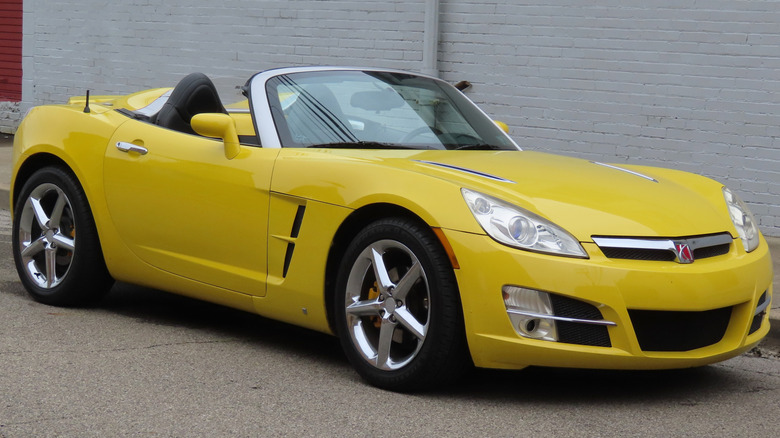
The connection between GM's excitement division and the Monsoon brand also meant that a number of Pontiac-adjacent vehicles were available with the sound systems. For example, the Firebird's Bowtie-wearing counterpart, the Chevrolet Camaro, welcomed a Monsoon sound system in 1998. Similarly, in the roadster department, the Pontiac Solstice offered Monsoon audio on its debut in 2006, and the Saturn Sky followed suit in 2007.
The Sky might have been the coolest car to ever wear a Saturn badge, and some folks have even dared claim that it was better than a Miata. Thanks to Monsoon, we can definitely say it had a more powerful audio setup, at least at its launch. The Sky's six-speaker Monsoon sound system was backed by a separate subwoofer and could belt out 225 watts — the Miata partnered with Bose for 200 watts of power.
Certainly helping the Sky with its under-the-hood muscle was the turbocharged 2.0-liter engine in the hi-po Red Line model. At a time when the Miata was running with 166 horses, and the standard Sky had 177, the Sky Redline rocked 260 horsepower with a matching 260 pound-feet of torque. A limited-slip differential, a performance-tuned suspension, and a high-flow exhaust system gave the Sky further benefits for top-down corner carving. Unfortunately, even though the Miata is still answering the call for enthusiasts today, the Sky and the Solstice didn't survive the financial meltdown of the time and were axed, along with four entire GM divisions (Pontiac, Saturn, Oldsmobile, and Hummer).
1999 Hummer H1
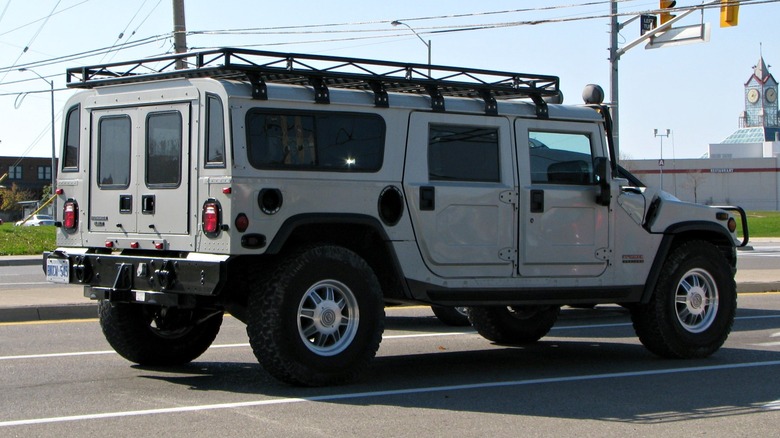
Speaking of dead GM brands, Hummer also has its part in the history of Monsoon audio. One of those systems was available in the H1 as early as 1999 — the same year in which GM purchased the rights to the Hummer name. The original maker was a military supplier called AM General, itself once part of American Motors, which is prominently positioned on the list of every company that's owned Jeep. As things played out, the H1 ended up with a Jeep-like seven-slot grille, which became a problem when Hummer became a GM brand. Indeed, Jeep's then owner, DaimlerChrysler, (unsuccessfully) sued GM for copyright infringement. As for the current Hummer EVs, like the 2026 models that get King Crab off-road mode, they're branded as GMC products.
The point is, the original H1 sold to the public was a far different beast that put a thin veneer of comfort over the military-grade machines to make them easier to live with in everyday civilian use. A few of the items were pretty basic, as the Hummer folks found it necessary to call out standard features like a serpentine belt, power steering, and three-point seatbelts — in a vehicle that was priced north of $83,000 in 1999. Today, you'd need more than $163,000 for the same amount of buying power. But, as you may have guessed, since you're reading an article about Monsoon stereos, it will likely come as no surprise that the H1's optional creature comforts extended to a Monsoon premium audio system with a CD player.
2004 Buick Regal
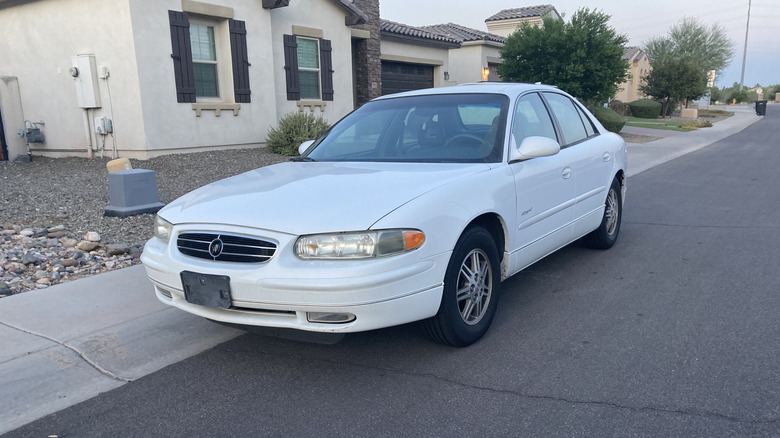
Next, we bounce back to another car with a Pontiac platform mate: the 2004 Buick Regal that shared underpinnings with the Pontiac Grand Prix. This model year was the last before Buick parked the Regal in favor of the 2005 LaCrosse, although the Regal name came back in 2011 — alongside the LaCrosse — as a midsize sedan based on the Opel Insignia. In that guise, the Regal would prove to be Buick's last sedan before the brand went all-SUV for the 2021 model year. True, that could change anytime — after all, Ford, which left the sedan segment over 5 years ago, isn't ruling out a return for sedans in the future.
The 2004 Regal that previously ended the nameplate's run was getting a little long in the tooth at that stage, with Consumer Reports calling it "acceptable" and praising its smooth and quiet driving experience, particularly at slower speeds, as well as its predicted reliability. The Regal's sound system? Well, it went unmentioned by CR, but we went back to the original sources to discover that an eight-speaker Monsoon stereo system was available for the 2004 Regal LS (with the Leather Package) and the supercharged GS.
Speaker placement was specifically tailored to the Regal cabin in each case and included dual subwoofers on the rear deck. Also in the mix were a pair of door-mounted tweeters, two similarly placed wide-range units, and, next to the subwoofers, two mid-range speakers. Finally, an eight-channel amplifier and 220 watts of power combined to make sure that your listening experience met the Regal's royal standards.
2009 Pontiac Vibe
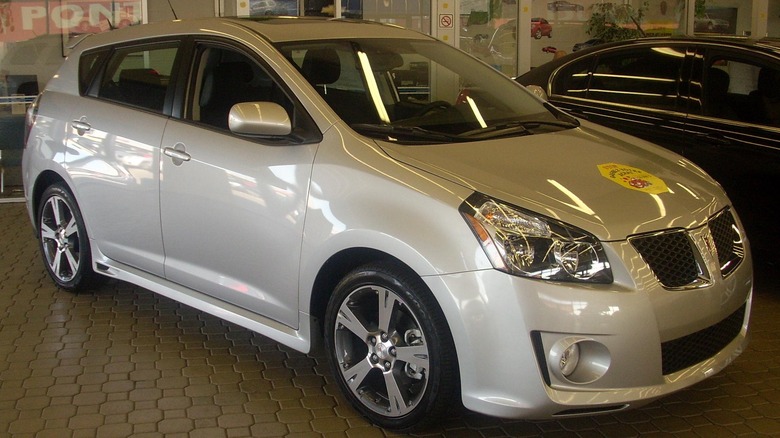
Born from a partnership between GM and Toyota, the Pontiac Vibe launched for the 2003 model year and was built at the very same plant that manufactured its Toyota Matrix sibling. In fact, as we touched on above, the Vibe was essentially a rebadged Matrix right down to its Toyota-sourced powertrain. On the other hand, there were a few key distinctions to help give the Vibe a Pontiac vibe of its own, and one highlight was its available Monsoon audio system — the uplevel setup for the Matrix was from JBL.
The Vibe would also see a redesign in 2009, when the GT trim was able to rock a standard 320-watt Monsoon stereo with seven speakers and an 8-inch subwoofer – the system was bundled with the Sun and Sound package for lower-level models. At the time, the updated Vibe was still earning kudos from the likes of Motorweek, which, after in-depth testing, reported, "we fully expect this sporty little crossover to resonate with younger buyers even better than ever."
Unfortunately, the big GM breakup came only a year after the new Pontiac Vibe launched, marking the end of the car and the brand. The Monsoon audio brand seemed to disappear right around the same time — as shown by those trademark documents — and, like Pontiac, it hasn't returned.