

What Are The Symptoms Of Bad Spark Plugs?
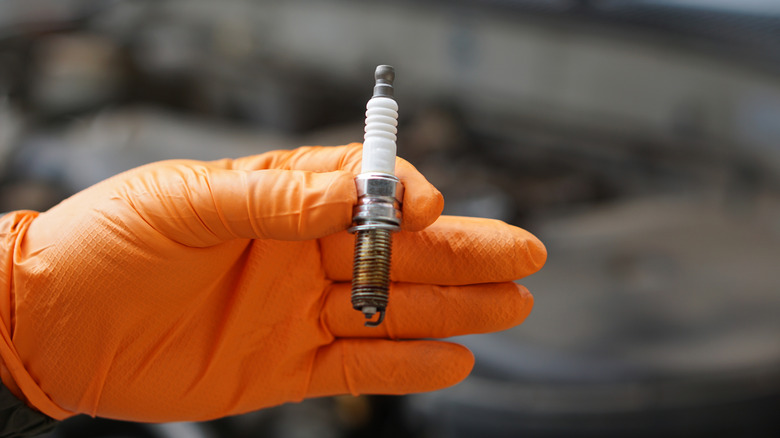
There are a lot of different types of spark plugs out there, but they all do one job, which is igniting the air-fuel mixture inside the cylinders. A shiny new spark plug does that consistently at the proper intervals. The problems start when spark plugs begin to wear over time. Reliability is lost when the spark is interrupted and weakened by eroded electrodes and the buildup of carbon deposits. When this occurs, combustion can falter, and the engine can quickly begin displaying red flags.
If your spark plugs are nearing the end of the line, you may notice something is off when you try to start the engine. Extended cranking and rough idling are some not-so-subtle signs that you may see. Cold startups are especially harsh on the ignition, and a worn spark plug just doesn't have enough juice to meet those additional demands. Even if you somehow manage to start the engine, misfires are what come next. This is when an engine suffers a momentary loss of power and uneven operation, due to fuel in the cylinder not igniting properly.
Performance and efficiency symptoms you can feel while driving

As the spark plugs wear out, symptoms become more noticeable under load. Your vehicle may not respond as well as it once did when you press the accelerator, and it may struggle to keep up with gear changes when you merge or try to overtake someone. This sudden sluggishness in acceleration is one of the most common complaints, and it can be due to the misfiring cylinders having an adverse effect on engine power.
If your spark plugs fail to consistently ignite the air-fuel charge, it can also tank fuel efficiency. The injectors don't stop sending fuel into the cylinders, even if the combustion of the previous charge is incomplete or delayed, which can ultimately lead to increased fuel consumption. When this occurs, a full tank will not last as long as it used to.
Improper sparks can also cause fuel to ignite when it's not supposed to, causing knocking or rattling noises. Surging or jerking of the engine can also accompany the aforementioned misfires. Uneven power delivery is often the culprit behind surging problems, and it happens when spark quality takes a hit and the engine sucks in more air than it needs.
Warning indicators and physical signs of spark plug failure

A modern vehicle has several ways of telling you that something's wrong with it. One of those warnings is the check engine light (CEL). While the CEL doesn't specifically call out faulty spark plugs, it often points to the symptoms of worn-out plugs, like engine misfires. Flashing lights can indicate ongoing misfires that could damage emissions components, which is why they are especially bad news. Promptly deal with the problem as soon as you see it.
Physical damage is also a strong sign of faulty spark plugs. Black deposits on the plug tip suggest carbon buildup and can cause incomplete combustion. Oil fouling, which is oily residue on the insulator and electrodes, often points to an internal oil leak. Electrode damage can be confirmed by signs of melting or erosion, all of which cause weak sparks. Cracks in the ceramic insulator can hinder proper electrical control and cause the ignition to fail intermittently.
Ignoring these symptoms allows small ignition problems to spread. Misfires force the engine to work harder and increase exhaust emissions. Over time, this added strain can shorten engine life and contribute to costly repairs. So, it's better to replace the spark plugs at the first sign of trouble. Also, make sure you use the right ones for your vehicle, as the wrong spark plugs present their own set of problems for your engine.