

The Differences Between RV, Motorhome, And Camper Tires
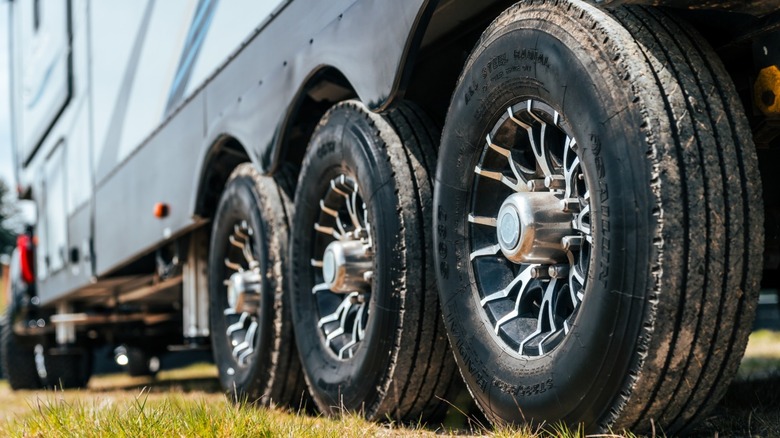
Anyone who has looked into the world of RVs knows that there are different classes and types. There are the campers and fifth-wheels that are pulled behind a tow vehicle; then there are motorhomes that come in three different classes: A, B, and C. You can probably guess that these different types of RVs use different types of tires, especially considering the difference in weight between a huge luxury Class A and a small campervan Class B.
You'll probably find more Light Truck (LT) tires on RVs because they are used on both Class Bs and most Class Cs. Commercial truck tires can be found on Class A RVs, which makes sense since they are often built on commercial bus or truck chassis — and some Class A RVs are so big and heavy you'll need a CDL to drive them in some places. But they can also be found on a sub-class of Class C — called "Super C" RVs — as they are sometimes built on custom truck chassis.
Trailer tires are a different animal. Trailer tires deal with different forces, pressures, and demands from tires on a motor vehicle. That's why Special Trailer (ST) tires are made specifically for trailers like camper trailers and fifth-wheel RVs. LT, commercial truck, and ST tires are not interchangeable. They are made to deal with different weights and handling requirements. That doesn't mean some people don't try, of course.
Class A RVs – commercial truck tires
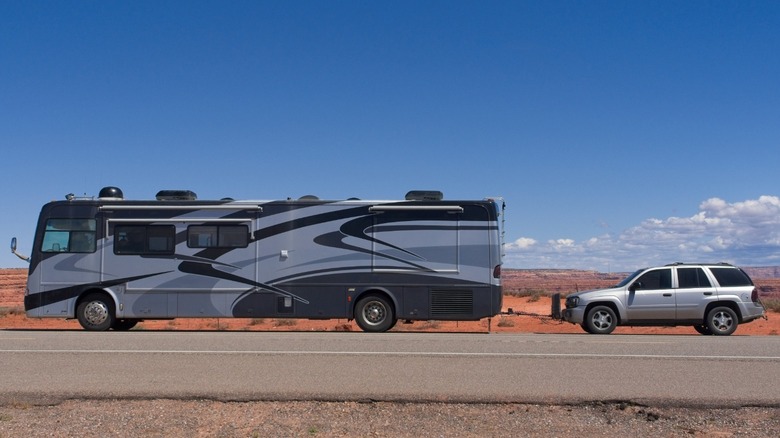
Class A RVs can get huge. They can start at around 26 feet long, but some of them stretch out over 45 feet. Some of these bigger Class As have two stories, multiple bathrooms, a porch, and, for all we know, a bowling alley. They're so long you could end up crossing a state line before you completely get out of your own driveway. Some Class As are big, is what we're trying to say.
We've said all of that to make the point that the LT tires you find on Class Bs and some Class Cs aren't going to cut it on these behemoths. That's why you'll find them fitted with commercial truck tires. These tires have to strike a balance between handling heavy loads and providing a comfortable ride, so they are built with some flexibility in the sidewalls. Some commercial truck tires can even be retreaded.
How do commercial truck tires differ from other tires? Obviously, they are built to handle more weight than light truck tires. But they also differ from ST tires in their flexibility. All-position (for both steering and drive axles) and steering-axle commercial truck tires are made with tread that can handle the specific demands that come from steering and so they provide for better handling, whereas ST tires are made to go mostly in a straight line. Trailer tires are not built for comfort but prioritize handling heavy loads — by the way, here's what tire load index is and why it's important.
Class B RVs – Light Truck Tires
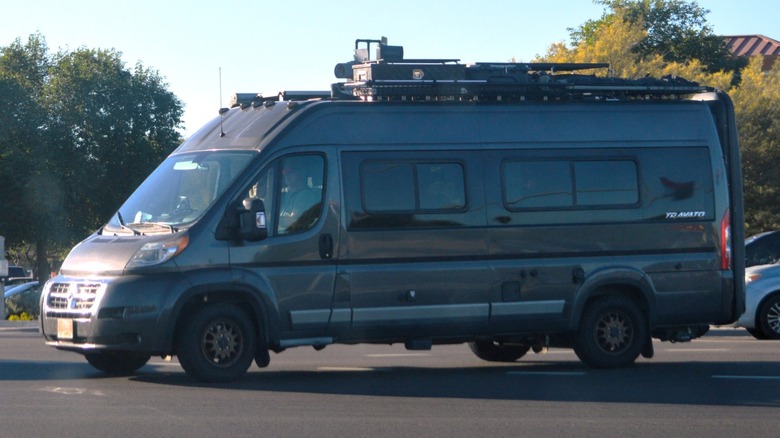
Class Bs are the smallest RVs and are often referred to as campervans. That's not to be confused with those converted vans you see vanlife YouTubers ride around in, though we think they deserve to be classified as RVs. Some of them have been built out nicer than some apartments we've lived in.
That having been said, Class B RVs are typically built on van chassis, so LT tires are generally up to the job when it comes to these vehicles. Like commercial truck tires, they are built with stronger materials so that they can withstand much more weight than a car, though not as much as commercial truck tires of even the same size. And, like commercial truck tires, while they are designed to provide some comfort, they can't provide as much as a car due to the needs of handling heavier loads. In other words, they have a stiffer feel than passenger cars.
How do light truck tires differ from other tires used for RVs? As we pointed out, they are not built to handle the weight of a loaded luxury Class A, nor can they handle the weight that many special trailer tires can. They aren't as stiff as trailer tires, and provide a little more comfort. They're also able to handle steering, unlike special trailer tires. They can also be rated for much higher speeds than both special trailer tires and commercial truck tires. Oh, and if you're dreaming of vanlife, complete with wood cabinets and a shower stall, you might want to make sure your van's tires are rated for the extra weight. If not, you'll want to budget new tires into your van build.
Class C RVs – it depends
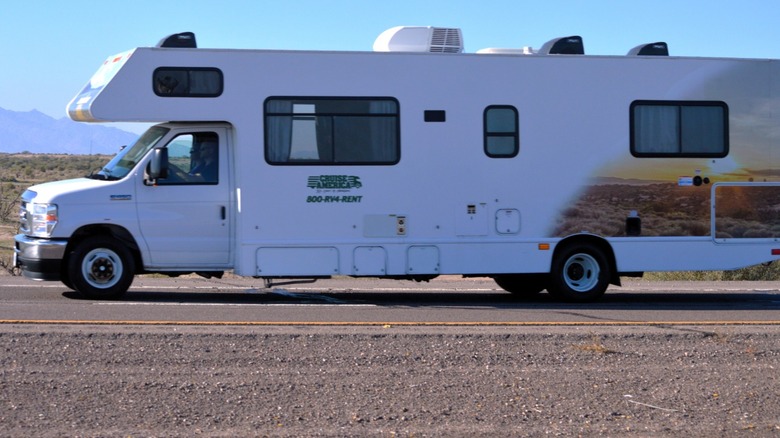
Class A RVs are the largest RVs and Class B RVs are the smallest. Class C RVs? They're in between. Confusing, we know. However, the "Super Cs" are as big as some Class A RVs, reaching 39 feet in length. On the other hand, the smallest Class C RVs are around 23 feet long, which is pretty much the length of some Class B+ RVs. What makes a Class C a Class C, then? Unlike campervans, Class C RVs can have multiple rooms like a Class A. However, Class C RVs often have cabover bunks, unlike Class As.
So, which tires should go on a Class C RV? In most cases, Class C RVs are fitted with LT tires because most of them are built on cutaway van chassis. This is the other thing that differentiates a Class C from a Class A, which is built on a commercial truck or bus chassis. However, the Super Cs are built on large commercial truck chassis and commercial truck tires work well for them. Of course, whichever chassis your Class C is built on, you would not use ST tires on your RV — they are not made to handle steering
Camper trailers and fifth-wheels – Special Trailer tires
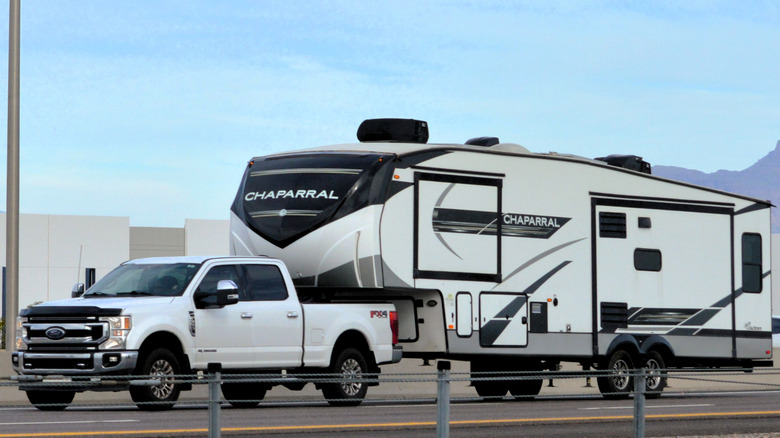
Trailers are designed to do two things: carry loads and stay behind whatever vehicle is towing them. They aren't designed for handling or comfort, since they are not supposed to carry passengers. If you do choose to ride in a trailer, you will have things other than comfort to worry about — like safety, for instance. But all of that means trailers need their own special kind of tires; hence the existence of ST tires.
ST tires have stiff sidewalls so that they can handle heavy loads, instead of providing comfort for passengers. They're treaded and shaped to help them track behind the tow vehicle without swaying, making them unsuitable to steer with. They're specially designed to handle lateral forces, or side motions. This is important because trailer wheels aren't turned, but rather dragged in the direction of the turn (sometimes referred to as "slide").
Can you use LT tires on a trailer? Many people do, judging from what we've seen in the RV and tire forums. But we also see folks talking about their tires blowing out or disintegrating on the road. LT tires aren't built to handle loads or lateral forces in the same way that ST tires are. ST tires are also designed to withstand sitting a long time, as a lot of trailers will be parked a while without use. If you've ever seen a car that's been sitting in the same spot for a while, you know what happens to its tires. We'll likely get comments below telling us we're wrong about this, but LT tires ideally shouldn't be used for trailers. Have you put LTs on your trailer? Tell us about your experiences with them.