

The Big 3 Better Get Used To Seeing Chinese EVs In Their Own Backyards
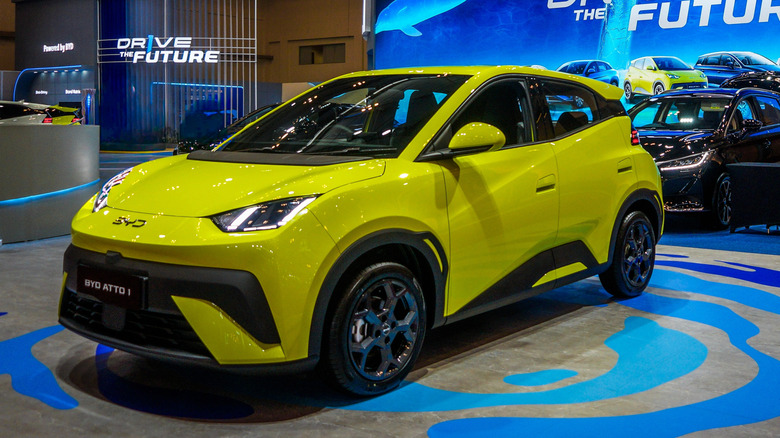
Canada shook up the car world by dropping its 100% tariff on Chinese cars down to just 6.1%, ensuring a flow of cheap EVs into the country just as soon as the auto giants can do the pesky work of setting up a dealership network, marketing, and distribution. It won't happen in the near term, but sooner than they'd like, the C-suite at the Detroit Big 3 will be sharing the roads in their capital city with Chinese EVs.
There's a big land border between the United States and Canada, and every day some 400,000 people make the crossing for work and play. Detroit is home to the busiest border crossing in and out of the great white north. Millions in trade cross the Ambassador Bridge (and soon, the Gordie Howe Bridge) everyday, along with around four thousand people commuting into the country each day for work. While it wouldn't be correct to say Detroit will be swarming with Chinese EVs, there will be significantly more of them driving around the Motor City than have ever been. When GM CEO Mary Barra makes the trip to her fancy new office in the new Hudson's building, she's going to see new models she's not used to seeing. When Ford CEO Jim Farley is driving around Dearborn, he's going to see other Chinese EVs apart from the one he's driving himself. Chinese EVs in the United States will no longer be an academic discussion for them, but rather a real thing that is happening before their very eyes.
For folks who live near the U.S. southern border, this won't be a new experience. Non-U.S. market cars cross all the time, and you don't have to travel far to see one. What's different here is that more Americans are going to be exposed to more of these cars, even if the volume of cars heading into Canada is relatively low. Canada's population centers — Vancouver, Toronto, Montreal — are within spitting distance of some of the most heavily populated regions of the United States. Americans who make the journey north will enter these cities and see these cars zipping around. And although the number of Canadians coming to the U.S. via car has been dropping for 12 consecutive months straight, that was still 1.3 million Canadians in December 2025, according to Global News.
The media onslaught

There could even be a Hollywood aspect to this. Fans of modern television probably know that many shows are shot in either Toronto or Vancouver. There was an episode of "Star Trek: Strange New Worlds" that even hangs a lantern on the fact that the show is shot in Toronto. That show, like so many others, features cars parked on the street and moving traffic. It doesn't seem likely that producers are going to spend the time to digitally remove any Chinese cars that might get filmed. That costs money. So maybe that next crime procedural you watch that is supposed to be based in New York City will have a BYD Seagull parked outside the precinct.
Adding to the propaganda victories will be the easy access to the products for car magazines, websites, and YouTubers. You can bet your posterior that many reviewers, especially the ones near a border crossing, are going to flock to Canada as soon as they can to sample the new cars they didn't have access to before. The algorithm will be flooded with reviews for these cars that you previously had to fly across an ocean to experience. This will expose even more Americans to what the Chinese are doing right now regarding build quality, software, and value.
This is a massive win for the Chinese automakers, even if they are only bringing in up to 70,000 cars in 2030. Half of those cars will be priced under $35,000 CAD, if the framework holds up, and both Canadians and Americans are going to be exposed to these cars in a big way. Customers will share their stories and their ownership experiences with others. As long as they deliver on the value being offered reliably, there's no reason to think that word won't spread even quicker. The Chinese EV makers will be champing at the bit to get more cars onto the continent.
Does Tesla change the equation?
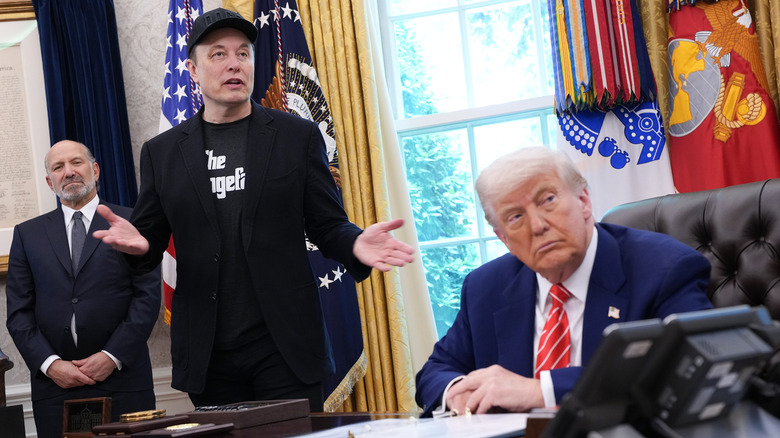
There is a chance that Canadians will reject these EVs. Ontario Premier Doug Ford has called on Canadians to boycott these Chinese vehicles. All of Canada's auto production occurs in this province, meaning its people have the most to lose if people start rejecting Canadian-built cars. Additionally, there is one Chinese EV manufacturer that benefits immediately, which Canadians might not like: Tesla. In the year 2023, before Canada instituted the 100% tariff, Canadians bought Tesla Model Ys assembled in China. Tesla imported 44,000 cars that year from its Shanghai plant. Tesla only sold 20,000 cars last year in Canada (out of 1.9 million overall new vehicles sold), as the world began rejecting the brand after its CEO took a wrecking ball to everything.
It's also important to note that North American EV sentiment has also diminished. Some of that is due to the lack of government support here in the United States, while some of it is also people believing the negative propaganda about EVs (as well as windmills, solar panels, and chemtrails). Lastly, Canada is preparing for a potential invasion from the United States, so the borders would certainly be closed in the unlikely event that were to happen.
Whether Canadians take the Teslas has yet to be seen, but the other cars that make their way to Canada will likely be gobbled up quickly. It's becoming difficult to ignore the rising cost of new automobiles, and if these cars are as inexpensive as we expect them to be, you're going to start seeing them everywhere. The threat will be too real for the Big 3 to ignore.