

Can An Oil Change Improve Engine Horsepower?
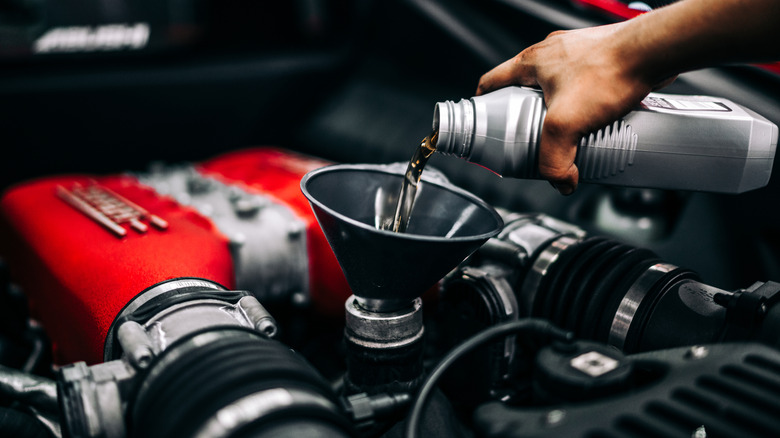
Sticking to routine oil changes can definitely improve engine horsepower. However, we're not talking about a magic formula that turns your Corolla into a barrel-chested Dodge Viper V10. Changing the oil or switching from semi-synthetic to full-synthetic won't add horsepower to your engine or make your car quicker. When we say "changing the oil can improve horsepower," we mean fresh oil can restore lost performance brought about by degraded, sludgy oil. And it's not hard to understand why.
The oil in your engine doesn't have an infinite lifespan. It degrades with time, even if you don't use the car, thanks to moisture, oxidation, and additive breakdown. If you go beyond the manufacturer's recommended oil change interval of, say, 5,000 miles or six months, oil accumulates heavier volumes of dirt and particles. And when it does, it starts losing its ability to lubricate internal parts, reduce friction, and keep the engine cool, all of which adds stress while reducing motor efficiency. When all of that happens, the oil has most likely lost its original viscosity and become thicker, making the engine work harder while losing performance and fuel economy.
So yeah, changing the oil can improve your engine's performance and restore lost power from months or years of neglect. But fresh oil does more than keep the motor ticking while consuming the least fuel and spewing fewer emissions.
Oil goes beyond lubrication
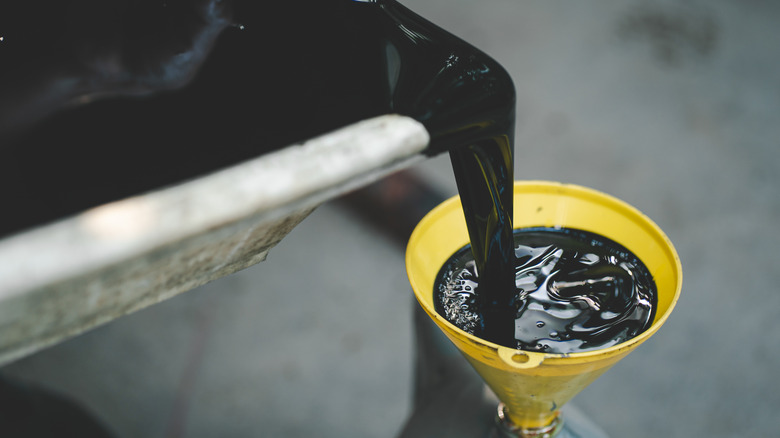
It's been said and published again and again that oil is the lifeblood of any internal combustion motor. Besides the obvious parts about lubrication and minimizing friction, oil absorbs heat from the crankshaft, bearings, pistons, and cylinder walls, helping minimize wear and keeping internal parts cool.
Moreover, oil contains detergents and dispersants to dissolve and suspend the most common oil contaminants, like sludge and combustion byproducts. Sludge is a nasty byproduct of neglect, and finding it under the oil cap or inside the motor indicates the engine has not received an oil change for who knows how long. Regular oil changes will keep your engine clean and prevent sludge from ruining the fun.
Periodic oil changes maintain like-new engine performance, prevent unnecessary wear and tear, and reduce operating costs. But since oil is not one-size-fits-all, it's worth consulting the owner's manual to know the best oil for your car. Keep in mind that using thicker oil has innate downsides, and sticking to the recommended viscosity is more important than deciding between name-brand or store-brand oil.