

5 Signs Your Cylinder Heads Could Be Failing (And What To Do About It)
No one likes spending money on car repairs. Modifications? Sure, you can never throw enough money at mods. The same goes for detailing supplies. But actual repairs? That's never a fun way to burn through your hard-earned cash. Having said that, some repairs are easier to swallow than others. Like swapping out a failed sensor or replacing tired brake pads – jobs like these are usually easy enough to tackle at home with basic tools, and they're unlikely to break the bank in the process.
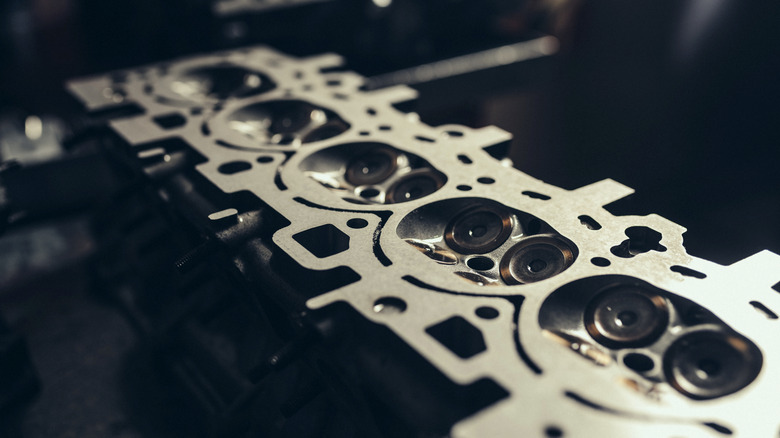
However, some jobs are best left to the professionals, and there are plenty of such tasks that can easily drain hundreds, if not thousands, from your bank account. One example of this is failed cylinder heads. For the uninitiated, a cylinder head is the top part of your engine. In it, you'll find valves, spark plugs, and various passageways for coolant and oil. It gets perfectly seated and sealed upon your block — the bottom of your engine — and rarely needs seeing to.
Problems can and do arise, though. When they do, you are usually given a whole host of warning signs. In regular use — such as commuting to and from work — it's unlikely that your cylinder head would give up in dramatic style; it's usually a process that happens over time. This might lead you to think that you can ignore the signs for a little while. However, that's never wise, as smaller problems grow into bigger ones, and with that come sky-high repair bills. So keep an eye out for any of the following symptoms, and be sure to tackle them sooner rather than later.
Overheating is a common symptom of head gasket failure
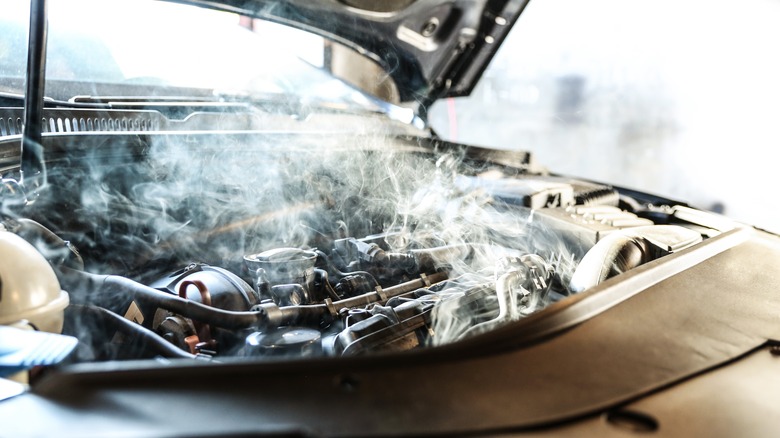
When someone refers to a "failed cylinder head," they are most likely talking about a failure of the gasket or seal between the cylinder head and engine block. If this happens, the coolant that usually flows through the various passageways can then leak out. As you may be able to gather by the name, coolant is designed to keep your engine at a safe operating temperature.
When coolant leaks out, especially if it's a significant leak, then it can no longer keep temperatures manageable. The first sign of a coolant leak will typically be steam from under the hood, as the escaped coolant hits hot engine components on its way down. When enough escapes, your engine temperature will begin to soar, and this will come with an indication on the dash — either in the form of a warning light, or a high reading on the gauge.
If you see this happening, it's important to stop as soon as is safely possible, and let the car cool down. Putting the heaters on can let some hot air escape from the engine bay, but you still need to stop and let the engine cool. There's a possibility that it's a very slow leak, and that it has gone unnoticed for a while. Realistically, you may need to get your head gasket replaced before driving again — continuing to use it in this state could result in serious and costly damage to the physical cylinder head itself.
Contaminated oil and coolant points toward cylinder head trouble
Overheating doesn't conclusively mean that your head gasket is toast; your radiator fan might have just packed in. Equally, contaminated oil and coolant aren't definite proof on their own, but they are common symptoms. The more of these symptoms that apply, the more likely it is that your cylinder head has been compromised in some way.
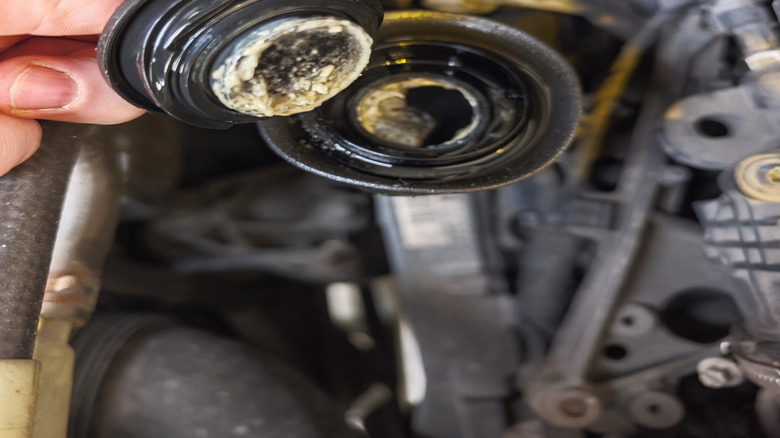
When the head gasket fails, it means the pathways for both the oil and the coolant merge, whereas these two fluids are usually kept totally separate. When oil and coolant do come into contact with one another, the resulting fluid is a thick white one — sort of like mayonnaise — with a brown tinge to it. If you suspect cylinder head woes, pop the oil cap off and take a look. If there is thick white sludge on your oil cap, that's a pretty strong indicator that the head gasket needs replacing. It could also be down to condensation, especially if the car has been sitting a while.
When your oil and coolant turn to sludge, both the lubricating and cooling capabilities of your engine will be seriously weakened, so driving the car in this condition is a no-go. You run the risk of sending temperatures so high that the cylinder head itself warps, which means it'll need skimming to be straight and usable again. So, if you see sludge and can't be certain that it's not just condensation, get it to the shop pronto — taxis and public transport will probably cost a lot less than a new cylinder head.
Watch out for reduced power

Don't let alarm bells start ringing if your car feels down on power, because this really could be anything from a blocked air filter through to a faulty sensor. In other words, reduced power is not a reason to suddenly start panicking about your cylinder head. When coupled with other symptoms, though, it's a likely indicator that something is up.
When the head gasket goes, or cylinder head warps, your engine will be operating at a lower compression ratio. This results in a lower power output, so your car will feel a little sluggish in comparison to when it was in good health. You might also experience worsened fuel economy at this point.
Again, the advice is simple — get your car inspected by a professional so they can determine what the root cause of your issue is. If you'd rather try and diagnose the issue yourself, there are a few ways you can tell if your head gasket is blown at home. One of the simplest ways you can do this is by using a combustion leak tester kit. You simply attach it to the top of your radiator — with the cap of the tester removed and test fluid poured in — and then run the vehicle. If the fluid within the tester turns yellow, the head gasket has likely failed and CO2 has been found within the cooling system. This isn't a guarantee that the head gasket has failed, but it is a strong indicator, especially when coupled with other symptoms.
That annoying misfire could be related to your cylinder head

This symptom goes hand-in-hand with reduced performance and, like the other signs of a failing cylinder head we've touched on, it could be down to a whole multitude of issues under the hood. In this instance, though, a misfire or lumpy idle could be caused by your engine struggling to combust as efficiently as it wants to.
A warped cylinder head or failed gasket means the combustion chamber beneath is no longer entirely sealed. This messes with the compression ratio, air-fuel ratio, and will ultimately lead to a misfire. However, misfires are one of the most common issues you can have with a car — before you assume the worst, it would be wise to rule out some simpler reasons for why you're experiencing a misfire.
Common causes include spark plug issues, faulty sensors, or even just bad or old fuel in the system — all of which are less trouble than a failing cylinder head. If you have checked the more obvious and easier-to-address causes and found nothing untoward, then it might be worth investigating the cylinder head before things get any worse. If left ignored, the issue could spread from one cylinder to another, and before you know it, the car may end up undrivable.
Keep an eye out for white smoke billowing from your tailpipe
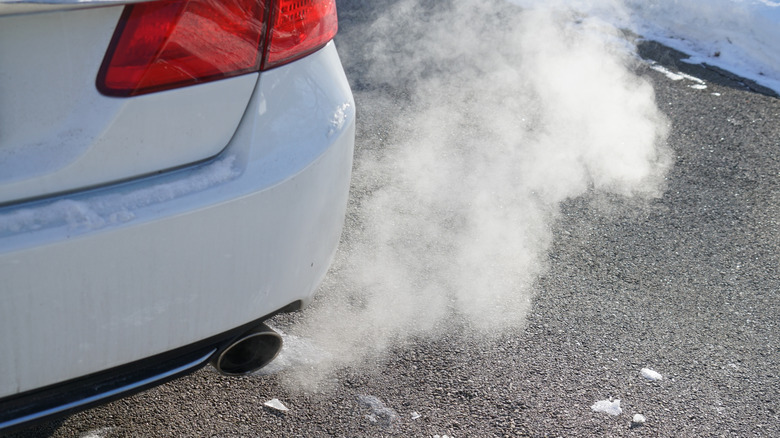
This particular symptom is a little more specific, as white smoke pouring from the exhaust means your engine is burning coolant. A little white smoke is normal — especially on startup — but if there's a plume of smoke following you around everywhere, it's a surefire signal that something is amiss.
When your cylinder head fails, it's typical for this to allow coolant to enter the combustion chamber. As a result, the coolant is burnt, which is how you end up with white smoke from the tailpipe. Coolant also has a sweet smell to it, which is a pretty solid indicator that your white smoke problem isn't just condensation on a cold day.
As we've covered, burning through your coolant will rapidly lead to overheating issues if you are not careful, so don't ignore that sweet smell and cloud of smoke. Burnt coolant passing through your exhaust will also likely damage your O2 sensors, meaning more cash to part with when you finally get it to the workshop. Always act quickly to avoid further bills when you notice something untoward with your engine.