

The Potential Power Savings Of Expensive LED Traffic Lights May Be Worth It
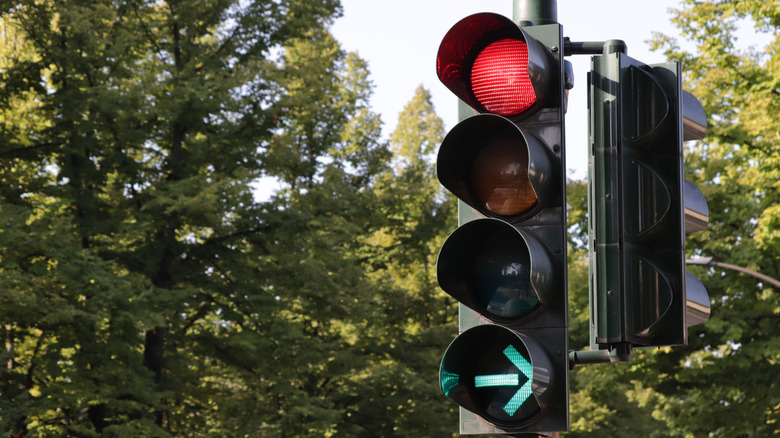
LED signal lights generally carry a price tag several times higher than incandescent traffic signal bulbs. However, that hasn't stopped many cities from replacing their incandescent lights with LED versions. While it may be a little hard to justify spending more money, there are some valid reasons for doing so.
A typical traffic signal operates 24 hours a day, every day of the year. Typically rated between 50 and 150 watts, the normal incandescent or halogen bulbs used in traffic lights are extremely power hungry. A single signal can consume several kilowatt hours of electricity per day.
LED traffic signals operate very differently. Instead of relying on a single high-wattage bulb, they use arrays of small light emitting diodes that fill the entire lens area. These arrays produce a much brighter and more uniform light, while also consuming just 15 to 20 watts, which is much less than incandescent bulbs. Because LEDs emit light directionally and waste very little energy as heat, far more of the electricity goes toward visible illumination. These reasons are also what give LEDs a leg up over HIDs.
The long-term cost case for LED traffic signals
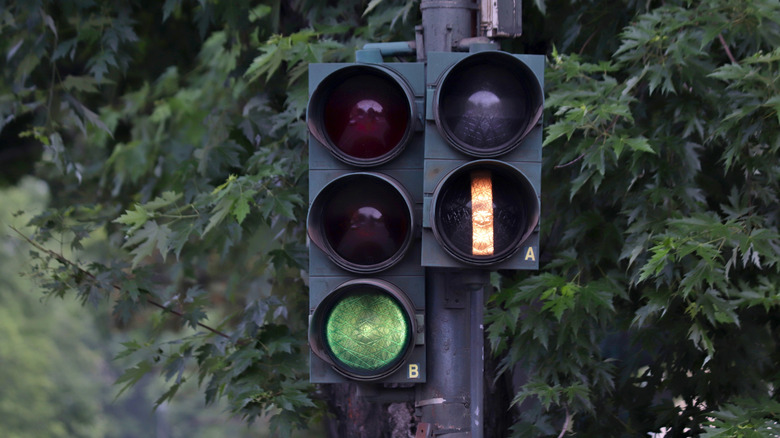
The strongest argument for LED traffic lights is lifetime cost. Incandescent signal bulbs may seem a rosy proposition because of their low initial price, but it's the LED traffic signals that win out in the long run.
This is because LED traffic lights can last for years, as opposed to incandescent ones, which typically last only a few months. Replacing them is not child's play either, and it requires trucks and crews. Increased operating costs and disruptions in the flow of traffic follow. LED traffic signal modules solve all these problems with their long service lives, significantly reducing material costs and maintenance cycles.
There have already been positive real-life case studies, with cities that have made the conversion to LED across thousands of signal lamps reporting savings of up to 90% in traffic signal energy costs. Large urban areas can potentially save upward of a million dollars annually. However, it's not just large cities, with even smaller municipalities standing to benefit from this strategy. That said, the maximum ceiling for these savings is making do without traffic signals entirely, like Bhutan, the only country left in the world without traffic signals.
Reliability and public benefits
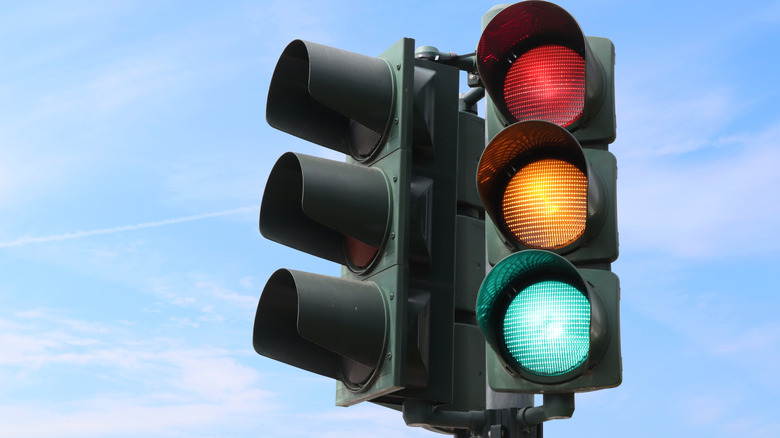
Even if the prospect of monetary savings is not enough to convince your city hall to make the switch, there are other things going for LED traffic lights as well. Vibrations and environmental stresses are a big problem, particularly at intersections and in tunnels that experience huge amounts of traffic. LED traffic lights are resistant to those issues, too. They also reduce a city's carbon footprint, with measurable reductions in emissions that are the equivalent of removing millions of cars off the road for a whole year.
It also helps that LEDs produce a signal that is not only brighter, but also more even across the light's whole face, helping drivers and pedestrians see them more clearly. Coupled with some simple Fresnel lenses, using LEDs can go a long way toward making traffic lights more visible.
While LED traffic lights cost more upfront, their combination of lower energy use, reduced maintenance, improved reliability, and long-term financial savings explains why many cities have concluded that the investment is worth it. For municipalities facing tight budgets and growing infrastructure demands, these savings can be redirected toward other services such as public health or education.