

Near-Record Number Of Buyers Are Underwater On Their Trade-Ins, And They Owe Thousands Of Dollars
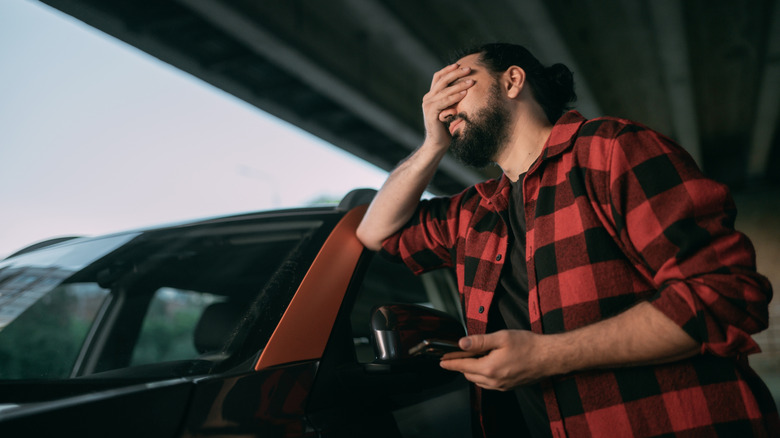
In another big win for fans of debt, new data from Edmunds says that car buyers are falling into a worrying cycle of negative equity on their cars. In the fourth quarter of 2025, just about 3-in-10 trade-ins were underwater — meaning the outstanding loan balance was actually higher than the value of the car. I'm no financial wiz (given what I pay monthly for rent), but even I can tell that isn't ideal.
All in all, 29.3% of all trade-ins toward new car purchases were underwater, and while that isn't an all-time high, it's damn close. Back in the first quarter of 2021 — during the Dog Days of the pandemic, that number hit 31.9%, CNBC reports. However, one record was hit: the amount of money owed. The average amount owed on trade-ins with negative equity hit $7,214, and more than one-in-four trade-ins had over $10,000 in negative equity. That's also a record.
Usually, when a buyer shows up at a dealer to trade in a car with negative equity, they either come up with the cash to pay the balance or they roll the debt into their new loan. I'm sure some of that contributes to the record number of $1,000-plus monthly loan payments we told you about recently.
It's a tough cycle to break, and that's why buyers with negative equity financed $11,453 more on average than other new vehicle buyers, according to data from Edmunds reported by CNBC. Buyers who decided to roll over negative equity in their new loans had an average monthly payment of $916 in Q4, which is a record high. That's monstrous compared to the $772 industry average. And to get these monthly installment loans down, these buyers are opting for longer terms, with about 40.7% of them opting for 84-month loans.
How buyers end up here
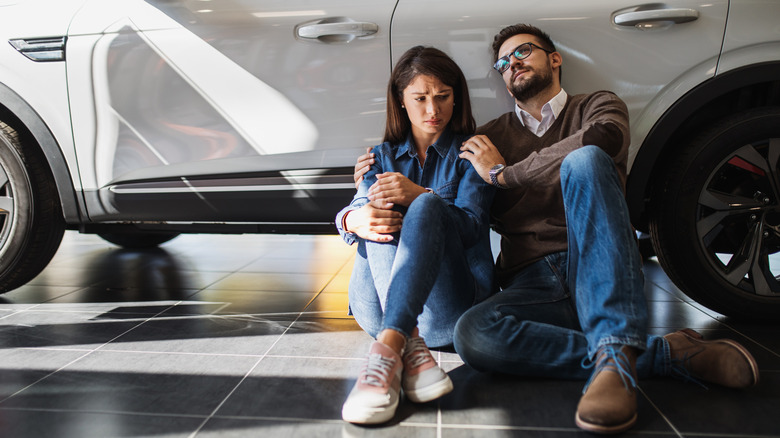
Ending up underwater on a car isn't the result of some grand work of financial mismanagement. It can actually happen rather easily. Apparently, a lot of the cars that are underwater trade-ins today were likely purchased during the height of the pandemic-era chip shortage, according to CNBC. That's when customers were pretty much forced to pay above sticker if they wanted a new car, as automakers struggled to keep up with demand. That was compounded by a shortage of leasing options that might have pushed some customers into stretching and buying new cars instead.
Now, car buyers are far more likely to find deals at or below MSRP, and that could provide some relief to the market going forward. However, it's not going to change the fact that a lot of cars sitting in people's driveways right now are rapidly losing money. Even if buyers make their payments on time — and have been doing so for years — they can still end up upside down, CNBC says. High annual percentage rates, longer loan terms and buying vehicles with bad resale value (read: luxury cars) are all contributing factors.
Really, the only way to get out of being underwater on your car is to keep it longer than you were planning to. I know that's not what anyone really wants to hear, but it's simple math. Even if you start out owing more on the car than it's worth, after a few years, depreciation will eventually slow and you'll reach a point where the balance will drop below the vehicle's value.